Auburn Hair Color: Red-Brown Depth and Copper Comparisons
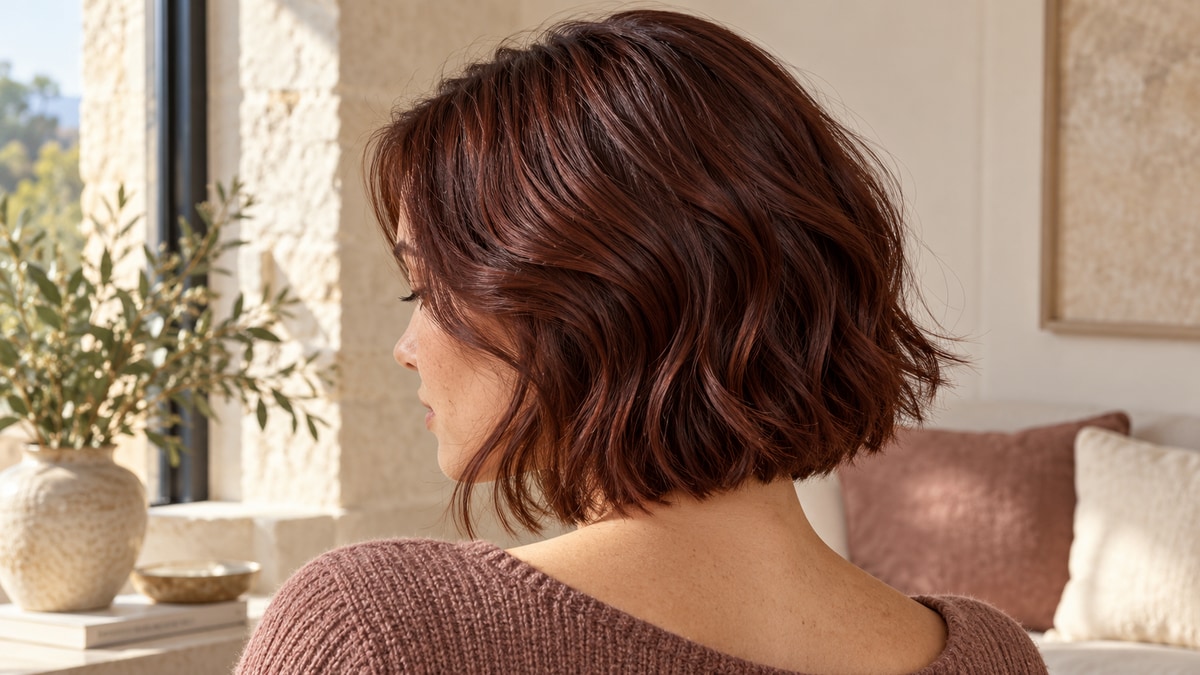
Auburn is a red-brown hair color family, ranging from softer reddish brown to deeper, more vivid red-brown. Compare the amount of brown depth and copper or cooler reflection in each reference. The name does not specify a single dye formula. Your current base and color history will shape the route to the result.
Recognize the brown-and-red balance
Auburn combines brown depth with red reflection. One example may look almost brunette indoors, while another shows a much clearer red cast in daylight. Wella’s auburn guide describes this range from subtle reddish brown to deeper, more vivid red-brown. Save references that show the balance you mean, rather than asking for the name alone.
Separate depth—how light or dark the overall hair looks—from reflection, the red you notice when light hits it. Light auburn and dark auburn describe broad directions, not universal salon level numbers. A dark auburn reference can retain a deep brunette base and still show red; a lighter one may reveal more of the red-brown color throughout. Use hair color levels to describe the depth you want.
Compare auburn, copper, burgundy, and mahogany
Look first at the brown-to-red balance, then at the kind of red reflection. Auburn keeps brown and red in conversation; copper puts more emphasis on orange warmth; burgundy often reads cooler and wine-red; mahogany commonly keeps brown depth with a cooler red or violet direction. These are reference descriptions, not universal dye codes. Wella’s auburn comparison distinguishes auburn from copper, burgundy, and mahogany by their relative red and brown emphasis. For orange-led options, see the copper hair guide.
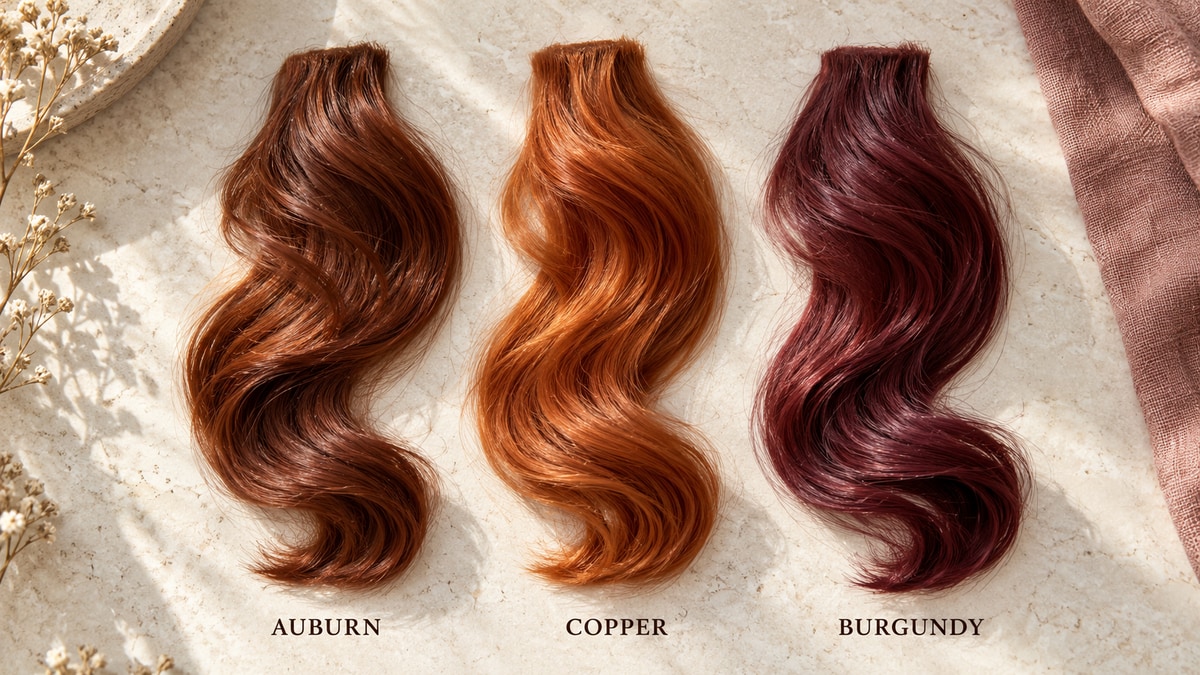
| Reference direction | Brown depth | Red reflection | Point out in your reference |
|---|---|---|---|
| Auburn | Can range from softer brown to deep brunette | Red-brown, from subtle to more vivid | How much red should be visible in daylight? |
| Copper | Varies with the reference | More orange or copper-led | Is orange warmth the feature you want? |
| Burgundy | Often medium to deep | Cooler wine-red direction | Do you want a cooler red rather than orange? |
| Mahogany | Typically brown-led | Muted red, sometimes violet-leaning | How much brown should remain apparent? |
A cooler, more muted auburn is possible within the same broad family. Wella discusses adjusting auburn toward a cooler appearance; that is a choice about the visible color, not a rule about who may wear it. Compare the actual swatch or photograph beside your face in consistent light and keep your own preference in the decision. The hair color wheel can help you discuss tone separately from lightness.
Choose a reference for your starting base
Bring one image of the overall auburn color, a clear view of the root area, and a daylight image that shows the red reflection you want. Lighting and editing can change how red appears on a screen, so tell your colorist which part of each image matters. A reference shows a target appearance; it does not reveal the formula or process used to create it.
Decide whether you want auburn through all the hair or as red-brown ribbons against your current base. Selected strands leave more of that base visible, while all-over color changes the overall impression. Show your natural root and describe any old dye on the lengths: previous color and starting depth matter to the plan. Ask what is feasible on your hair and whether the color in your reference would require lightening. The American Academy of Dermatology advises that greater lightening can cause more damage.
Discuss fading and regrowth before coloring
Ask how the red reflection may look between appointments and how visible your natural roots may become. A deeper auburn close to your natural depth may make the root contrast less noticeable, while a brighter all-over direction may call for more frequent attention. Timing depends on the chosen formula, starting hair, and your preferred look; a shade-family name alone cannot set a refresh schedule. Use hair color maintenance to plan questions about home care and follow-up.
If you are comparing color services, ask what a demi-permanent option could do on your current hair and whether permanent color is relevant to your goals. Neither service name specifies the exact auburn shade or guarantees the same fade and root pattern. Follow the directions for the product actually used; the FDA’s hair-dye precautions include following package warnings and doing a patch test each time you dye your hair.
Bring these questions to your consultation:
- Which part of my reference is overall depth, and which part is red reflection?
- Would all-over auburn or selected ribbons better match the placement I want?
- How might this color fade, and what will the roots look like as they grow?
FAQ: choosing between red-brown shades
Is auburn always warm?
No. Many auburn references lean warm, but the red-brown balance can be made cooler and more muted. Compare actual examples at the same depth and in similar light; the shade name alone does not show how much warmth you will see.
Is dark auburn the same as burgundy?
No. Dark describes depth, while burgundy usually describes a cooler wine-red reflection. A deep auburn can stay brown-led with red highlights and need not look violet. Show your colorist both references and point to the reflection you prefer.
Compare your preferences with the hair color quiz, then take your references and color history to your colorist.
Continue exploring
- Balayage: Placement, Highlights, and Full vs Partial Coverage
- Copper Hair Color: Light, Brown, and Deep Copper Directions
Browse all shades guides.