Copper Hair Color: Light, Brown, and Deep Copper Directions

Copper hair spans light peach-copper, brighter orange-red, and deeper copper-brown directions. Compare depth and warmth before choosing a reference, and decide between an all-over change and smaller highlights. Your starting base and previous color determine the salon plan.
Define copper before comparing names
Copper describes an orange-red direction, not one fixed shade or level of lightness. A pale peach-copper and a rusty copper brown can both belong to the family: the first looks lighter and softer, while the second keeps more brown depth. Wella’s copper examples include both lighter peach-tinted and richer brown versions. Compare references in similar daylight so a bright reflection does not make a deep shade appear lighter than it is.
Auburn is useful as a neighboring comparison, but the names overlap in everyday use. For this guide, choose copper when the orange or copper reflection is the detail you want to show; use an auburn reference when you want more red-brown balance. Point to the actual reflection in a photograph instead of relying on either label. The hair color wheel helps distinguish a tonal change from a change in lightness.
Compare light, bright, and deeper copper
Start with depth, then compare how much orange-red reflection you want. Light copper may read peachy against a lighter base; vivid copper makes the orange-red more prominent; copper brown keeps brunette depth with a warmer surface reflection. None of these names fixes a universal color level. Use the hair color levels guide to describe how light or deep your target looks.
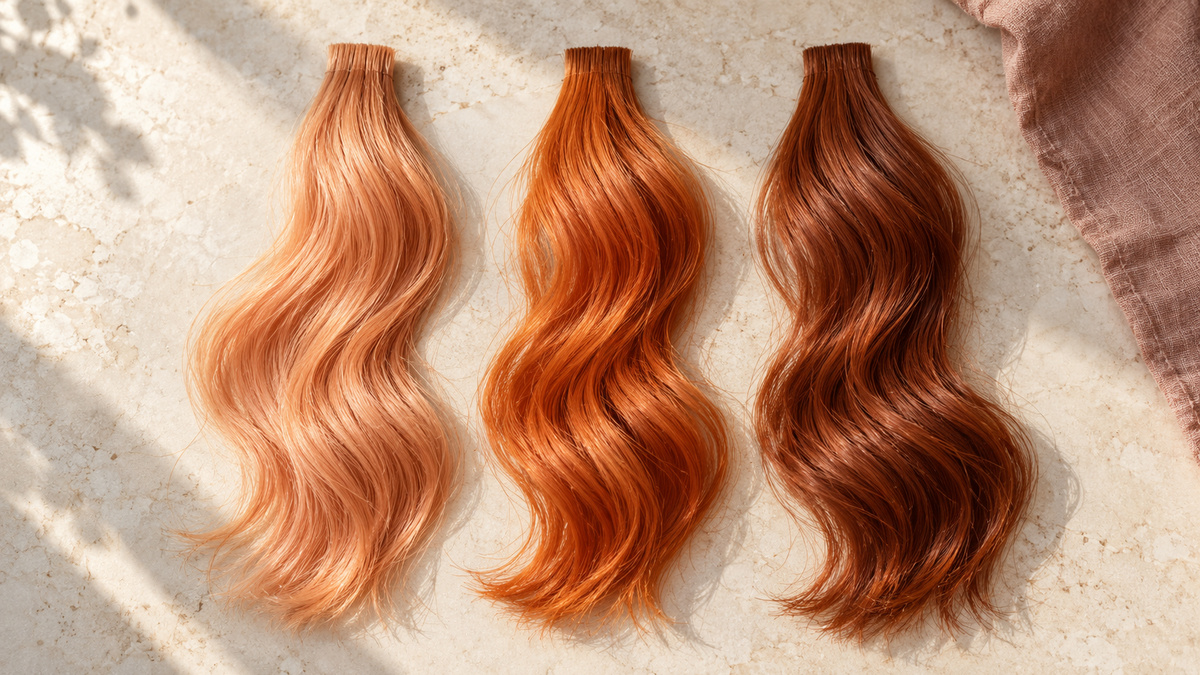
| Direction | Visible depth | Copper reflection | Ask your colorist |
|---|---|---|---|
| Light peach-copper | Lighter overall | Soft peach-orange | How light would my starting hair need to be for this reference? |
| Vivid copper | Choose a specific light or medium-depth reference | Clear orange-red | How bright could this look on my current base? |
| Copper brown | Brunette depth | Rusty or burnt-orange warmth over brown | How much copper would show in indoor light? |
Undertone can guide the effect you compare, but it does not rule a shade in or out. Wella presents traditional copper as one option for warm and neutral skin tones and also discusses redder or rose-leaning versions for cooler undertones. If you have cool-toned skin and prefer clear orange-copper contrast, keep that preference in the conversation. Look at your references beside your face in consistent light; do not treat a styling category as a requirement.
Choose all-over color or copper placement
All-over copper makes the warm reflection part of the whole hair shape. Copper highlights put that reflection in selected strands and leave more of the existing base visible. You can also ask for a deeper root with copper through the lengths. These are placement decisions, not guarantees about the coloring process. A picture of copper highlights cannot tell a colorist whether your particular hair needs lightening.
Bring a clear view of your natural roots and tell your colorist about previously colored lengths. A dark natural base, an old dark dye, and lighter precolored ends can respond differently to a new copper goal. Ask what steps may be needed to reach the depth in your reference and whether a staged approach makes sense for your hair. The American Academy of Dermatology advises that greater lightening can cause more damage, so hair condition belongs in that decision.
Plan the fade and refresh
Copper reflection may become less vivid between appointments even when the overall depth still works for you. Wella shows a gloss as one product-specific way to refresh red color; a gloss is a service name, and its effect depends on the actual formula. Refreshing reflection and making hair lighter are different requests. Ask what your chosen service can do on your current hair rather than expecting one refresh schedule for every copper shade.
Before choosing a bright all-over shade, discuss how you want it to look as it fades and grows. Ask which home care fits the formula your colorist uses, how often you may want to refresh the copper reflection, and whether your natural root will make the grow-out conspicuous. The hair color maintenance guide helps you plan the upkeep you are comfortable with. Follow the directions and warnings for any dye actually used; the FDA’s hair-dye precautions include a patch test each time.
Take these questions to your consultation:
- Which part of my reference is depth, and which part is copper reflection?
- Would all-over color or selected highlights better match the placement I want?
- What could fade first, and how would the roots and lengths look between visits?
FAQ: copper versus other red shades
Is copper the same as auburn?
No. Copper usually emphasizes an orange-red reflection; auburn is commonly used for a deeper red-brown balance. The names can overlap, so compare photographs at a similar depth and point to the brown, red, and orange you want. This guide focuses on the copper-led options.
Can I get copper without lightener?
It depends on your starting base, color history, and how light you want the copper to appear. A deeper copper-brown reference and a pale peach-copper reference ask for different changes. Bring both your natural root and previously colored lengths to a colorist; the shade name alone cannot answer whether lightening is needed. Compare the target with hair color levels before the appointment.
Compare your preferences with the hair color quiz, then take your references and color history to your colorist.