Demi vs Semi-Permanent Hair Color: Cuticle Penetration, Longevity & Gray Blending
The short answer: A typical semi-permanent color is a ready-to-use direct dye: no developer is mixed in, and its pigment deposits mainly at or near the hair’s outer cuticle. A typical demi-permanent color is mixed with its specified low-strength developer; oxidative color develops within the hair, making a longer-lasting tonal change and often a better option for blending gray. Neither is a substitute for a dedicated lightening service. Check the particular line before buying: wash counts, gray coverage, developer strength, and even lifting ability vary by formula.
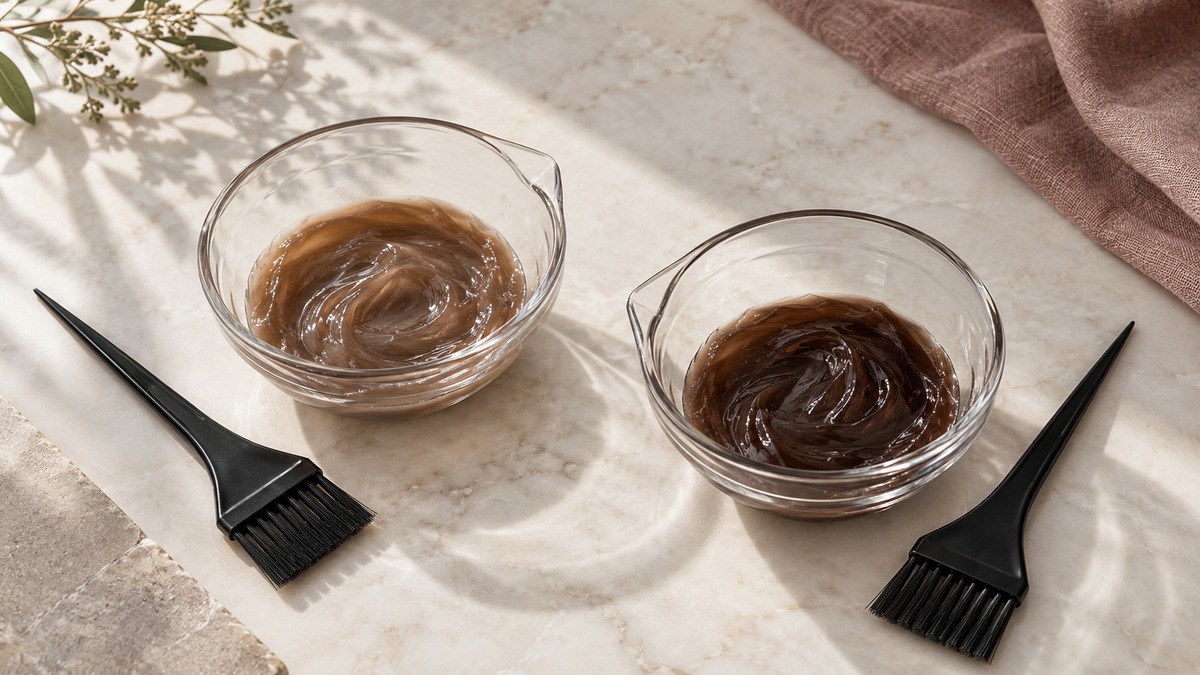
Demi vs Semi-Permanent: Head-to-Head Comparison
On a narrow screen, scroll sideways to compare all three columns.
| Decision point | Semi-permanent direct color | Demi-permanent oxidative color |
|---|---|---|
| Developer | Usually none; apply the ready-to-use color as directed. | Yes; mix with the matching processing solution or developer at the specified ratio. |
| Where color sits | Mostly on or close to the outer cuticle, though some direct dyes can stain porous hair more deeply. | Color develops within the fiber, including the outer cortex; depth varies by formula and hair condition. |
| Wash count | Often short-lived: one Clairol line says 4–6 washes, another up to 12; Wella Color Fresh Create says up to 20. | Often longer-lived: Wella Color Touch and Redken Shades EQ each advertise up to 28 washes. |
| Gray result | May tint or blend gray; coverage depends greatly on the line and the strand. | Frequently chosen for gray blending; some lines claim up to 50%, while specific enhanced formulas claim up to 70%. |
| Natural-base lift | No meaningful lightening without a separate lightener. | Many glosses are no-lift, but some alkaline demi formulas can lift slightly; read the exact product claim. |
| Grow-out | Usually soft fading, though intense color can linger on porous sections. | Usually softer than opaque permanent coverage, but a root contrast can still be visible. |
Those numbers describe specific manufacturers’ products, not the legal definition of each dye category. For example, Clairol Professional Beautiful Collection Moisturizing Color specifies 4–6 washes and no developer, while its Advanced Gray Solution advertises up to 12 washes and gray coverage on heads with up to 50% gray. Wella Color Fresh Create is also semi-permanent but advertises up to 20 washes. The “4–12 versus 20–28” shorthand is useful for a quick comparison, but the label and your hair history are better predictors than the category name alone.
The Chemistry Explained Simply: Cuticle vs. Cortex
A hair fiber has an outer cuticle, made of overlapping protective scales, and an inner cortex, which contains much of the fiber’s structure and natural pigment. A direct semi-permanent dye arrives with color molecules already formed. You apply it without a peroxide developer. It largely deposits color on the outer layers, so repeated washing tends to remove the visible tone sooner. This is a useful mental model, not a promise that every molecule stays on the surface: porous or pre-lightened hair may hold some direct pigments stubbornly.
A conventional demi-permanent dye is oxidative. You mix the color with the matching low-strength peroxide processing solution, following that line’s ratio. The process lets dye components develop color inside the hair fiber, including beneath the cuticle. That helps explain why a demi often lasts longer and can give gray strands a more substantial, translucent tint. It does not mean every demi must pry the cuticle open in the same way: acidic glosses and alkaline demi colors are formulated differently. Redken Shades EQ, for example, describes an acidic, no-lift gloss mixed with its Processing Solution; Wella Color Touch’s usage guide specifies its own 1.9% or 4% emulsion.
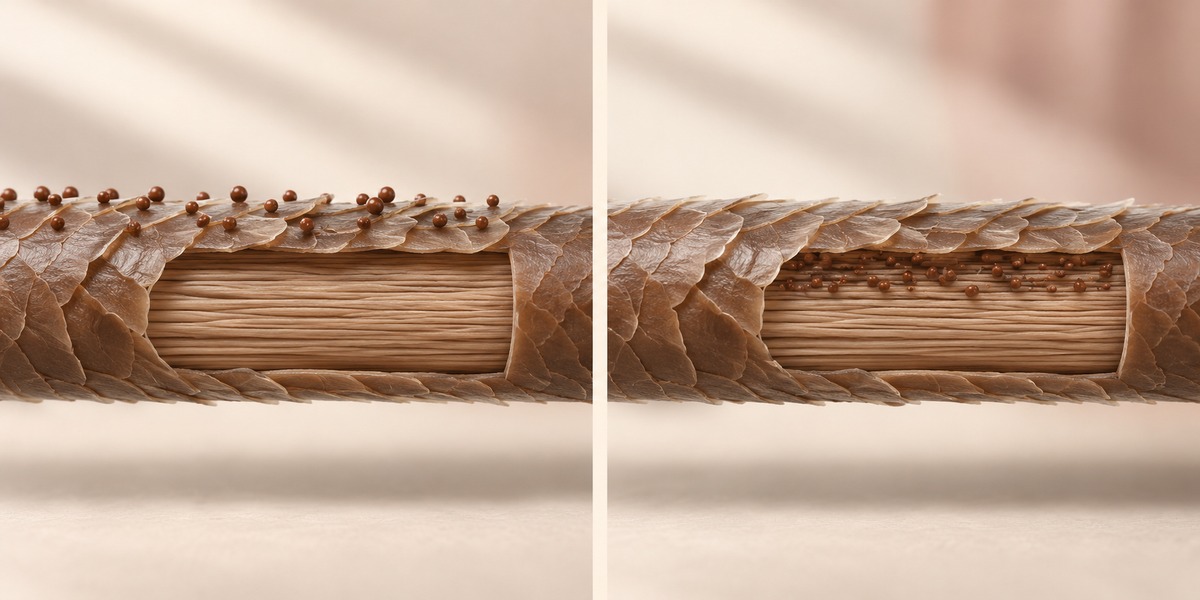
Does less processing mean zero damage? It is more accurate to compare the actual services than to call either category harmless. A ready-to-use direct dye avoids mixing peroxide, but applying and removing color still involve handling hair and scalp. A low-strength developer is different from a strong lightening service, yet a demi is still a chemical process. Prior bleaching, porosity, heat, timing, and the chosen formula all matter. A glossy finish can improve the appearance of hair without proving that the underlying fiber was repaired. If hair feels fragile after lightening, ask a colorist to assess it before adding another service.
The natural base is another distinction. Most direct semis deposit color and do not lift natural melanin. Many demi glosses are also marketed as no-lift: Redken explicitly describes Shades EQ that way. But “demi” does not always mean zero lift. L’Oréal Professionnel Dia Color is an alkaline demi that specifies up to 1.5 levels of lift with its 15-volume developer. If you want a lighter natural base, ask whether the particular formula lifts and whether that amount is enough for your target. Do not assume a deposit-only gloss will turn dark brown hair blonde.
When to Choose Semi-Permanent Hair Color
Choose a ready-to-use semi when your main goal is temporary tone or creative color, especially on a base that is already light enough to show it. A copper wash can refresh faded copper; a vivid violet can show strongly on pre-lightened sections. The same violet on deep brown hair may give only a subtle reflection. The product does not create the light canvas underneath it. Wella’s Color Fresh Create instructions describe direct application without developer and note that the result depends on shade, pigment intensity, and hair condition.
Semi can help you test a tonal direction, though it cannot predict a future oxidative result. Make a strand test as directed, especially on pale or porous ends. Intense direct pigments may linger on lightened hair.
For maintenance, match the product to the fading problem. A color-depositing semi can replace a little lost warmth or coolness on the lengths. It will not correct dark regrowth, lift an orange base to pale blonde, or make uneven old dye uniform. If brassiness is the main issue, the hair toner guide helps separate a short-term tinted product from a salon toning service. Your colorist may suggest different care for roots, mids, and ends rather than one all-over application.
“No developer” is a useful shopping clue, but it is not an instruction to improvise. Do not add developer to a ready-to-use semi to make it last longer. The manufacturer has formulated and tested it for a specific application. Likewise, avoid assuming a semi is allergy-free or universally safe because it is peroxide-free. Read the ingredient list and directions, and follow the product’s skin-test instructions. The FDA advises following hair-dye directions and skin testing before each use.
When to Choose Demi-Permanent Hair Color
A demi is a stronger candidate when you want a longer tonal refresh, a salon gloss after lightening, or a soft blend of early grays. A colorist can select depth and tone, then apply the line’s matching developer or Processing Solution. For a previously lightened blonde, an appropriate demi gloss can shift a yellow-looking finish toward beige or cool blonde without another full lightening step. It changes the color you see at the current level; it cannot make a no-lift formula raise that level. Redken lists toning pre-lightened hair and refreshing faded lengths among Shades EQ uses.
If your natural base is dark and your target is a lighter caramel, pause before buying a demi. Some alkaline demis lift a little, but that is not equivalent to the several levels often needed for a visibly lighter shade. A colorist should assess your natural level and any artificial pigment first. Existing dark dye can affect the result differently from untouched hair. Bring a photo of your present color in indirect daylight and a realistic target reference, then ask how much of the change is lift and how much is tone. The hair color levels guide explains the depth scale used in that conversation.
Longevity is another reason to consider demi, provided you accept its upkeep. Wella Color Touch and Redken Shades EQ each describe fading over or lasting up to about 28 washes for their own lines. “Up to” is a ceiling in product guidance, not a timer that starts identically on every head. Frequent shampooing, the shade, prior lightening, porosity, and the processing instructions can change what you see. Count your usual washes per week instead of converting 28 washes into a guaranteed number of calendar weeks.
A demi can produce a glossy visual finish, but gloss is a service description, not a single chemical class. Some glosses are demi; other color-depositing products are ready-to-use semis. Ask what the salon will use, whether it needs developer, whether it can change your natural base, and how the chosen shade may fade. A clear discussion is more useful than requesting “a gloss” without naming the color goal.
Which One Is Better for Gray Hair?
For subtle gray blending, demi is often the more predictable starting point. It can tint gray strands so they sit closer to the surrounding hair without necessarily creating the solid, opaque look of permanent color. On a dark base, the result may read like fine, lighter threads rather than an evenly covered sheet. The effect depends on the percentage of gray, resistance, shade choice, placement, and processing. Wella’s Color Touch guide describes up to 50% gray blending for standard Color Touch and up to 70% coverage for Color Touch Plus, a specific enhanced formula. Those are product claims, not a demi-wide rule.
Semi can also tint gray, so the claim that it always washes off gray at the first shampoo is too broad. Clairol Professional’s Advanced Gray Solution is a no-developer semi specifically marketed for gray coverage and up to 12 shampoos. By contrast, a pastel direct dye intended for pale blonde may leave only a faint tint on resistant white strands. Read the gray-use instructions for the actual line. If you want a light veil rather than coverage, either route may work; if you want more consistent blending, compare a demi service with a strand test.
Neither choice automatically solves fully resistant, mostly white hair if your goal is opaque coverage. A colorist may recommend a permanent line, a different formulation, or intentional blending depending on how solid you want the result and how much root maintenance you accept. The word “coverage” can mean tinting, blending, or hiding; show a reference and say which outcome you mean. Ask what the regrowth will look like after several weeks. Even with fading color, newly grown natural gray can make a line visible when the applied shade is much darker.
Gray hair may sit beside previously colored lengths. A blanket application can make porous ends darker or cooler than new growth. Tell the colorist about permanent dye, lightening, henna, and color-depositing products so placement and processing can vary by zone.
How to Choose Before You Buy or Book
Start with the result you want to see, not with the product category. For a short-lived vivid shade on already light hair, look first at a direct semi and its expected fade. For a deeper, more even tonal change or salon gray blending, ask about a demi and the exact developer it requires. If your desired reference is distinctly lighter than your current natural base, ask about a lightening plan before discussing the final tone. If the base contains old dye, tell the colorist; a category label alone cannot predict what will happen over that pigment.
Then check the label or ask the colorist four questions: Does this specific formula require developer? Does it lift natural hair, and by how much? What gray result does the brand claim for this shade and method? How should I expect it to fade on my current hair? The answers may differ within one brand. Do not substitute a generic 5-, 6-, 9-, or 15-volume developer for the matching solution just because the percentages seem close. The intended mixing ratio and processing time belong to the selected line.
Finally, consider maintenance and reversibility. A lower-commitment color can still leave a stain on porous, pre-lightened hair, while a demi may leave some visible color after its advertised wash count. If you expect to go blonde soon, mention any planned vivid dye now; residual pigment can complicate the next service. If you want to preserve a soft grow-out, stay closer to your natural depth and ask how the new growth will meet the colored lengths. Use the hair color maintenance guide to plan the upkeep around your actual wash routine.
FAQ
Does demi-permanent hair color have developer?
Yes. Conventional demi-permanent color is mixed with the brand’s specified low-strength developer or processing solution. That is a key difference from a ready-to-use direct semi. The exact strength and ratio vary: Wella Color Touch lists 1.9% or 4% emulsion, while Redken Shades EQ specifies its own Processing Solution. Follow the selected product’s instructions rather than transferring a formula from another line.
Which lasts longer, semi or demi?
Demi often lasts longer in a like-for-like comparison, because its oxidative color develops within the fiber. But wash-count ranges overlap across real products. Clairol lists 4–6 washes for one semi and up to 12 for another; Wella lists up to 20 for Color Fresh Create; Wella Color Touch and Redken Shades EQ describe up to 28 for their demis. Your shade, porosity, care, and processing affect the visible fade.
Can either color lighten dark hair?
A direct semi does not lighten natural dark hair. Many demi glosses are explicitly no-lift, so they change tone or add depth without making the base lighter. Some alkaline demis can lift modestly—L’Oréal Dia Color specifies up to 1.5 levels with a particular developer. A much lighter target or light blonde generally requires a separate professional lightening plan.
Is demi-permanent color better than permanent for gray coverage?
It depends on what coverage means to you. Demi is a useful option for softer blending and a less opaque appearance; permanent color is often selected when the goal is more solid coverage, especially on resistant gray. Ask for a strand assessment and compare examples of the intended finish. Neither a percentage on a product page nor a photograph guarantees your individual result.
Can I switch from semi to demi later?
Often, but disclose the semi’s shade and when you used it. Direct pigment can persist on porous hair and influence the next formula, especially after vivid colors. A colorist may test a strand or adjust the plan before applying a demi. Avoid treating a faded appearance as proof that every pigment is gone.
If you are still deciding on shade direction, the hair color quiz can help you compare three directions based on your preferences. Bring your current-base and maintenance notes to a colorist before choosing the formula.