Hair Color Wheel: Yellow, Orange, and Red Neutralization
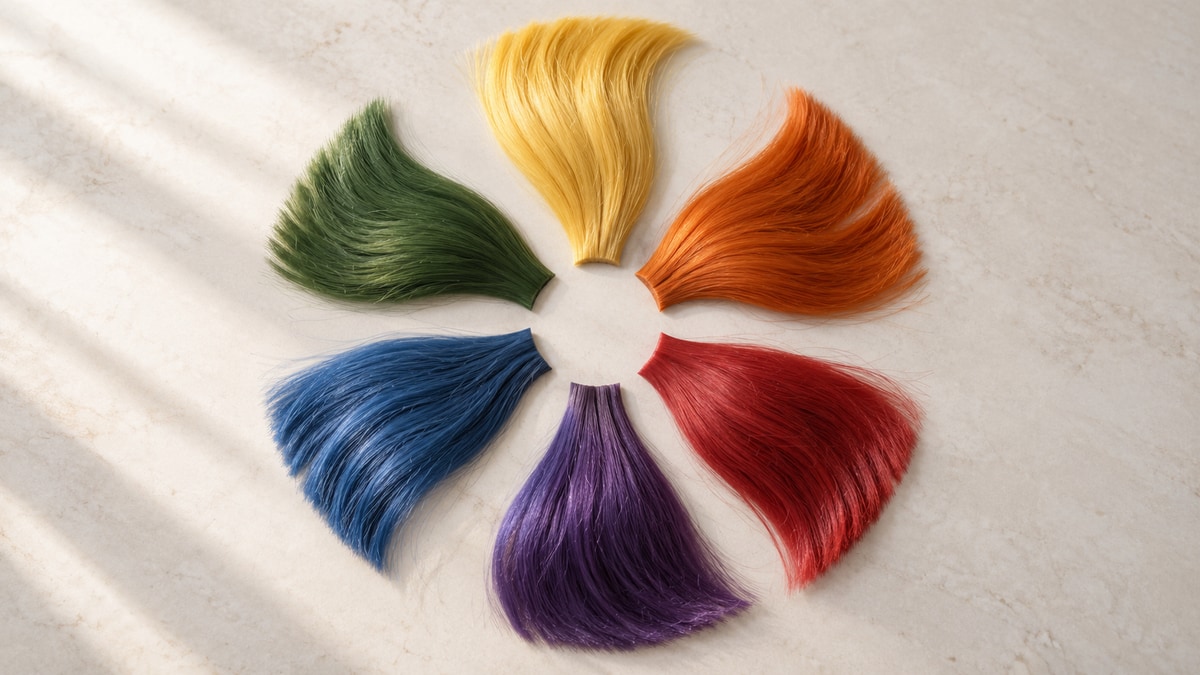
Use violet for unwanted yellow, blue for orange, and green for red as a color-theory starting point. First check the reflection you actually see, how light or dark the hair is, and what color services it has had. The wheel helps you describe a tonal goal; it cannot choose a formula or make hair lighter.
Match the visible reflection to its opposite
On the hair color wheel, the complementary directions are yellow and violet, orange and blue, and red and green. Adding a suitable opposing tone can make unwanted warmth look less prominent. It does not physically erase the underlying color, and the wheel does not tell you how much pigment to use. Wella’s color guide describes the pairs and explains why a colorist assesses the hair before selecting a toner.
On a narrow screen, scroll sideways to compare every column.
| Unwanted reflection | Opposite direction | What to compare |
|---|---|---|
| Yellow | Violet | Is the strand clearly yellow or also orange? |
| Orange | Blue | Do you want less orange at the same depth? |
| Red | Green | Is red unwanted, or part of your chosen shade? |
The Hairdresser’s Color Wheel: How It Works
Red, yellow, and blue are the wheel’s primary colors; orange, green, and violet sit between them. In between are mixed directions such as yellow-orange and blue-violet. Those distinctions matter when a strand looks gold-copper rather than plainly yellow or orange. The Wella Color Charm education workbook illustrates these groups and their opposing directions. “Cancel” is shorthand for changing how a reflection reads, not a promise that all warmth disappears.
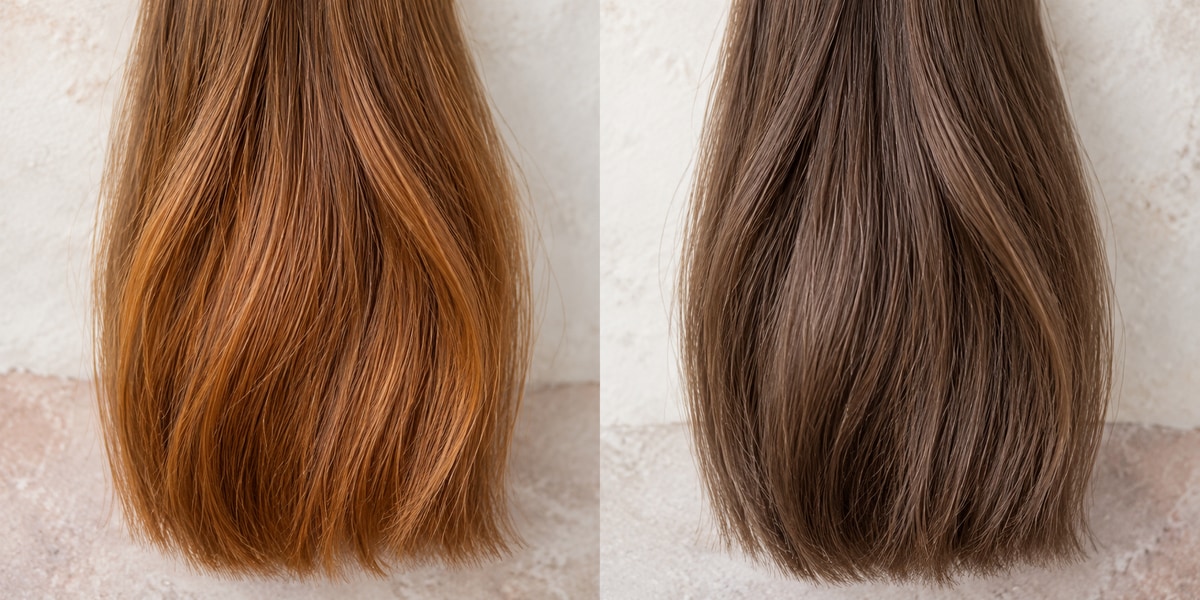
A yellow-orange highlight is a useful test of the rule’s limits. Reaching for a purple product solely because the hair is called “blonde” may leave an orange component visible. Compare the warmest area in indirect daylight, then describe both colors if the reflection is mixed. A colorist can assess whether one tonal direction, a blend, or another process fits the actual base.
Green is the opposite of red, but that relationship is a comparison direction, not an instruction to apply green dye. If a deep brunette shade shows an unwanted red cast, ask whether it comes from faded artificial color, prior red coloring, or the hair’s background warmth. If the red is part of the shade you chose, there may be nothing to neutralize.
Separate color direction from depth
Depth means how light or dark the hair is; reflection describes the color you notice within that depth. A dark orange-brown and a light yellow-blonde can both be described as “too warm,” yet they are different starting points. Blue is opposite orange, while violet is opposite yellow. Neither opposing pigment alone turns the dark example into the light one. The hair color levels guide gives you language for the depth part of the conversation.
Treat level numbers as a way to describe the starting point, not fixed rules for purple, blue, or green. Wella’s yellow-hair guide gives examples of warmth at different levels, but the visible reflection and the chosen product still matter. A label saying “for blondes” or “for brunettes” cannot replace looking at the particular strand. For a quick comparison, keep depth and reflection in separate columns:
On a narrow screen, scroll sideways to compare every column.
| Visible reflection | Opposite direction | Depth check | Question to ask |
|---|---|---|---|
| Yellow | Violet | Is the current lightness already right? | Would a violet maintenance product or a salon toner fit this blonde? |
| Orange | Blue | Do you want this depth cooler, or a lighter result? | Can tone be adjusted at this depth, or does the target require more lightening? |
| Red | Green | Is the red an unwanted reflection or part of the chosen shade? | What is causing the red, and should it be softened? |
| Mixed or uneven bands | Assess each zone | Are roots, mids, and ends different depths? | Can you assess each zone before choosing a correction? |
Know what purple and blue products can address
Purple products target yellow-looking warmth; blue products target orange-looking warmth. For example, a violet shampoo may help a blonde whose depth is already right but whose yellow reflection has become more noticeable between appointments. It will not lighten an orange base into pale blonde. The outcome also depends on the product and the hair, so follow the maker’s instructions instead of extending contact time to force a stronger correction. Wella describes violet-based toning for yellow and blue when orange is present.
If the mids look orange while the ends look pale yellow, one tinted wash over the whole head may affect those zones differently. Uneven bands, old dye, and a target much lighter than the current base call for a colorist’s assessment rather than a home color recipe. If your goal is simply less visible warmth at the same depth, ask which zone a maintenance product can reasonably address.
On a narrow screen, scroll sideways to compare every column.
| Reflection | Comparison direction | Next question |
|---|---|---|
| Yellow | Violet on the yellow area | Is the depth right for a maintenance product? |
| Orange | Blue on the orange area | Would a cooler result at this depth meet the goal? |
| Uneven yellow and orange bands | Assess each zone separately | Can a colorist identify the depth and history of each band? |
For ongoing care, see hair color maintenance. Keep a short checklist: compare the color in the same daylight each time, use any tinted product only as its maker directs, and note which zone changes first. Bring those observations to the next appointment if the result is uneven or the warmth quickly returns.
Prepare for a toning consultation
Look at dry roots and lengths together in indirect daylight, then save a reference that shows the depth and reflection you want. Tell the colorist about previous permanent color, lightening, and tinted products, including where they were applied. Ask them to identify the warm reflection in each zone before discussing a toner. Wella’s consultation guidance likewise includes hair history and the desired outcome in the assessment.
State two wishes separately: “I want less orange at roughly this depth,” or “I want a lighter blonde with less warmth.” Then ask which part of the proposed service changes depth and which changes reflection, and what follow-up care the chosen finish needs. That gives the colorist a clearer goal than a request for “cool hair” alone.
FAQ: choosing a correction direction
Can purple shampoo fix orange hair?
Purple targets yellow; blue is the opposite direction for orange. If the strand looks yellow-orange, describe both parts instead of treating “brassy” as one color. A shampoo may soften a suitable reflection, but it cannot make the base lighter. Ask a colorist to assess mixed or uneven zones before applying one product everywhere.
Does toner lighten hair?
The neutralizing role discussed here is a change in reflection, not a lightening plan. “Toner” can describe different formulas and services, so ask what the specific product is intended to do on your starting hair. If the reference is lighter than your current depth, discuss whether lightening is needed before the final tone is selected.
Compare your preferences with the hair color quiz, then take your references and color history to your colorist.
Continue exploring
- What Does Hair Toner Do? Complete Guide to Post-Lightening, Gloss & Toning
- Hair Color Levels: Read Depth, Tone, and Brand Numbering
Browse all color theory guides.