Balayage: Placement, Highlights, and Full vs Partial Coverage
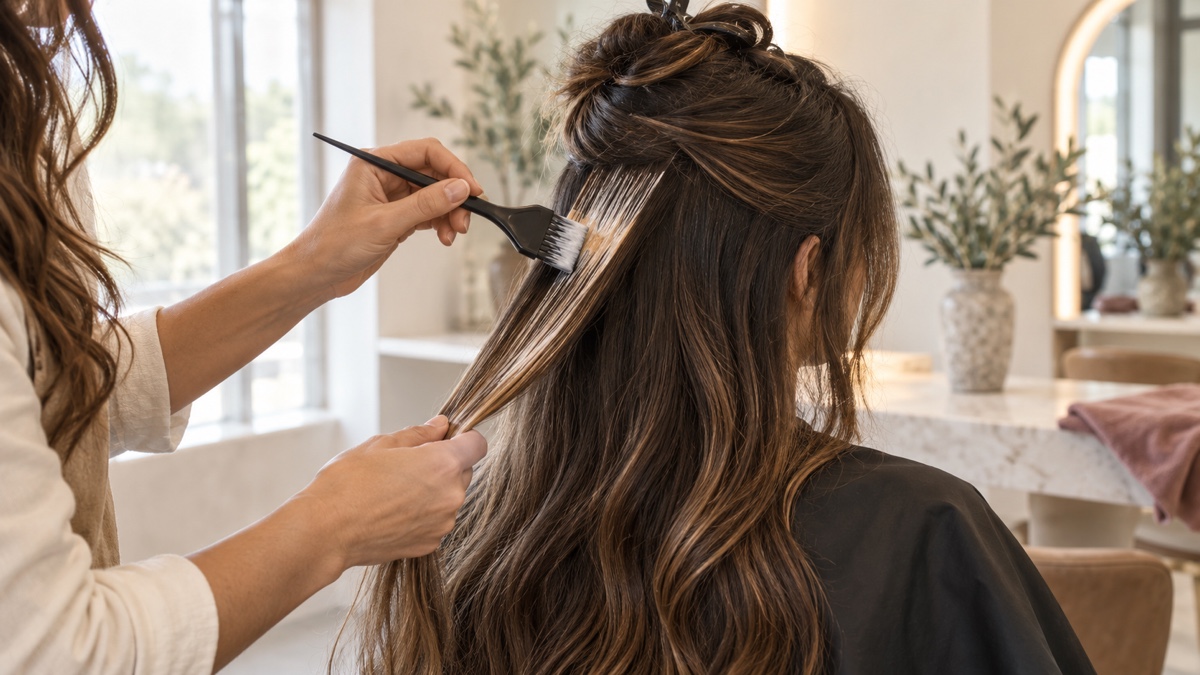
Balayage describes how color or lightener is placed, not a single blonde shade. A partial service targets selected areas; a full service distributes brightness more widely. Compare placement, root contrast, starting color, and upkeep before choosing.
Separate technique from finished hair color
Balayage is a placement technique: a colorist paints selected sections to create a gradual transition. Wella’s full and partial balayage guide describes freehand painting and different amounts of brightness. The finished color might read brunette, bronde, or warm red-brown. Asking for balayage alone does not specify the depth, reflection, or toner you want. Compare hair color levels when describing overall depth.
Traditional foil highlights usually isolate selected strands in foils for more controlled placement; balayage describes a painted, graduated effect. These terms are useful starting points for a salon conversation, not rigid rules about every tool a colorist may use. In fact, the same Wella guide pictures a brush and foil during a balayage service. Show which strands you want brighter and how soft you want the transition near the roots.
Compare partial and full balayage
A partial balayage puts brightness in selected areas, often around the face and on the upper surface. A full balayage distributes it through more of the head and lengths. Wella describes this as a difference in coverage; neither label alone tells you the final shade or a price. Compare the amount of brunette base you want to keep visible.
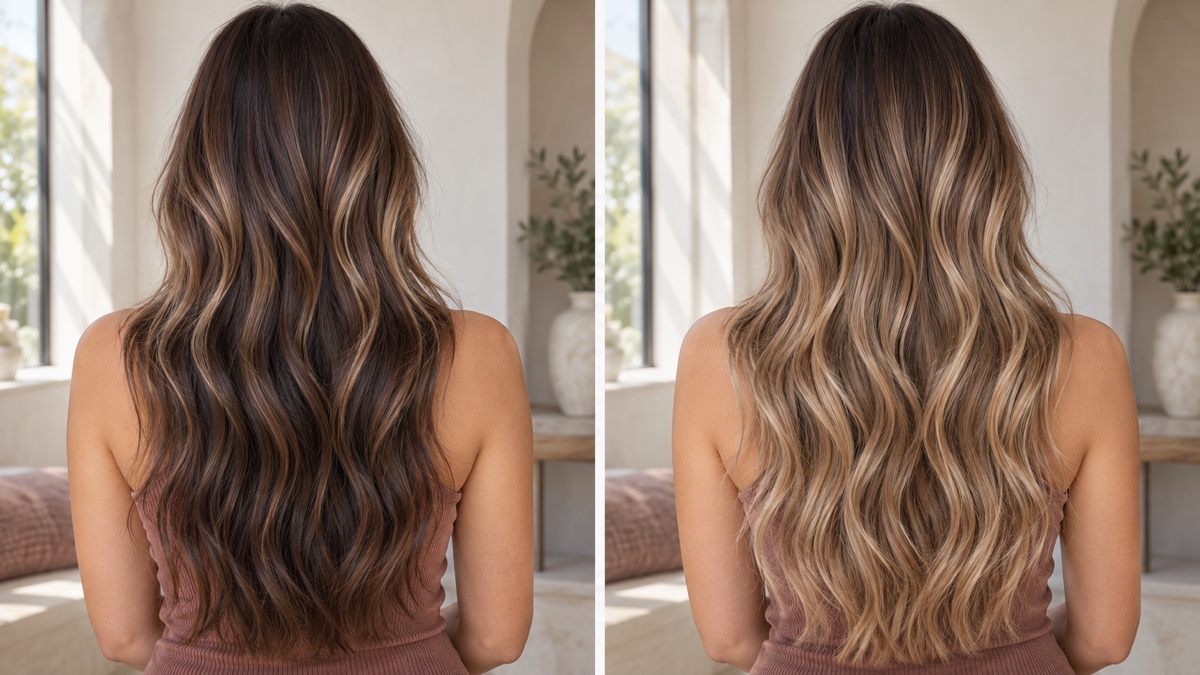
| Option | Coverage | Visible placement | Reference view | Salon question |
|---|---|---|---|---|
| Partial | Selected sections | Brightness near the face or upper surface; more base stays visible | Front and back in daylight | Where would the lighter pieces sit on my hair? |
| Full | More of the head and lengths | Brightness distributed more widely, with a broader overall effect | Back, sides, and front in daylight | How much of my base would remain visible? |
Bring a rear view and a face-framing view of the same reference, if possible. Point out whether you want an overall lighter impression or a few local accents. Photos taken in different light can exaggerate a difference in coverage, so compare them under similar daylight and ask your colorist to translate the placement to your own hair.
Assess your starting base and previous color
Your natural root and previously colored lengths may need different planning to reach the same reference. A photograph of the finished look cannot show which steps produced it or how many lightening sessions someone needed. Tell your colorist where old dye, highlights, or lightener remain. A darker base can carry subtle balayage, but a much brighter target may involve more lightening; the American Academy of Dermatology cautions that greater lightening can cause more damage.
Describe the contrast you want between roots and lighter pieces, then show what your hair looks like now in daylight. Ask what is feasible on your base and whether previous color changes the plan. Do not infer a lightener, developer strength, or formula from a reference image. If you are comparing warmth or toning, the hair color wheel helps separate reflection from the amount of lightening required.
Plan regrowth, toning, and maintenance
A gradual root transition can make new growth less conspicuous, but the reflection on lightened lengths may still change between appointments. Wella discusses glossing and toning as possible follow-up services, with timing depending on the amount of brightness and the desired look. Ask how your chosen contrast might grow out and what color changes you may notice along the lengths.
Use the hair color maintenance guide to organize your follow-up plan. Before the service, ask:
- Would a gloss or toner help keep the reflection in my reference, and how would we decide when it is needed?
- What home care suits the products and lightening used on my hair?
- When should we reassess the roots, lengths, and condition rather than follow a fixed schedule?
Follow the instructions for the products actually used. For hair dyes, the FDA advises following package warnings and doing a patch test each time; ask your colorist about the precautions relevant to your service.
FAQ: choosing your first balayage
Is partial balayage always less damaging?
No. Fewer colored sections do not establish that a service is safe for every head of hair. Product choice, your hair’s condition, previous processing, and how the service is performed all matter. Discuss those factors with your colorist before deciding on coverage.
Is balayage always blonde?
No. Balayage describes placement, not one finished color. You might prefer subtle brunette dimension or a warmer direction such as copper or auburn. Show a reference for both placement and color so your colorist can discuss what is realistic on your starting base.
Compare your preferences with the hair color quiz, then take your references and color history to your colorist.