Hair Color Levels Explained: 1 to 10 Chart & Underlying Pigments Guide
The short answer: A hair color level describes how dark or light hair is on a scale from 1 (black) to 10 (lightest blonde). It does not tell you whether the color is ash, golden, copper, or neutral. If you lighten natural hair, warm underlying pigment becomes visible along the way—often red, then orange, then yellow as the hair reaches lighter levels. Your current level, previous dye, and hair condition determine what the next step can be.
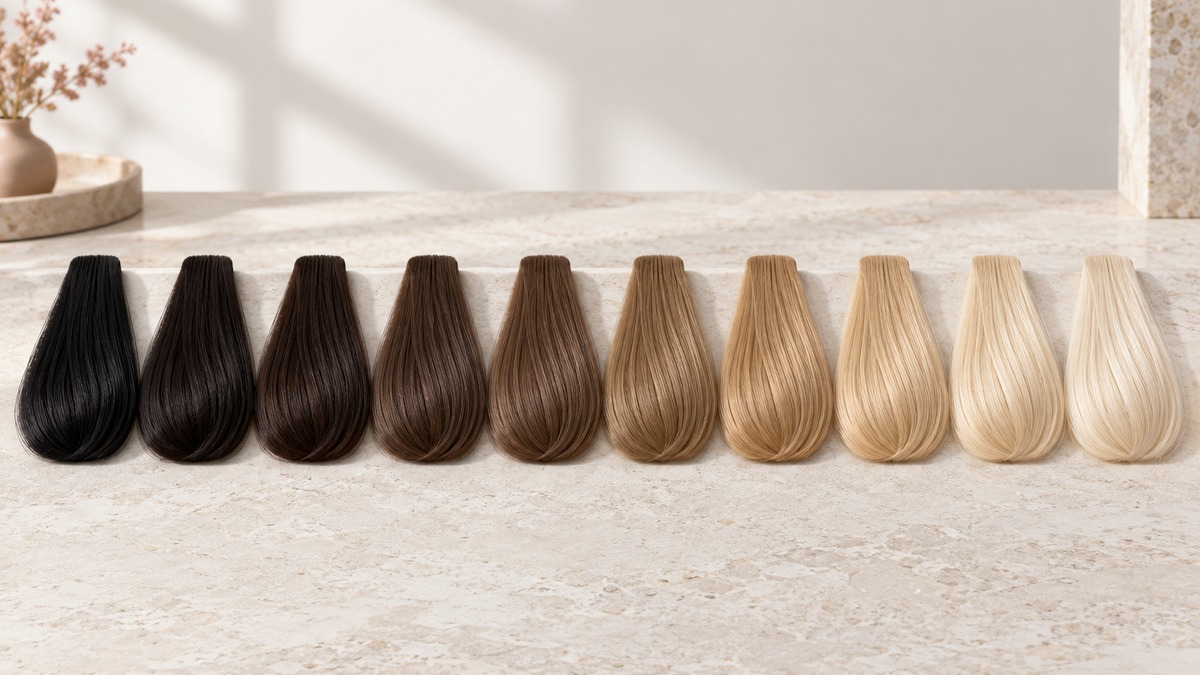
The hair color levels 1 to 10 chart is a shared starting language for salon conversations, but brands can label neighboring depths differently. In Wella Color Charm’s chart, level 5 is light brown and level 6 is dark blonde. Compare the actual swatch under consistent light instead of assuming that a descriptive name transfers perfectly between lines.
On a narrow screen, scroll sideways to compare every column.
| Level | Common name in this chart | Depth cue | Warmth seen when lifted to this level |
|---|---|---|---|
| 1 | Black | Deepest visible depth | Too dark for a useful visual background reading |
| 2 | Very dark brown | Brown may be visible in strong daylight | Deep red family |
| 3 | Dark brown | Clearly brown beside black | Red |
| 4 | Medium brown | Deeper everyday brunette | Red |
| 5 | Light brown | Light brunette | Red-orange |
| 6 | Dark blonde | Border between brown and blonde names | Orange |
| 7 | Medium blonde | Noticeably lighter blonde | Orange-yellow |
| 8 | Light blonde | Light yellow-gold depth | Yellow |
| 9 | Very light blonde | Pale blonde | Pale yellow |
| 10 | Lightest blonde | Palest depth in this chart | Very pale yellow |
The warmth column describes what a colorist may expose while lightening natural pigment toward a level. It is not a prediction of how every untreated head of hair looks, nor a promise that all hair lifts at the same speed. The sequence follows Wella’s professional lightening curve; individual product charts and color histories still matter. A level number alone cannot tell a colorist whether your ends contain artificial dye, how much lift is safe, or which finished tone you will like.
The Standard 1 to 10 Level Scale
Think of the numbers as depth, not as an attractiveness score or a complete shade name. Level 1 is the darkest point and level 10 the lightest in this common ten-level chart. A move from level 4 to level 7 means a noticeably lighter result; it does not mean that every hair can be taken there in one service. Numbering is most useful when you compare a current base, a desired destination, and the amount of change between them.
Levels 1 and 2: black to very dark brown. Level 1 reads black in most light. A level 2 may also look black indoors but reveal a brown edge in daylight. Instead of deciding from a dark phone photo, compare a natural root with a professional swatch in indirect daylight. If the lengths have been dyed black, record that separately from your natural root level: the two areas can behave differently during lightening.
Level 3: dark brown. This is where a brown impression becomes easier to see beside black. It can still appear nearly black in shade, especially in a compressed or filtered image. A reference showing only bright sun may overstate how much brunette detail you will see indoors. Ask for a second reference in ordinary light if the goal is a visibly brown result.
Level 4: medium brown. In this chart, level 4 is a familiar deep brunette. Warm, cool, and neutral versions can all occupy this depth. If you have level 4 permanent color on your lengths and want a level 9 blonde, the dark appearance is only part of the assessment; the artificial color history is just as important.
Level 5: light brown. Level 5 brown hair often shows more detail and reflection than level 4, yet it still reads brunette. This is a useful checkpoint if you want a softer brown rather than a blonde change. Under lightening, a red-orange background may appear at this stage. A desired cool level 5 finish therefore involves both reaching the right depth and planning the tone.
Level 6: dark blonde. This number sits near a naming boundary: some people would call the same visual depth light brown. The number and a real swatch are more useful than arguing over the word. Orange warmth can be prominent when hair is lifted to around this level. That warmth may be welcome in a copper or caramel direction, or it may need balancing for a cooler target.
Level 7: medium blonde. A level 7 hair color may be ash blonde, beige blonde, golden blonde, or coppery blonde. All have roughly similar lightness but different reflections. At this lift stage, an orange-yellow background can influence the finished shade. If your reference says “level 7 ash,” ask whether your starting hair can reach level 7 cleanly and how that tone will be maintained.
Level 8: light blonde. At this depth, exposed warmth is more yellow than orange on the professional lightening curve. The same level can support a soft gold or a cooler beige appearance. A pale-looking photo is not a dependable formula: exposure, toner, and the model’s starting hair may all differ from yours.
Level 9: very light blonde. The underlying yellow tends to be paler. This is the sort of depth needed for many light beige or cool blonde references. From a dark or previously colored base, reaching it may require a larger change than the shade name suggests. Ask a colorist to assess the lengths and a test strand before deciding on a schedule.
Level 10: lightest blonde. In this chart, level 10 is the palest depth; “platinum” usually adds an icy or neutral tonal intention, so level 10 and platinum are not exact synonyms. The exposed background is very pale yellow, not automatically silver or white. A toner can shift the reflection after sufficient lightening, but it does not erase the importance of the starting level or the hair’s condition.
To estimate your own level, look at dry natural roots in indirect daylight, away from colored lengths. Compare a few adjacent swatches rather than selecting a number from a single selfie. Indoor yellow light can make hair appear warmer; bright sun can make it appear lighter. If you have highlights, gray strands, or a shadow root, you may have more than one visible level. Tell the colorist which area you mean: roots, mids, or ends. A professional consultation can identify those zones more reliably than a chart on a phone screen.
The Secret Behind Lifting: Underlying Warm Pigments
Natural hair color comes from melanin. Two broad pigment types are eumelanin, associated with brown to black color, and pheomelanin, associated with yellow to reddish color; the amount and mix help produce the range of natural hair colors. MedlinePlus Genetics explains this biology. In salon language, “underlying pigment” is the warmth that becomes visible as a chemical lightening process reduces dark natural pigment. It is a practical color-planning concept, not a separate hidden stripe inside the hair.
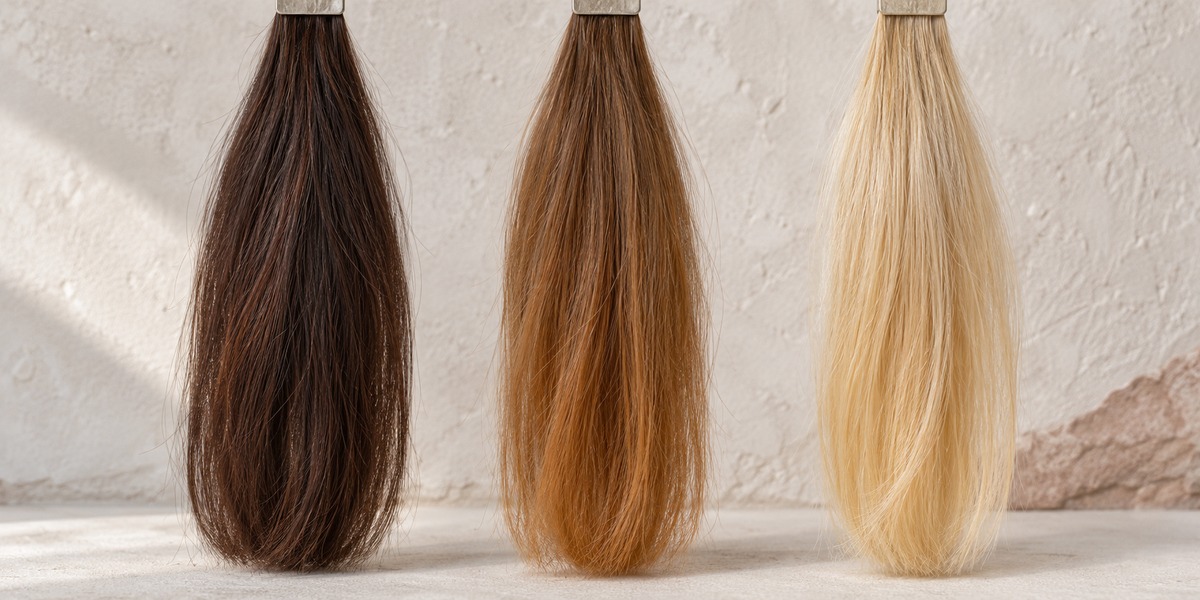
Why does dark hair sometimes look “rusty” partway through a blonde service? As the dark appearance is reduced, red and orange warmth may become easier to see before the hair reaches yellow. The colorist can use that information to decide whether to keep lightening, work with the warmth, or balance it at the appropriate depth. Applying an ash toner to hair that has stopped at a deeper orange level cannot make it the pale blonde in a level 9 reference. Wella’s lightening guide likewise separates lightening from the choice of complementary color at the reached level.
Scroll sideways to compare the warmth with its opposite color direction.
| Lifted level | Common exposed warmth | Opposite color direction if a cooler result is wanted |
|---|---|---|
| 2–4 | Deep red to red | Green direction |
| 5 | Red-orange | Blue-green direction |
| 6 | Orange | Blue direction |
| 7 | Orange-yellow | Blue-violet direction |
| 8 | Yellow | Violet direction |
| 9–10 | Pale to very pale yellow | Violet to light-violet direction |
This underlying pigment chart is a conversation aid, not a home mixing guide. Wella’s shade chart pairs exposed warmth with complementary color directions. A professional chooses a product and strength for the actual hair and desired finish. You may also decide to keep some warmth: a golden level 8 or copper level 6 needs a different goal from a cool ash shade. “Neutralize” is a choice about the target tone, not an automatic requirement of lifting.
Prior highlights, permanent dye, mineral buildup, and uneven starting levels can create different backgrounds across one head. That is why the root, middle, and ends may need different handling even when the desired photograph looks uniform. If the hair feels fragile or a history is uncertain, ask about a consultation and strand test before committing to an ambitious lift. The chart tells you what to discuss; it cannot assess the condition of your individual hair.
Level vs. Tone: The Essential Distinction
Level is lightness. Tone is the color reflection you see within that lightness. Compare level 7 ash blonde and level 7 golden blonde. Both are around medium-blonde depth, but the ash version has a cooler visual cast and the gold version a warmer one. They may frame your face differently even though neither is “higher” or “lower” on the level scale. Wella’s numbering guide explicitly separates the depth number from the tone code.
The distinction prevents two common requests from being mixed up. “I want less orange” asks for a change in tone; “I want a lighter blonde” asks for a change in level. A toner or gloss may adjust the first when the hair is already light enough, but it cannot take a level 6 background to level 9. Conversely, lightening to level 9 does not by itself make the result ash or beige. The finished color depends on both the reached depth and the tonal choice.
Look at references with those two questions in mind. First, is the root, middle, or end as light as you want? Second, does the reflection lean gold, copper, beige, ash, or another direction? A cool filter can make hair look less warm without changing its actual depth. Bring more than one unfiltered image and point to the exact part you want the colorist to match. If you are comparing shade directions more broadly, the hair color analysis guide offers a framework for depth, contrast, and maintenance.
The Golden Rule: Color Does Not Lift Color
“Color does not lift color” is useful shorthand for a specific planning mistake: putting a lighter ordinary hair-color shade over previously dyed dark lengths will not reliably turn those lengths into the light level pictured on the box. A level 9 dye number describes its intended shade, not a promise that it can remove existing level 4 artificial pigment. The natural roots and dyed mids or ends may respond differently, producing an uneven result if treated as one uniform base.
The phrase is a salon rule of thumb rather than an absolute chemistry law for every product. Some professional lighteners are formulated for color-treated hair; L’Oréal Professionnel’s Blond Studio lightener, for example, explicitly lists natural or colored hair. The distinction is the service and product chosen to remove or reduce pigment, followed when appropriate by a separate tonal step. It is not a reason to try a stronger developer or repeat box dye at home.
Imagine natural level 4 roots with level 4 permanent dye through the lengths and a level 9 blonde reference. The colorist needs to identify the natural base, the added dye, any older bands or highlights, and the condition of the ends. A single lighter dye application cannot be assumed to take all those zones to level 9. The plan may involve controlled lightening, testing, several appointments, or a different target that preserves the hair’s condition. The exact route cannot be inferred from the reference photo alone.
Before the consultation, write down every relevant color service you remember: salon permanent color, box dye, gloss, henna, highlights, and lightening. Photograph your roots and ends in daylight. Ask: What is my natural root level? What level are the colored lengths? What level is realistic for this visit? What warmth will show on the way, and how will we handle it? Those questions turn a vague blonde request into a useful salon discussion.
Frequently Asked Questions
Is level 5 brown hair or blonde hair?
In the ten-level chart used here, level 5 is light brown and level 6 is dark blonde. Brand naming can differ, especially near that boundary. Compare the swatch, not just the label. If you are asking for a level 5 result, also specify whether you want the brown to read cool, neutral, or warm.
What does “lift two levels” mean?
It means aiming for a depth roughly two steps lighter on the level scale, such as moving natural level 5 hair toward level 7. It does not specify the final tone, the product, or whether the change is appropriate for previously colored hair. Ask which zone is being lifted and what warm background is expected at the target.
Is level 10 the same as platinum blonde?
Not exactly. Level 10 describes a very light depth in this chart; platinum describes a typically cool or neutral-looking tone at a very light depth. Hair lifted to level 10 may still show very pale yellow before toning. The reference photo and professional swatch should establish the finish you mean.
Can toner take orange hair to pale blonde?
Toner can shift or balance a reflection on hair that has reached a suitable depth. It does not make an orange level 6 base into a pale level 9 or 10 base. Discuss whether more lightening is feasible before selecting a toner for a very pale target.
How can I find my natural level if my hair is dyed?
Compare an area of uncolored root growth in indirect daylight with several neighboring swatches. Do not use the dyed lengths as a measure of your natural base. If the roots are too short, or gray and highlights make the comparison confusing, ask a colorist to identify the different zones at a consultation.
Use the chart to name your starting depth, target depth, and preferred tone. Then take those notes and clear daylight references to a colorist who can assess your color history and hair condition. If you are exploring broader shade directions, the hair color quiz can organize those observations into three shade directions to discuss at your consultation.