Hair Gloss vs Toner: Service Names, Formulas, and Goals

Gloss and toner describe overlapping services, not two universally separate chemical categories. Ask what exact formula will be used and whether your goal is shine, a subtle color refresh, or correction of an unwanted reflection. A clear gloss and a tinted toner do not do the same job.
Compare the service goal before the label
The names can overlap even within one brand. Redken describes Shades EQ Hair Gloss as a toner. That is a useful reason to ask about the product and desired result instead of treating “gloss” and “toner” as mutually exclusive formulas. A salon may use either word for a service that changes the way a shade reflects light.
Name the change you want to see: more shine, a subtle refresh of an existing color, or a shift away from an unwanted warm or cool reflection. Redken describes hair gloss as a way to add shine and refresh color, but the word alone does not tell you whether your appointment uses a clear or tinted formula. Bring a daylight reference and say which part of it matters to you.
Check a concrete formula and its limits
For one concrete example, Wella calls SHINEFINITY a demi-permanent color glaze and specifies zero lift. “Demi-permanent” describes this product category; it does not turn every service called a glaze or gloss into the same chemistry. Wella’s claim belongs to SHINEFINITY, not to every clear gloss, tinted gloss, or toner on a salon menu.
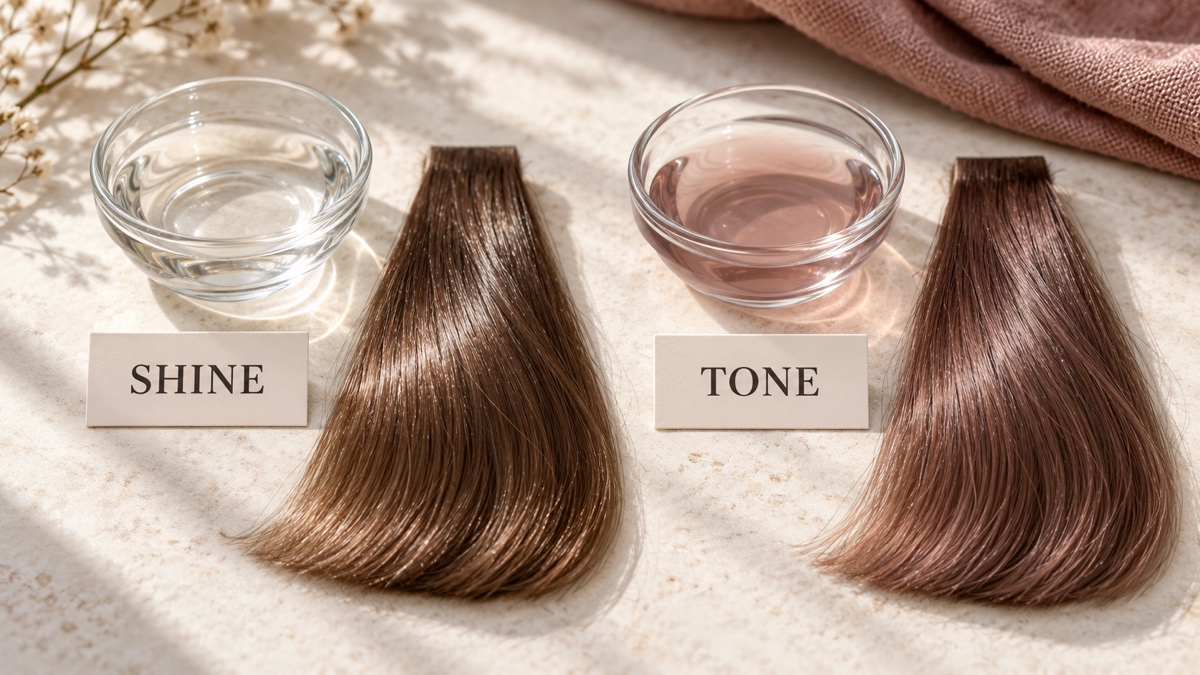
A clear option may suit a shine goal; a tinted option is the one to discuss when you want to change reflection. Check the selected brand’s instructions and shade options before assuming either will correct yellow tones. The dishes above separate two goals visually; they do not identify a formula or predict a result on your hair. Ask your colorist what the chosen product can do on your current base and previously colored areas.
| Your goal | Check the formula for | Ask your colorist |
|---|---|---|
| Add shine | Clear or tinted use and the stated result | Would a clear option meet my goal without changing the shade? |
| Refresh color | Available tint and intended use on existing color | How might this affect my roots, highlights, and ends differently? |
| Neutralize a reflection | Shade direction and suitable starting base | Which reflection can this formula adjust on my hair? |
| Change depth | Whether the product has any stated lift | Would this goal need a separate lightening service? |
Separate tone correction from changing depth
Depth is how light or dark hair appears; reflection is the warmth or coolness visible at that depth. Correcting a reflection is a different goal from making a dark base noticeably lighter. SHINEFINITY’s stated zero lift means that product is not the step that lightens a dark base. A colorist can assess whether your reference calls for a separate lightening process before a tonal adjustment.
Use hair color levels to describe a change in depth, then use the hair color wheel to explain the reflection you want to soften or keep. Those are ways to describe the goal, not instructions to mix or apply color yourself. For example, “keep this depth but soften the yellow reflection” is a different request from “make my dark brown hair several levels lighter.” The formula detail and salon question in the table help keep those decisions separate.
Discuss appointment timing and maintenance
Notice what changes between appointments. Is it the shine, the warm or cool reflection, or a line of new growth at your natural roots? Those observations give your colorist more useful information than a service name. A universal refresh interval would ignore your starting shade, color history, and chosen product. The hair color maintenance guide can help you plan follow-up care. Before your visit, note:
- Your natural root color and any previous lightening or color through the lengths.
- Whether shine, unwanted reflection, or visible regrowth bothers you first.
- How often you are comfortable returning for a refresh.
Ask whether the selected formula uses a developer, how its visible effect may change with washing, and whether it will affect existing highlights and ends differently from your roots. Ask what care the manufacturer recommends afterward. Follow the directions and warnings for the exact product used: the FDA’s hair-dye safety guidance advises following package precautions, and the American Academy of Dermatology notes that lightening choices matter for hair condition. Neither source makes a blanket promise about damage or a fixed duration for every gloss or toner.
FAQ: choosing a gloss or toner
Is every gloss developer-free?
No. “Gloss” alone does not specify whether a developer is used. Since Redken uses both gloss and toner language for Shades EQ, ask for the exact product and read its directions with your colorist instead of inferring the process from the menu name.
Can a gloss lighten my hair?
Not every gloss can. Wella specifies zero lift for SHINEFINITY, so that particular glaze is not intended to lighten your base. Other products need their own instructions checked; your colorist can explain whether your desired depth requires a separate service.
Compare your preferences with the hair color quiz, then take your references and color history to your colorist.
Continue exploring
- Color-Safe Shampoo: Cleansing, Pigments, and Product Claims
- Permanent Hair Color: Lift, Regrowth, Gray Coverage, and Limits
Browse all dye types guides.