Color-Safe Shampoo: Cleansing, Pigments, and Product Claims
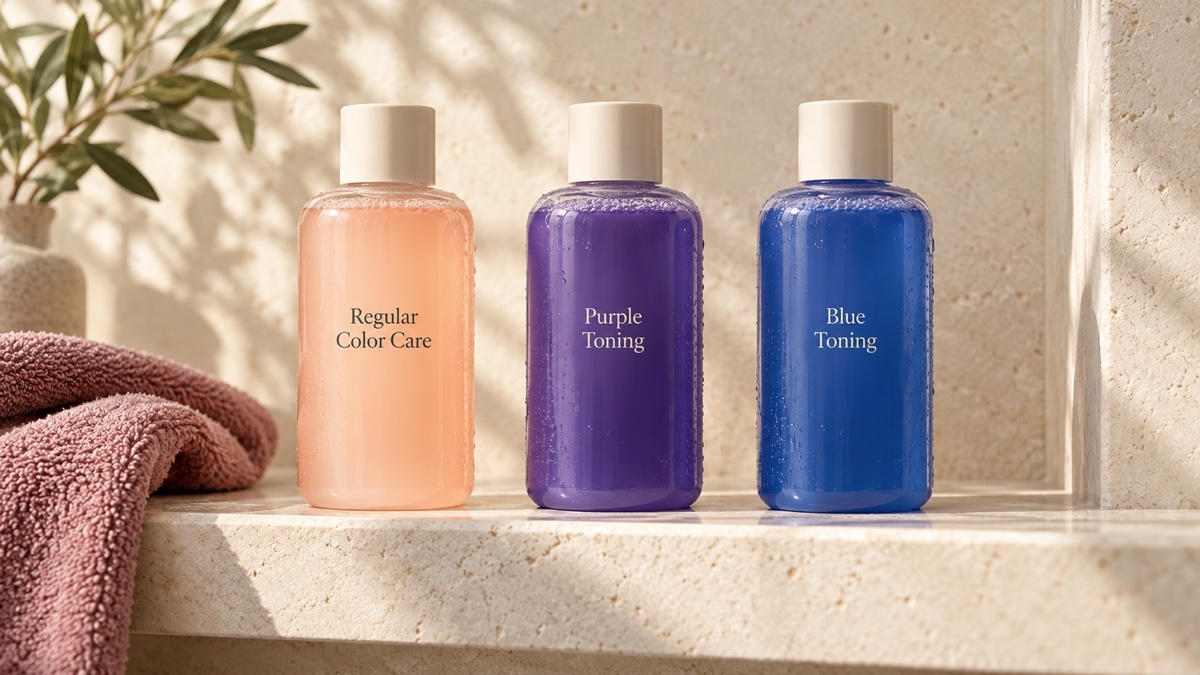
Choose a color-safe shampoo for gentle cleansing that fits your scalp, hair, and color service. Sulfate-free is one formulation choice, not proof that a product is better for every head of hair. Purple and blue products address reflection and do not replace every regular wash.
Start with cleansing needs rather than one banned ingredient
Shampoo cleans because surfactants help lift dirt and impurities so they can be rinsed away. The word sulfate-free tells you something about an ingredient category, but not how the entire formula will feel on your scalp or colored lengths. Compare the cleanser’s intended use and directions with your own hair and scalp needs. Wella’s professional color-care guide describes mild surfactants as one part of a color-care formula.
A color-safe shampoo does not have to be sulfate-free. Wella explicitly makes that distinction, even though it sells a sulfate-free option. If a label emphasizes what it leaves out, also read what the complete product is meant to do: cleanse, support moisture, or address another concern. A single exclusion does not settle whether it suits you.
Compare color-safe, purple, and blue products
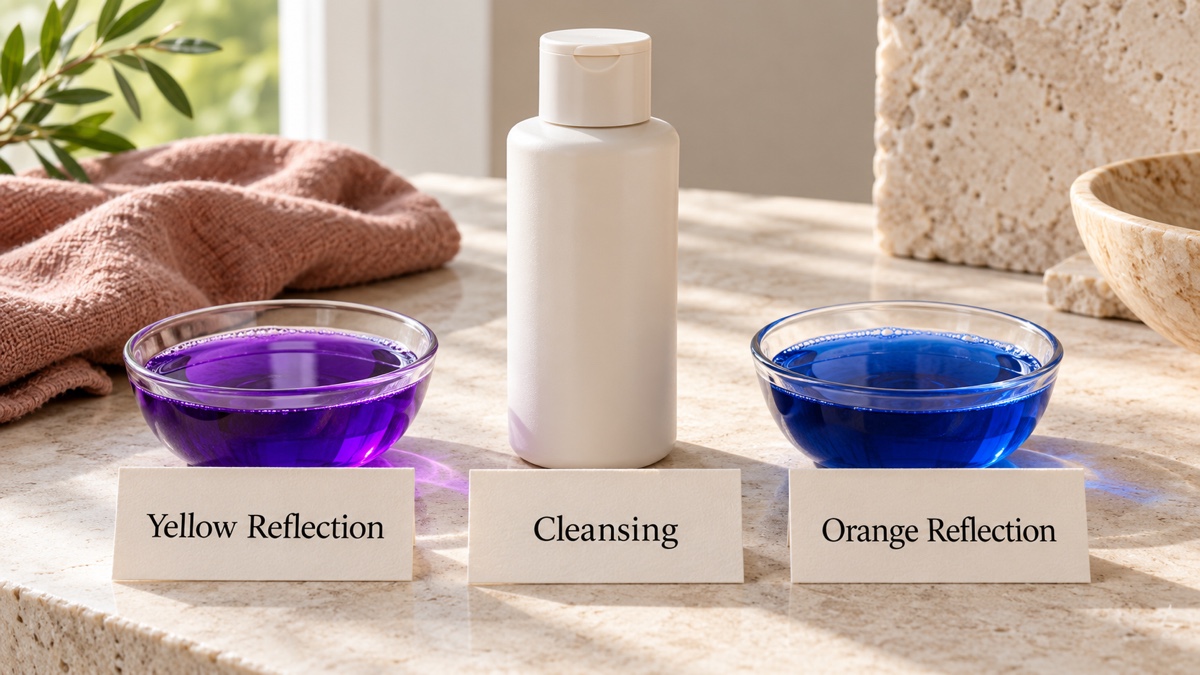
Start with the job you need done. A regular color-care shampoo is for cleansing colored hair; purple and blue shampoos add pigments intended to address specific unwanted reflections. They do not lighten hair or replace a color correction at the salon. Wella’s comparison of the three categories links purple products with yellow-looking warmth in lighter hair and blue products with orange-looking warmth in brunette hair. Your starting color and the product directions still matter.
On a narrow screen, scroll sideways to compare every column.
| Product role | What to notice | Question to ask |
|---|---|---|
| Regular color care | How it cleanses and how your scalp and colored lengths feel afterward. | “Does this cleanser fit my color service and usual wash routine?” |
| Purple toning | Yellow-looking reflection in blonde, highlighted, gray, or silver hair. | “Is the warmth I see actually yellow, and what do these product directions say?” |
| Blue toning | Orange-looking reflection in brunette or darker colored hair. | “Is the warmth I see orange, or does the color need a different adjustment?” |
For a simple example, if you chose a warm copper finish, you may want its warmth. A purple shampoo is not automatically part of that plan. Compare the hair you have with the finish you want in neutral light, then check the directions for any pigmented product before using it. First compare depth: are your natural roots and colored lengths close in lightness, or far apart? The hair color levels guide explains that scale. Then compare reflection: does the color look yellow, orange, or like the warmth you chose? The hair color wheel helps separate a tone adjustment from a change in lightness.
Read product claims in their exact context
When a package claims long-lasting vibrancy, identify the product and the conditions behind the claim. Wella describes its specific ULTIMATE COLOR line and an “up to 10 weeks” result under its stated test conditions. That statement does not establish a ten-week result for every shampoo, every color service, or every person. The same guide lists moisturizing ingredients and an anti-metal technology as features of its own selection and products; neither is a universal requirement for every reader.
Use a short comparison list in place of a supposed “best product” ranking: How does the cleanser feel on your scalp? Do your colored lengths need additional moisture care? Is the product intended for your service? What do its directions actually say? If you notice an uncomfortable scalp reaction or an unexpected color shift, stop guessing from the label and discuss the product with your colorist or a qualified clinician as appropriate.
Build a routine that fits your hair and scalp
There is no one wash frequency that fits every scalp, texture, color service, and lifestyle. For a broader follow-up plan, see hair color maintenance. Before your consultation, make a short record:
- How often you currently wash and how your scalp feels between washes.
- Which sections are colored, and whether the roots and lengths need different care.
- Whether the color’s depth or reflection has changed from the finish you wanted.
Bring that record to your colorist. It gives them something specific to work with when discussing cleansing, care for the lengths, and any next color step.
Keep regular cleansing separate from tone correction. If your color still looks like the finish you wanted, you may only need a cleanser that fits your routine. If unwanted yellow or orange reflection appears, compare it in consistent daylight and ask whether a pigmented product fits the actual color and its directions. If the issue is depth or uneven old color, a toning shampoo cannot do the colorist’s work. Ask what should be handled at your next appointment.
FAQ: choosing a shampoo label
Must color-safe mean sulfate-free?
No. Sulfate-free is one formulation choice, not the definition of color-safe. Wella notes that a color-care cleanser does not have to carry that label. Compare the whole formula’s purpose, its directions, and how it suits your scalp and hair.
Is purple shampoo my everyday color-safe shampoo?
Not automatically. Purple shampoo is a pigmented product aimed at yellow-looking reflection; a regular color-care cleanser serves the broader cleansing role. Read the particular product’s directions and ask your colorist when tone adjustment is useful for your shade. A brand’s suggested frequency for its own product is not a schedule for every reader.
Compare your preferences with the hair color quiz, then take your references and color history to your colorist.