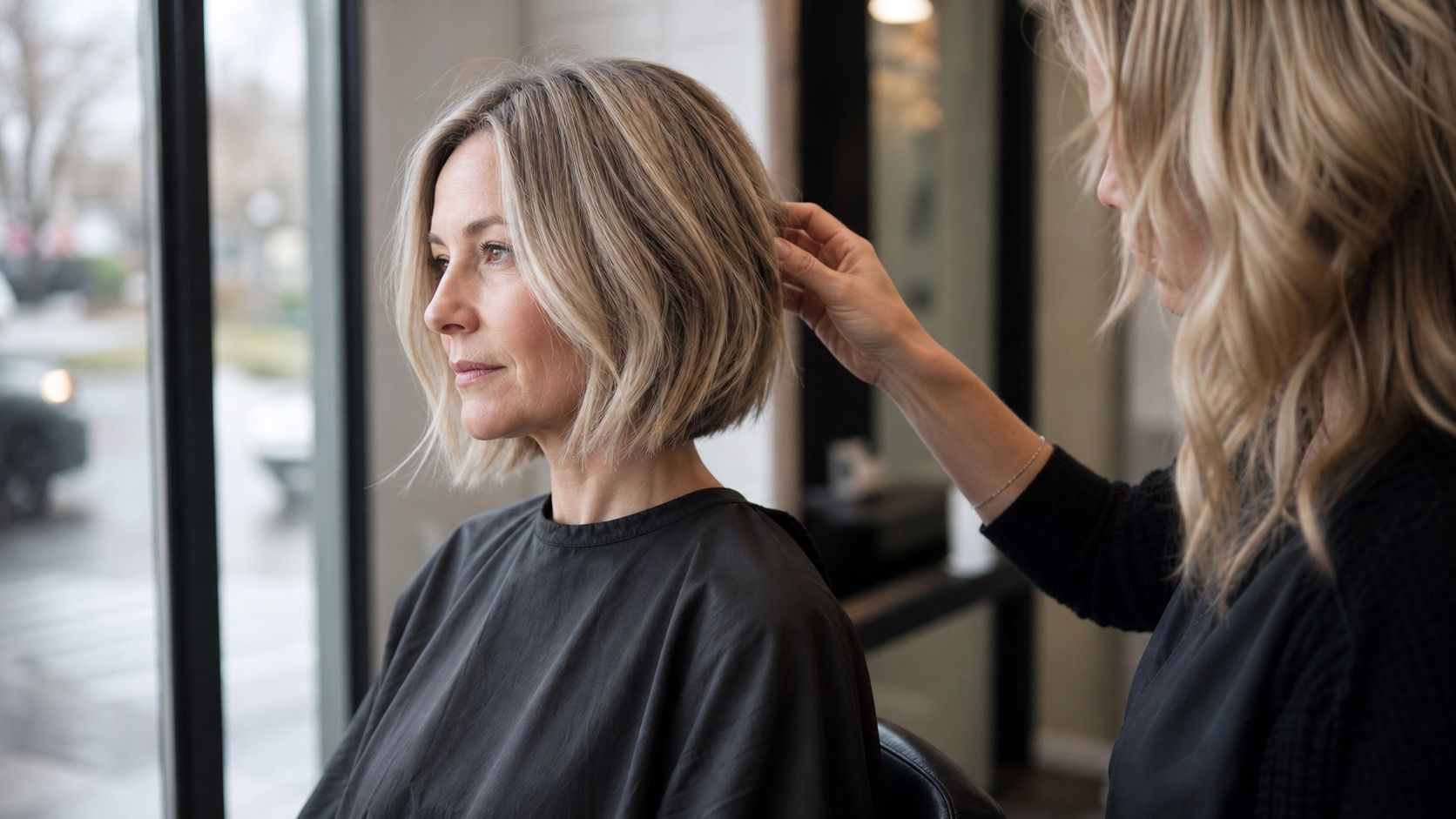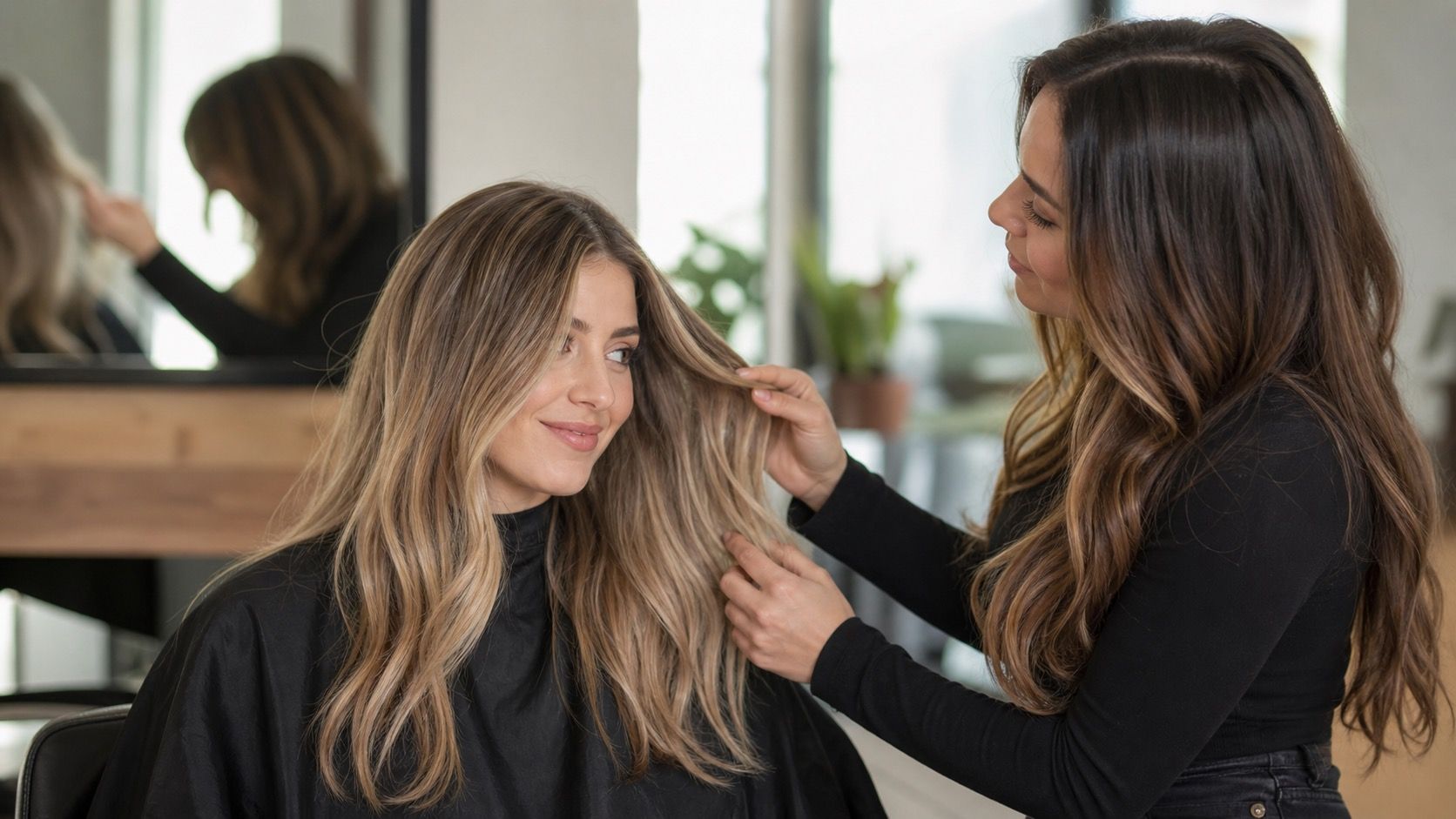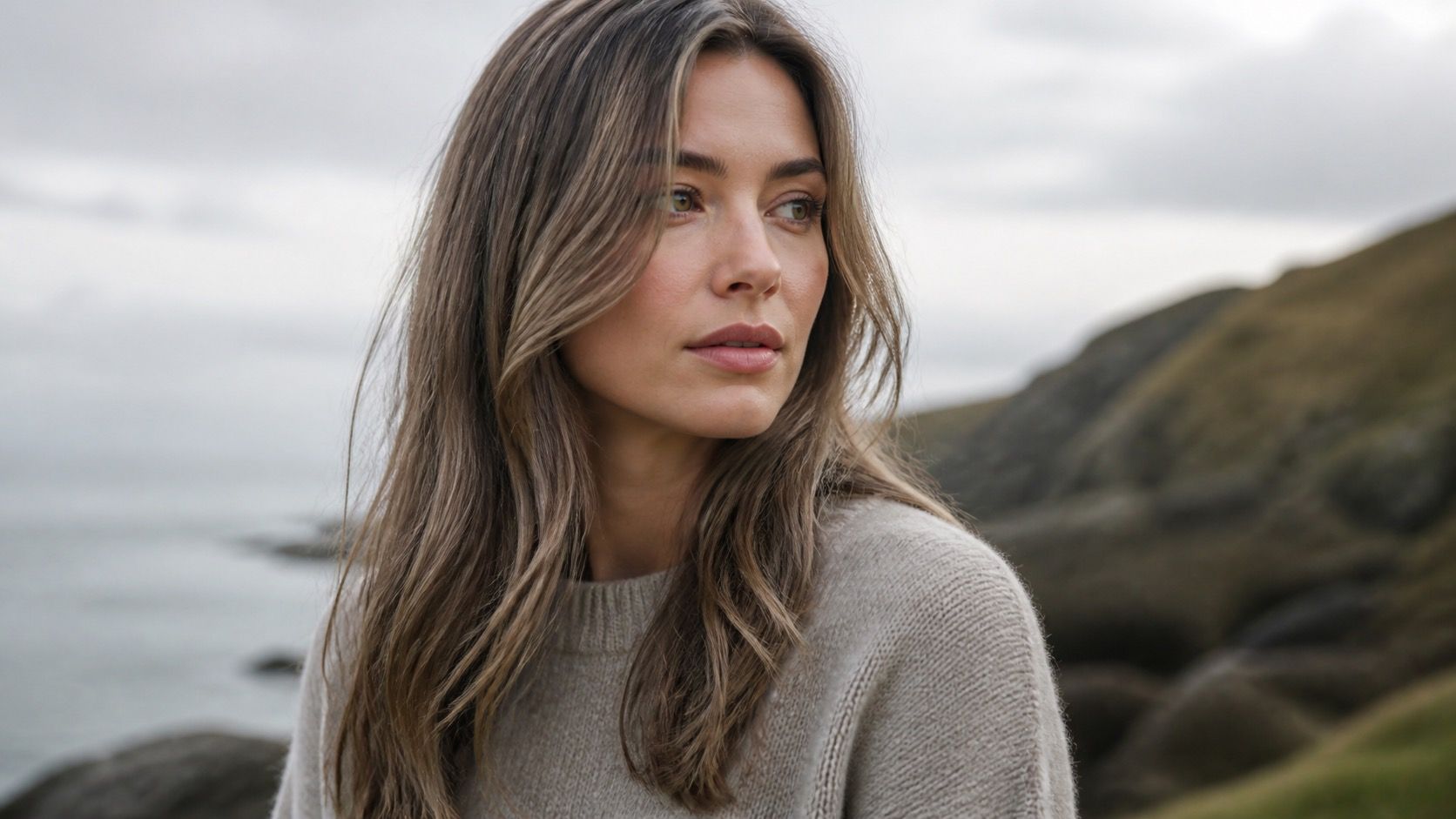
Soft Summer hair color works best when it looks quietly intentional rather than newly painted on: cool-neutral, softly blended and a little smoky. The useful question is not which shade has the prettiest name, but whether its depth and brightness leave your skin looking rested in ordinary daylight.
Find the balance before choosing a shade name
Soft Summer sits between coolness and softness. A blue-based undertone usually helps, but a hard silver-grey finish can be too severe; at the same time, bright gold and orange warmth tend to pull attention away from the face. The sweet spot is a colour with a blurred edge: taupe, mushroom, ash beige, muted cocoa or a restrained rose-brown.
Choose brunette shades with a cool, misted finish
Ash brown is often the easiest place to start, especially when natural roots already sit between dark blonde and medium brown. Think of brown with a grey-beige veil rather than a flat charcoal cast. Medium ash brown, mushroom brown, cool cocoa and soft taupe brunette keep dimension without the reddish flare that can appear in chestnut or caramel formulas.
Depth matters as much as tone. A very dark espresso can look elegant in a salon mirror but become heavy outdoors, especially if brows and eyes are not equally deep. If you want a brunette result, ask for lowlights or a root melt close to the natural base, with a gloss that cools unwanted orange rather than turning every strand slate grey.
For grey coverage, a colourist may need some natural pigment in the formula so the result lasts. That does not require a warm-looking finish. The useful conversation is about a neutral base with controlled ash, followed by a sheer gloss. It is more forgiving as the colour fades than trying to maintain a dense, opaque cool brown from the first appointment.
Make blonde look soft rather than sugary
Mushroom blonde, dark ash blonde and soft beige blonde are often better Soft Summer choices than bright platinum or honey blonde. They have lightness, but not the high-shine yellow effect that can make the face look washed out. The most believable version usually keeps some depth at the root and places lighter pieces around the face with space between them.
Ask to see the shade in daylight before committing. Salon lighting can make a beige toner appear cooler than it will look at home. If your current base is medium brown, a first session that aims for a smoky blonde blend is usually kinder to both hair condition and the final colour than an aggressive lift toward pale blonde.
| Direction | Why it can suit Soft Summer | Watch for |
|---|---|---|
| Mushroom blonde | Muted beige and ash keep the effect low contrast | Too much grey can look dull on very fair skin |
| Dark ash blonde | Feels natural when the root is already dark blonde | Yellow fade at the front hairline |
| Soft beige balayage | Adds light without a hard stripe pattern | Bright creamy ends that disconnect from the root |
| Cool cocoa brown | Gives depth while keeping red tones quiet | Overly dark, solid colour through the lengths |
Words like beige and ash are only starting points, not guarantees. A beige formula can be warm and an ash formula can be too blue. Bring photos that show the level of contrast you want, then discuss what your existing colour history can realistically lift to in one visit.
Handle red and copper with more restraint
Soft Summer does not automatically rule out red, but saturated copper and vivid auburn usually compete with the palette. They bring a yellow-orange brightness that can make cool-neutral skin look pinker or more uneven. The safer direction is a muted rose-brown, cool berry brown or a soft strawberry-beige that reads as a reflection rather than a statement colour.
Start with a gloss or a few low-commitment tonal pieces if you are curious. Red pigment can cling to porous ends and make a later move back to ash brown more complicated. A strand test is worth more than a perfect inspiration photo because it shows how the formula reacts with your actual base, old highlights and mineral buildup.
If the result looks attractive but suddenly makes your usual navy, soft rose or pewter clothing feel wrong, the hair may be carrying too much warmth. That is a practical clue, not a failure. A cooler neutralising gloss can often bring the shade back into balance without a full recolour.
Keep a muted result from turning brassy or flat
Soft colours need maintenance because fading exposes whatever warmth sits underneath. Brassiness often shows first around the face and on previously lightened ends, where water, heat tools and sun create uneven porosity. A purple or blue-toned shampoo can help, but using it every wash may leave pale pieces looking dusty. Alternate it with a gentle colour-safe cleanser and watch the tone in daylight.
A salon gloss every six to ten weeks is a practical way to refresh muted shine without repeatedly lifting the hair. It can soften yellow blonde, calm orange brown and improve the way separate highlights blend together. Tell the colourist if you prefer hair that looks natural on a cloudy day; that description is more precise than simply asking for ash.
At home, protect the lengths before heat styling and do not chase every trace of warmth with a darker box dye. Soft Summer hair is allowed to have movement. The goal is a cooled, diffused finish with a root-to-end story that still looks like it belongs to you.
Use the first weeks to fine-tune the softness
A Soft Summer result should be assessed after normal washing and ordinary daylight, not only in the polished moment at the end of a salon appointment. Fresh toner can make beige blonde look cooler and darker than it will be after two shampoos. Take a photograph near a window on the first day, then another a week later with the same top and similar light. The comparison helps separate a real colour problem from the simple settling that happens after a gloss.
Pay attention to where warmth returns. On highlighted hair it often appears at the front hairline, on old porous ends and beneath the crown where previous colour was uneven. This pattern tells a colourist more than the general comment that the hair has gone brassy. A light blue-violet gloss on the exposed pieces may be enough; covering all of the hair with a darker ash brown can remove the softness you originally liked.
Root growth is another useful test. A gentle Soft Summer blend should still look connected when the natural root is visible. If the transition suddenly looks striped, the lightest pieces may have been too pale or too wide. Next time, ask for finer sections, a softer root shadow or more lowlights through the middle rather than abandoning blonde completely. Hair that grows out gracefully is usually easier to keep cool-neutral without constant appointments.
Water and product buildup can distort a muted finish. Hard water sometimes leaves pale hair looking yellowed even when the toner is intact, while heavy oils can make ash brown appear dull. Use a clarifying wash only when needed, follow with moisture, and avoid treating every faded reflection as damage that requires permanent dye. A gloss is a reversible adjustment; a dark all-over correction can be much harder to lift back out.
Finally, consider the haircut and how you normally wear it. A soft beige highlight that disappears in a low bun may be ideal if you prefer subtlety, whereas someone who wears a centre part and loose waves may need a little more brightness near the temples. The successful version is not an exact swatch. It is a restrained colour story that remains calm beside your skin, your roots and the clothes you reach for every week.