Soft Summer hair colour tends to look best when it feels softened rather than made more dramatic: think cool brown, mushroom beige, muted ash and a gentle veil of dimension. The useful question is not whether you should be blonde or brunette, but how much contrast your cut, natural root and daily styling can carry without making your face look quieter than the hair.
What makes a Soft Summer shade feel wearable
Soft Summer hair colors usually sit between obviously warm gold and hard blue-black. A cool medium brown, taupe brunette or beige blonde can look understated in the salon mirror, then noticeably more polished outdoors because it does not compete with grey-blue, hazel or softly muted eyes. The finish matters as much as the formula. A slightly translucent gloss often keeps a brown from reading flat, while a muted toner can take the sharp yellow edge off lightened pieces.
Short cuts: keep the colour refined
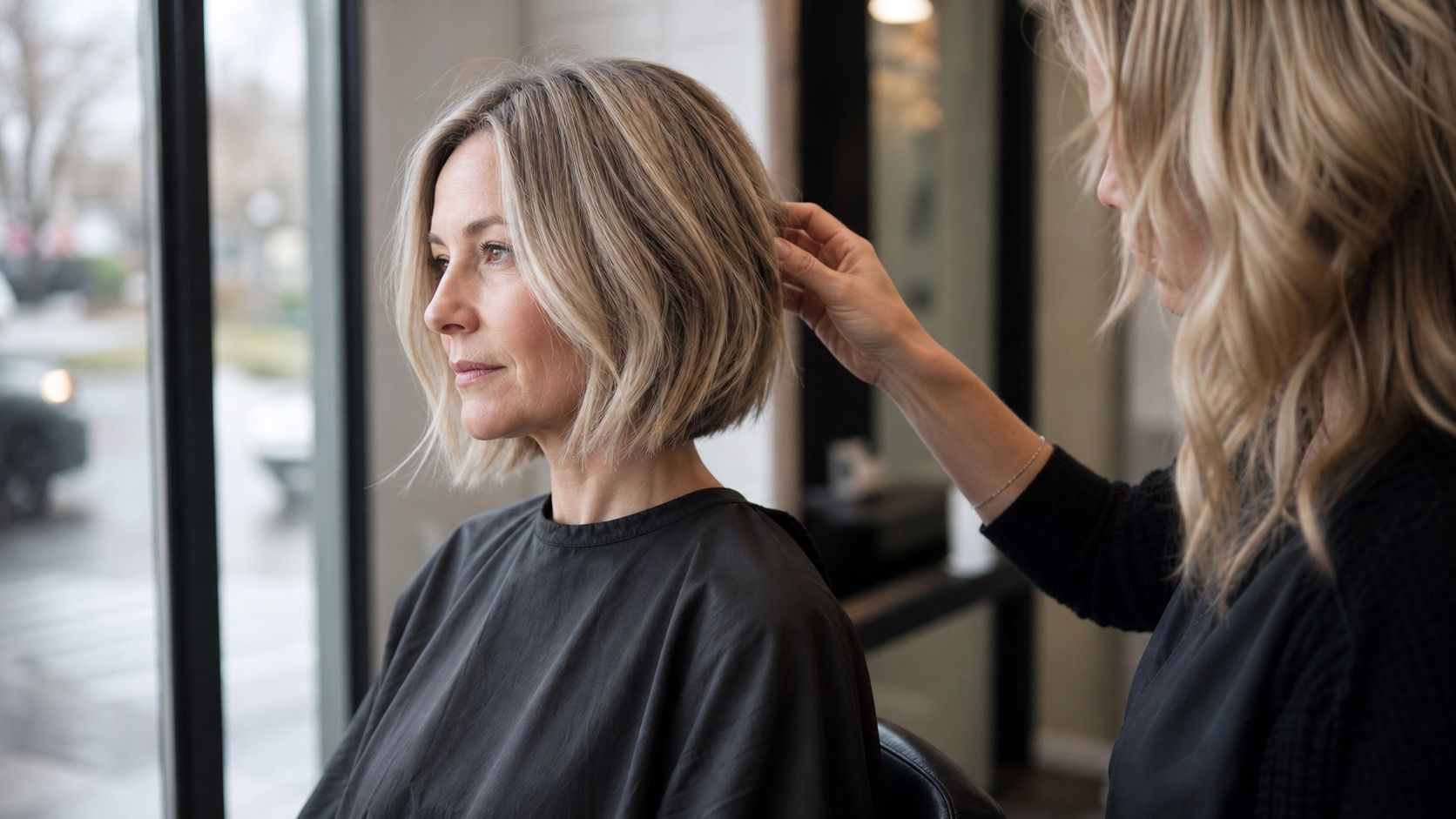
On a pixie, bob or cropped shag, every colour placement is visible. A dramatic balayage that might disappear into long waves becomes a stripe near the parting on a short cut. Soft brown with a small amount of cool beige around the front is often enough. The lighter pieces should be narrow and irregular, especially near a fringe, because a solid bright band can make the haircut look disconnected from the rest of the head.
Short hair also exposes the grow-out line quickly. A root that stays close to your natural level is usually easier to live with than a pale all-over blonde that needs a strict schedule. If your natural hair is medium ash brown, a demi-permanent gloss plus a few fine lived-in highlights gives movement without asking the cut to do all the work. A textured crop can carry slightly more contrast than a blunt bob, but it still benefits from a soft toner after lightening.
Medium lengths: blend dimension softly
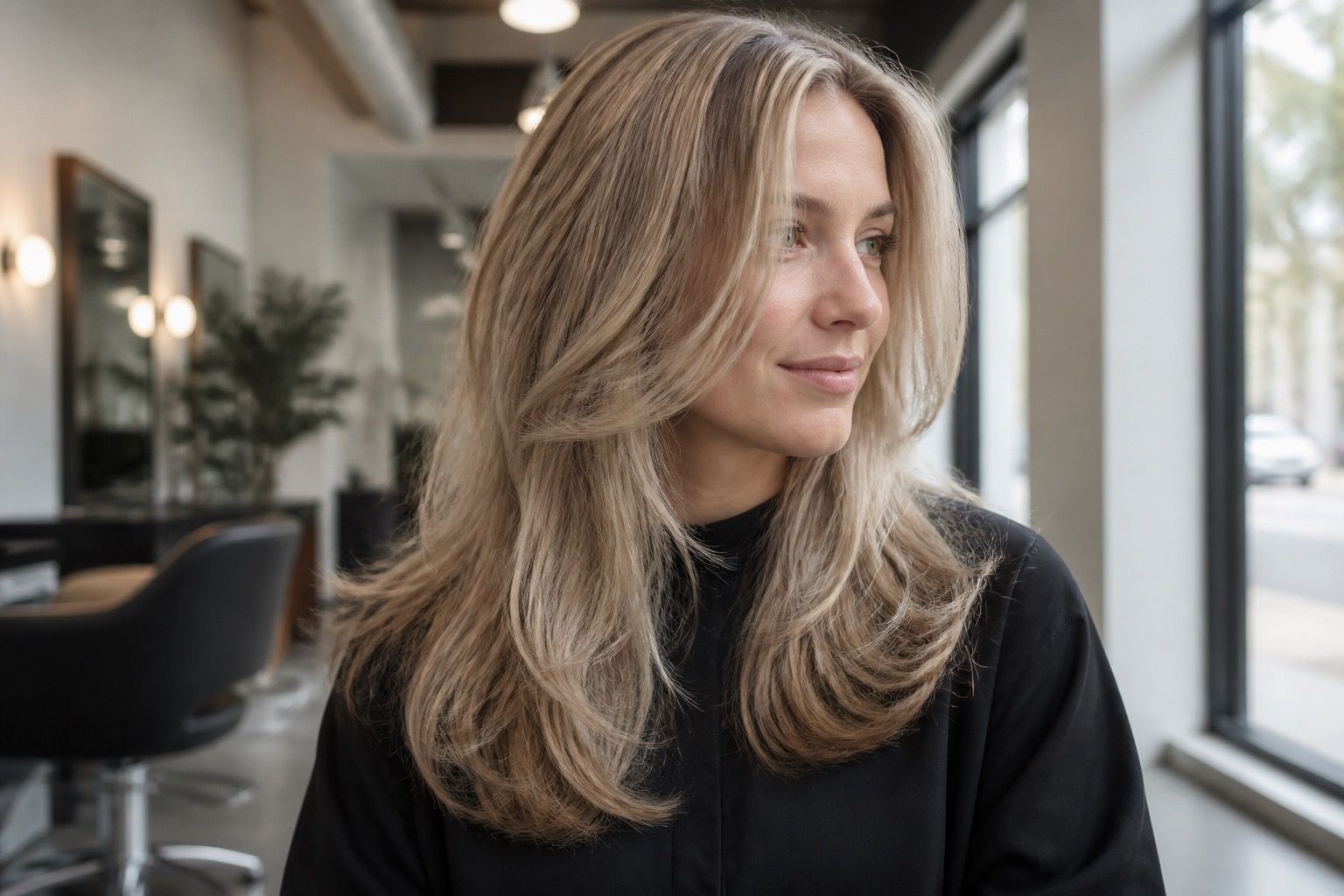
Shoulder-length hair is where Soft Summer hair color ideas become especially flexible. There is enough length for a diffused blend, but not so much that the ends become a separate colour story. A cool brown base with low-contrast ribbons of mushroom, sand and smoky beige can create dimension when the hair moves. The important detail is the transition: lightness should begin in scattered places through the mid-lengths, not as one clean horizontal line.
A collarbone lob often looks best with colour that follows the haircut. Face-framing pieces can be one or two levels lighter than the base, while the underlayers stay deeper so the overall silhouette has depth. If you wear your hair straight most days, request finer placement than you would for loose waves; straight hair reveals every change in tone. If you air-dry with a bend or wave, a slightly broader painted piece can look natural because the texture breaks it up.
| Hair length | A useful Soft Summer direction | Watch for |
|---|---|---|
| Short | Cool brown gloss with fine beige around the face | Chunky contrast at the parting |
| Medium | Mushroom brunette with blended lived-in highlights | A visible lightening line through the back |
| Long | Soft brunette or beige blonde with depth at the root | Ends becoming much lighter or warmer than the crown |
Long hair: avoid one solid heavy block
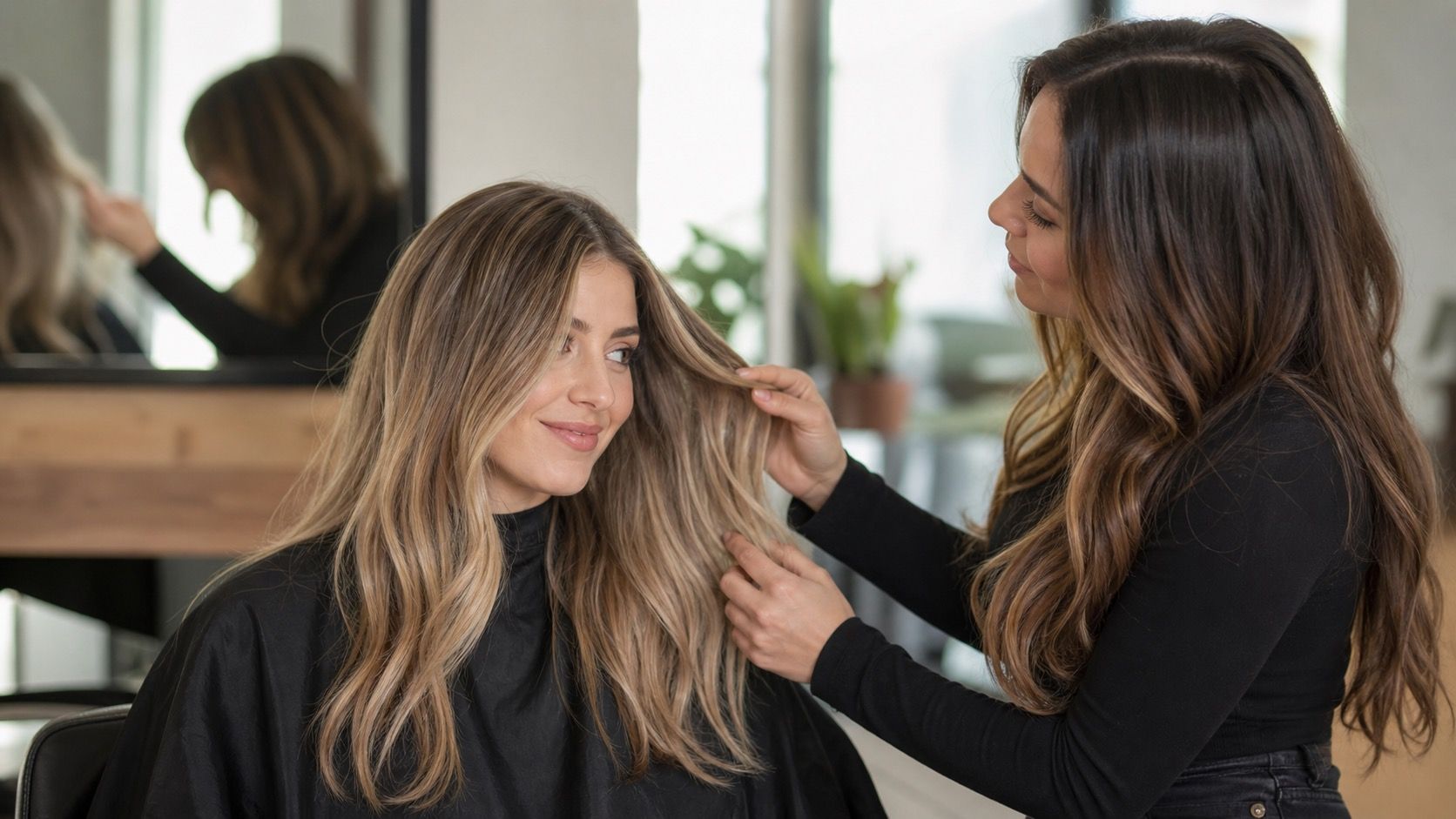
Long hair can make even a flattering soft brown look dense if the colour is applied as one opaque block from root to ends. Natural light catches the top and leaves the lengths darker, so a little internal variation usually looks more believable than a single permanent shade. Fine lowlights can restore depth after too much highlighting, and a low-contrast root shadow can make pale lengths feel connected again without turning the hair dark.
Beige blonde is possible for Soft Summer, but it is rarely the same as a bright buttery blonde. A cooler beige, pearl-taupe or smoky wheat tone leaves more room for your natural colouring. The ends need attention here: porous old lengths grab warmth quickly, even when the fresh toner looks perfect. A colourist may suggest treating the ends separately or using a clear gloss between toner appointments. That is practical maintenance, not a sign that the original result was wrong.
Choose dimension by your natural contrast, not a label alone
Two people can both identify with Soft Summer and need different hair. Someone with pale brows, light eyes and naturally medium brown hair may look best with a gentle shift of one level and barely visible highlights. Someone with deeper ash brown hair and clearer brows can hold more brunette depth, provided the tone stays softened. The seasonal label is a useful starting point, not a paint-by-number instruction.
Look at the whole frame: brows, eye depth, favourite neutral clothes and the amount of makeup you normally wear. If you mostly wear faded navy, soft charcoal, denim and dusty rose, a muted colour tends to make those clothes look intentional. If your wardrobe is high-contrast black and white, you may prefer a little more definition near the root, but a blue-black dye is not the only answer. A root shadow and cool brunette panels can give structure without overwhelming the face.
Bring photos and language a colourist can use
Bring reference photos in daylight, not only salon photographs with ring lights. Choose one image for the overall depth, one for the placement and one for the finish. Saying that you want a “soft summer hair color” may be helpful context, but a colourist can act more precisely on phrases such as “cool medium brown, no obvious red,” “beige rather than yellow blonde,” or “dimension that still looks natural when I wear it straight.” Mention whether you want to see a strong change or simply want your natural hair to look less dull.
Be honest about boxed colour, dark permanent dye, old highlights and how often you are willing to return. A good plan may begin with a gloss and a restrained set of highlights, then add brightness after the hair has shown how it lifts. That approach can feel less exciting than requesting a complete transformation, yet it gives Soft Summer colouring the soft edges and believable depth that make the result easy to wear beyond the first week.