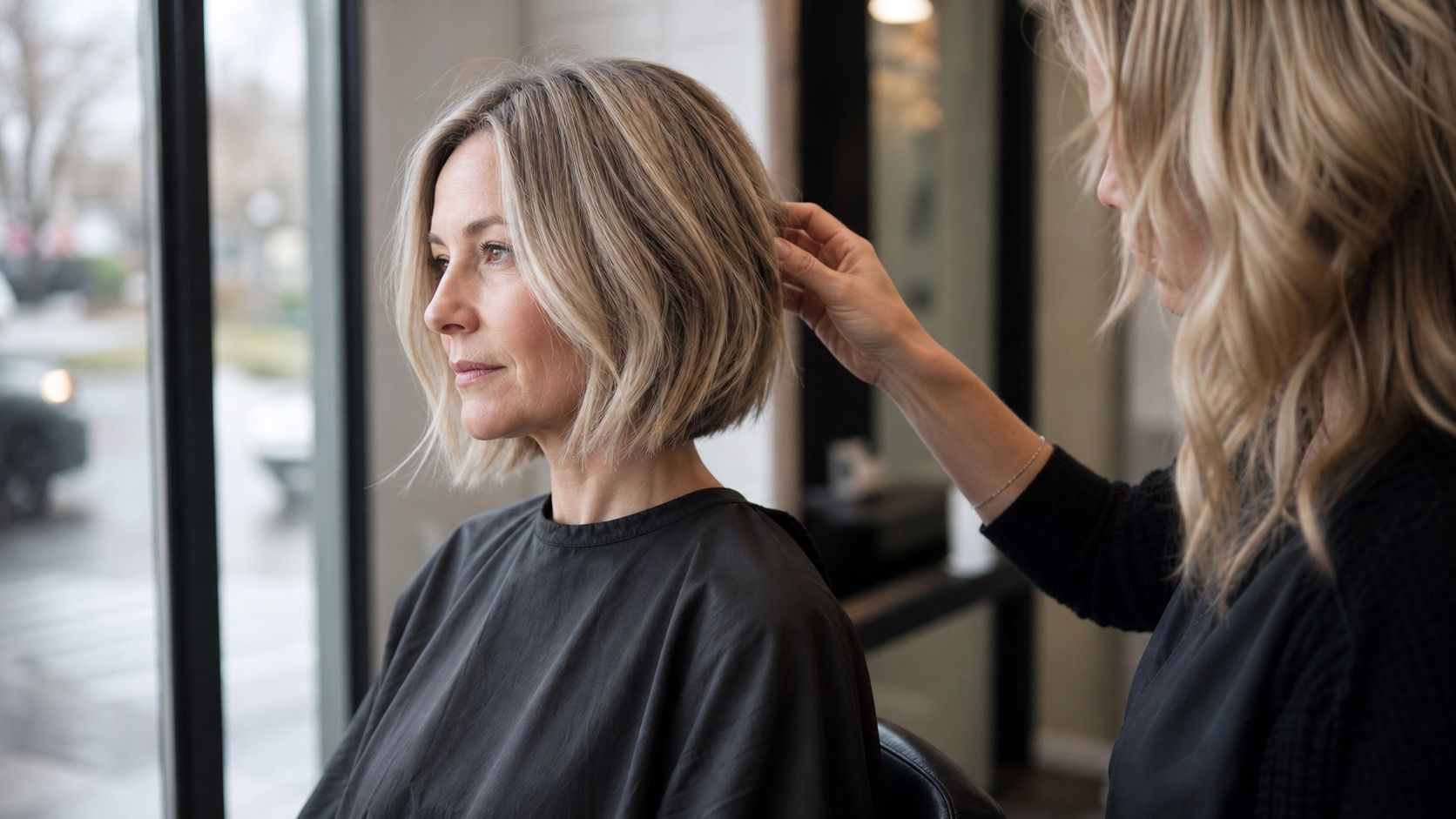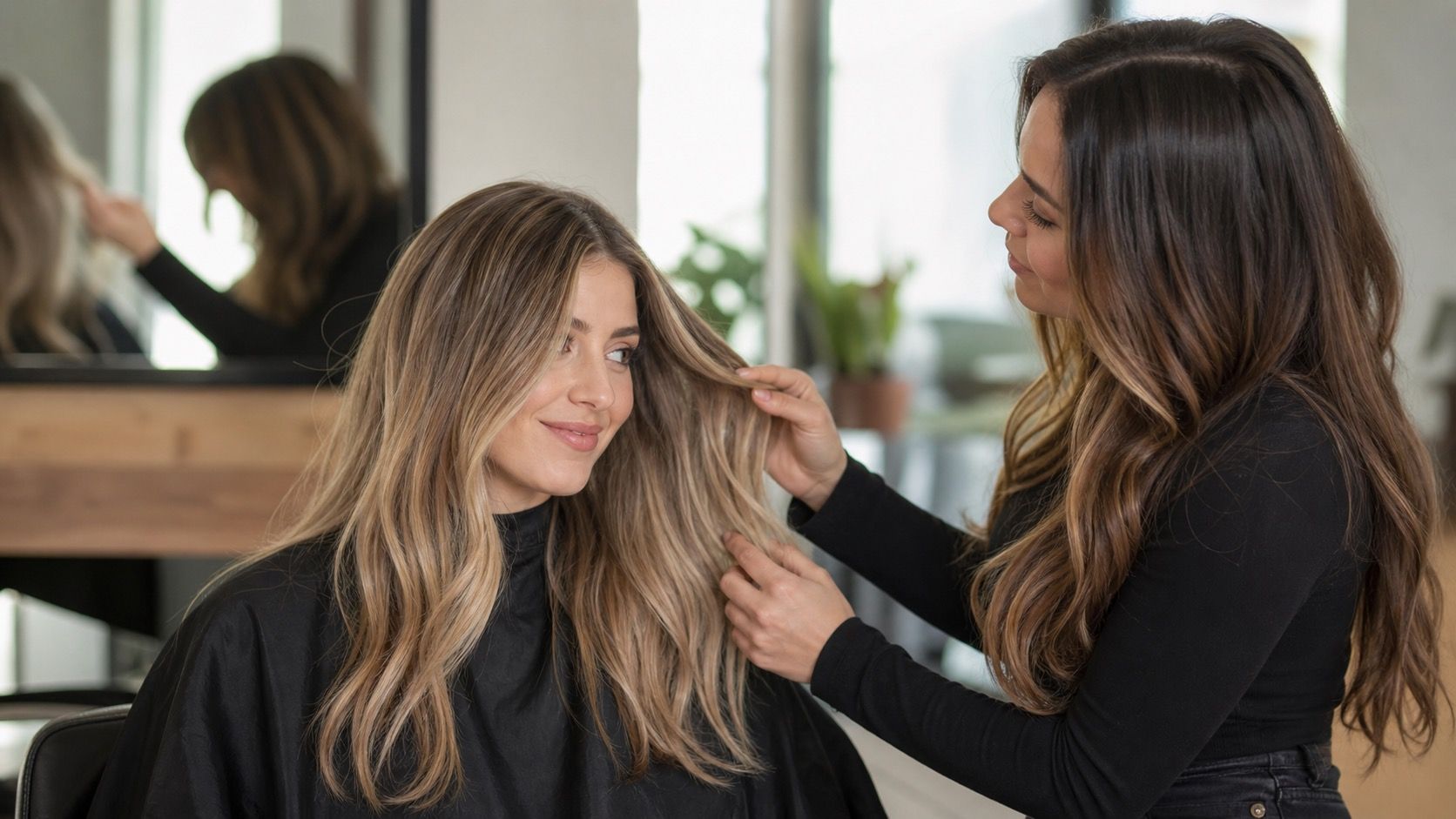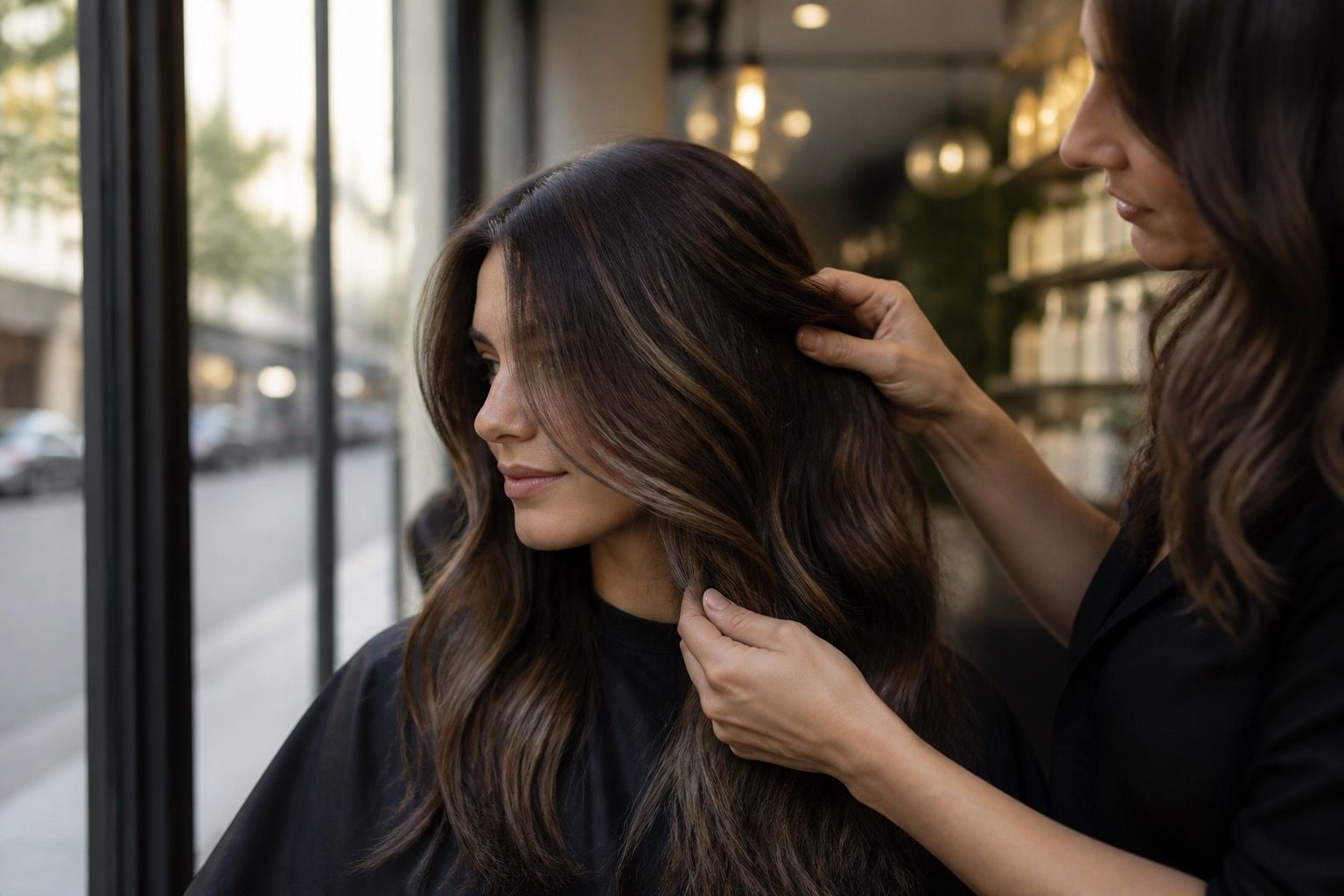
Brunette hair has a habit of being described as one colour when it is usually a whole range of shadows, warmth and reflected light. Good hair color analysis for brunettes is not about forcing brown hair toward blonde. It is about deciding which depth supports the face, which undertone belongs near the skin, and where a little dimension will make the colour look expensive rather than striped.
Why brunettes need a different starting point
Brown hair carries more visual weight than light hair, so a small change in depth can alter the face quickly. Going from medium chestnut to espresso can sharpen the eyes and brows, but it can also make fair or low-contrast skin look harder. Adding a few light pieces can create movement, yet too many can remove the rich base that made the brunette colouring distinctive in the first place.
Decide how much depth your face can carry
Hold your hair back and compare a dark brown fabric, medium brown fabric and a warm chestnut fabric near the jaw. Notice whether the darkest option gives useful definition or pulls all attention below the face. If you need more makeup to look awake beside it, that is a clue, not a rule. Espresso brown can be striking, but it has a stronger presence than many people expect.
Medium depth is often the most flexible place to work. It can be neutral brown, soft chocolate, mushroom brown or chestnut, depending on undertone. It gives enough edge around the face while leaving room for a gloss, lowlights or subtle highlights. For people who are unsure, keeping the root close to natural and changing only the mid-lengths is usually a safer first experiment.
Depth should also match lifestyle. A very dark all-over colour can show pale roots and grey hair more clearly than a softer natural base. If grey blending is the priority, a translucent gloss or fine lowlights may produce a gentler grow-out than opaque permanent colour. Ask what the line at the parting will look like at week six, not only what the lengths will look like at the end of the appointment.
Find the brown direction: cool, warm or neutral
Ash brown contains blue, violet or smoky pigments and can look elegant against cooler or neutral skin. It is not the same as flat grey-brown. The best ash brown still has light reflection, especially through the ends. On hair that naturally exposes orange when lightened, a colourist may need to balance warmth rather than chase an icy result that fades quickly.
Chestnut brings red-gold warmth and often makes green, hazel or warm brown eyes look more vivid. It can be subtle: a chestnut brunette does not need to read auburn from across the room. If your skin is prone to flushing, keep the red component soft and ask for neutral roots or cooler pieces around the face. This prevents the tone from making every pink patch more noticeable.
Neutral brown is the quiet workhorse. It suits many people because it does not exaggerate either yellow warmth or bluish ash. A neutral gloss can be particularly helpful after summer fade, when brunette hair looks uneven rather than intentionally dimensional. In hair colour analysis, neutral is not a compromise; it is often the most convincing route when your clothing, makeup and natural roots all pull in slightly different directions.
Create dimension without stripey highlights
Dimension should be visible when the hair moves, not drawn in as separate bands. Fine highlights placed around the face, through the crown and sparingly at the ends can lift a brunette without changing the overall depth. The placement matters more than the number of foils. Broad high-contrast ribbons may look good in a styled salon photo but can become obvious stripes when the hair is tied back.
A root shadow helps connect new brightness to the natural base. It is especially useful when old highlights are too light or too warm. Instead of trying to colour every strand darker, a colourist can restore depth at the root, add lowlights through porous lengths and finish with a gloss. The result often looks fuller because the eye can read shadow and light again.
Face framing needs restraint. Two fine brighter pieces can illuminate the cheekbones; a wide blonde panel can separate from dark hair and demand frequent toner. Ask to see the placement from the side and with a centre part, not only curled toward the face. A wearable brunette should still look balanced when you tuck it behind an ear or put it in a low bun.
Use a gloss, lowlights or highlights for the right problem
| What you notice | Often worth discussing | What to expect |
|---|---|---|
| Brown hair looks dull but depth is right | Neutral or tonal gloss | More shine and tone without a major lightening service |
| Old highlights look too blonde | Lowlights plus a root shadow | Restores contrast; porous ends may fade first |
| Face looks flat beside one-depth brown | Fine face framing and scattered highlights | Brightness without losing the brunette base |
| Grey shows strongly at the part | Grey blending or softer root colour | Less solid coverage, usually a quieter grow-out |
A gloss is usually the gentlest way to test a tone change. It can make ash brown cleaner, chestnut richer or neutral brunette more reflective, but it does not create permanent lift. Highlights create lightness; lowlights restore shadow. Choosing the right tool prevents the common mistake of adding more blonde to hair that actually needs depth.
Bring photos that show the effect in daylight and when hair is not heavily waved. Ask the colourist which part of the image comes from placement, which from styling and which from a temporary toner. That conversation makes the result easier to reproduce rather than leaving you with a beautiful but unexplained finish.
Maintain tone and shine without fighting your base
Brunette hair can look almost black indoors and rich in daylight, so maintenance is mostly about keeping the surface reflective and the undertone controlled. Use heat protection, avoid very hot water and ask which shampoo suits the specific issue. Blue shampoo can help orange warmth, but overuse may leave pale highlighted pieces dull or smoky. A warm chestnut gloss needs a different approach from cool ash brown.
Schedule glosses according to how the hair fades, not a fixed calendar copied from someone else. Fine hair and porous ends may release tone faster; dense virgin roots may barely change. Take a daylight photo after each appointment and again just before the next one. Over a few visits, you will see whether the colour is fading too warm, too flat or simply returning to a depth that still suits you.
The best brunette colour does not require you to correct it every morning with a curling iron, purple shampoo or a dark root powder. It should look like a deeper, clearer version of your own hair on an ordinary day. When depth, undertone and contrast are working together, dimension reads as natural movement rather than a collection of separate salon techniques.