Gray Blending: Highlights, Lowlights, and Coverage Choices

Gray blending softens the contrast between gray strands and the surrounding color instead of necessarily covering every gray. Highlights, lowlights, and a root shadow can serve different starting bases. Decide whether you want to blend, cover, or embrace your gray before choosing a service.
Choose blending, coverage, or an embrace-gray goal
Start with the result you want to see at the roots. Blending keeps some silver visible while making its transition into the rest of the hair less abrupt. Coverage aims to conceal more gray with a selected color formula. Embracing gray lets silver become the main direction; you may still choose color work on the older lengths. These are goals, not promises attached to a service name. Wella’s professional gray-color guide distinguishes blending with lighter and darker pieces from silver-focused options and root camouflage.
Use the table to name your goal before discussing a formula or placement. The amount of gray left visible depends on your starting pattern and the chosen work; a generic service name cannot tell you a coverage percentage.
On a narrow screen, scroll sideways to compare every column.
| Goal | Gray that remains visible | Ask your colorist |
|---|---|---|
| Blend | Some silver stays part of a varied pattern. | “Where would you add lightness or depth around my existing gray?” |
| Cover | Less gray is visible immediately after the service; the exact result depends on the formula. | “How opaque will this formula look on my gray, and what will new growth look like?” |
| Embrace gray | Silver is the main visible direction. | “How can we handle my previously colored lengths while my natural gray grows?” |
Compare highlights, lowlights, and root shadow
Highlights add selected lighter-looking pieces. On a blonde or light-brown base, they can reduce the visual jump between gray strands and surrounding hair. Lowlights place darker-looking pieces among lighter or mixed hair, restoring depth when an all-light result is not your goal. Their effect depends on where your gray grows and how much of the original base remains. Wella describes cool blonde highlights and brown lowlights as different blending options.
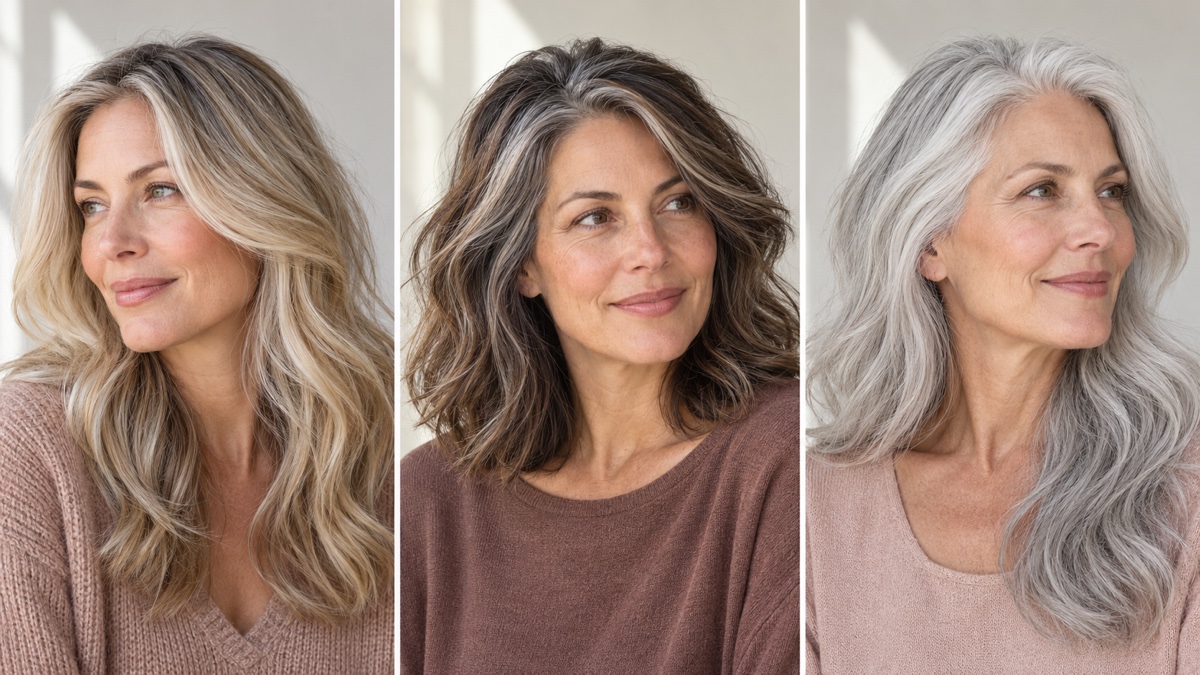
A root shadow changes the color impression near the scalp to soften a transition. It can camouflage a root area, but it does not define how much gray an entire head of hair will have covered. Ask whether the proposed root work is meant to tint your gray, connect highlights to the natural base, or conceal a line from older color. Wella lists root shadow separately from its highlight and lowlight approaches.
On a narrow screen, scroll sideways to compare every column.
| Option | Main visual change | Question to ask |
|---|---|---|
| Highlights | Lighter pieces can bridge some gray and a blonde or light-brown base. | “Which gray areas would the lighter pieces connect?” |
| Lowlights | Darker pieces add depth among silver or other light strands. | “How much of my existing silver would stay visible?” |
| Root shadow | Color near the scalp can soften the root transition. | “Will this tint gray roots, or only connect the roots to colored lengths?” |
Compare depth first: how light or dark are the roots and lengths relative to one another? Our hair color levels guide explains the depth scale. Then compare reflection: does a piece read warm, cool, or neutral in daylight? The hair color wheel helps separate a tone adjustment from the lightening needed to reach a paler strand. A toner cannot turn an unlightened dark section silver.
Use different starting bases as separate cases
For blonde or light-brown hair, lighter pieces may sit close to scattered silver, while lowlights can return depth where the overall color has become too pale. For a brunette base, the light-to-dark jump can be stronger; placement and old dark dye matter more than copying a blonde reference. See the separate gray blending on dark hair guide for that detailed transition. For predominantly gray hair, the choice may be how much former color to retain in the lengths rather than how to hide every silver root. Wella presents blonde, brown, and silver directions as distinct cases.
Bring clear photos of your part, temples, and lengths in the same indirect daylight, plus a reference for the amount of silver you want visible. Tell your colorist about permanent color, highlights, or home dye on the lengths. Ask which areas they would leave alone, which they would color, and what is realistic at the first visit. A photo is a way to discuss placement, not a formula or a guarantee of the finished result.
Plan the transition and maintenance
If the difference between new roots and older lengths becomes smaller, the boundary may look less abrupt as hair grows. That does not remove upkeep: highlighted pieces can shift in tone, and previously colored lengths still need attention. Use our hair color maintenance guide to plan care and follow-up around the finish you choose.
Before booking, take three questions to the consultation:
- “What old permanent color is still on my mid-lengths and ends, and how does that change the first step?”
- “How much silver should remain visible now, and what transition length am I comfortable seeing?”
- “What would you review at the next visit: placement, tone, coverage, or hair condition?”
Moving from years of opaque color to a mostly silver finish can require stages. Ask for a first-visit option that works with your current hair rather than assuming one appointment can produce the reference. For any dye used, follow the specific product’s directions and cautions; the FDA’s hair-dye safety guidance also explains why those instructions and allergy precautions matter. The American Academy of Dermatology advises extra care when lightening hair substantially.
FAQ: what gray blending can and cannot mean
Does gray blending cover every gray?
No. Gray blending usually leaves some gray visible while reducing contrast around it. If you want more opaque coverage, say so directly and ask your colorist what the particular formula can do on your hair and how new gray regrowth will appear. A root shadow or a few highlights alone does not define full coverage.
Is gray blending only for brunettes?
No. Blonde and light-brown bases can use lighter pieces or lowlights to work with scattered gray; predominantly silver hair can follow an embrace-gray direction. Brunette hair has its own contrast and color-history questions, which are covered in the dark-hair guide. Compare the root pattern and overall depth you want before choosing a reference.
Compare your preferences with the hair color quiz, then take your references and color history to your colorist.