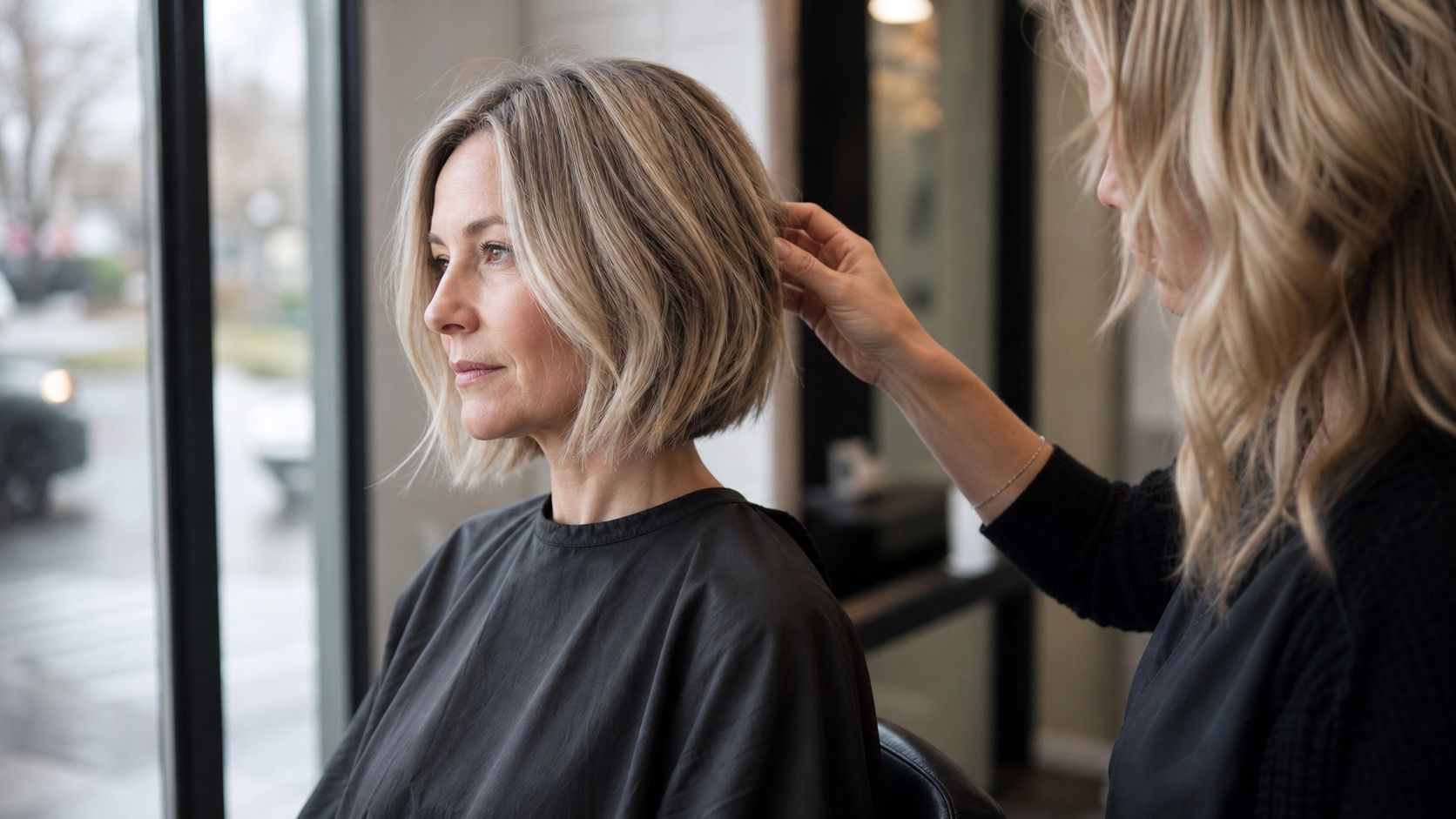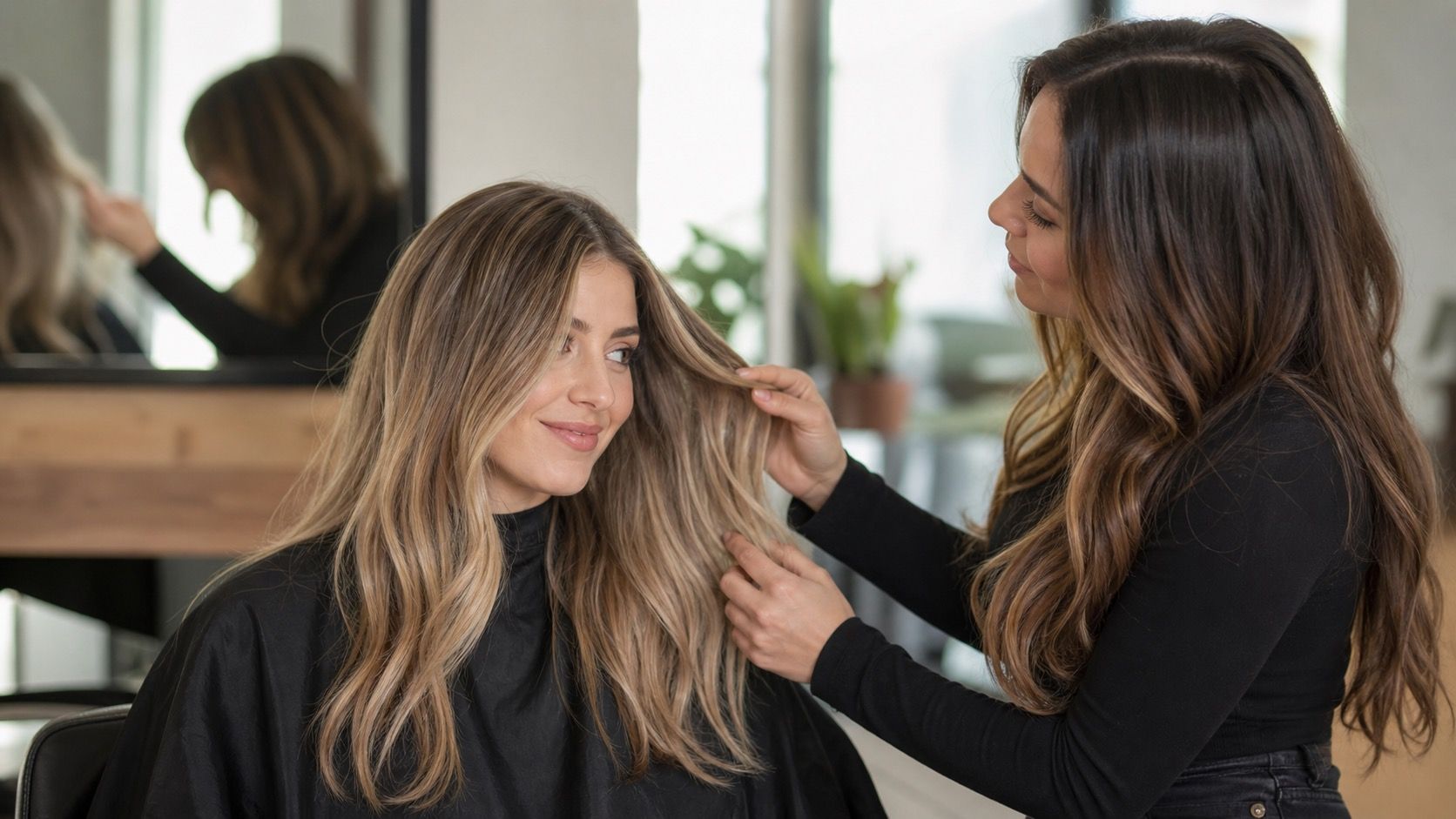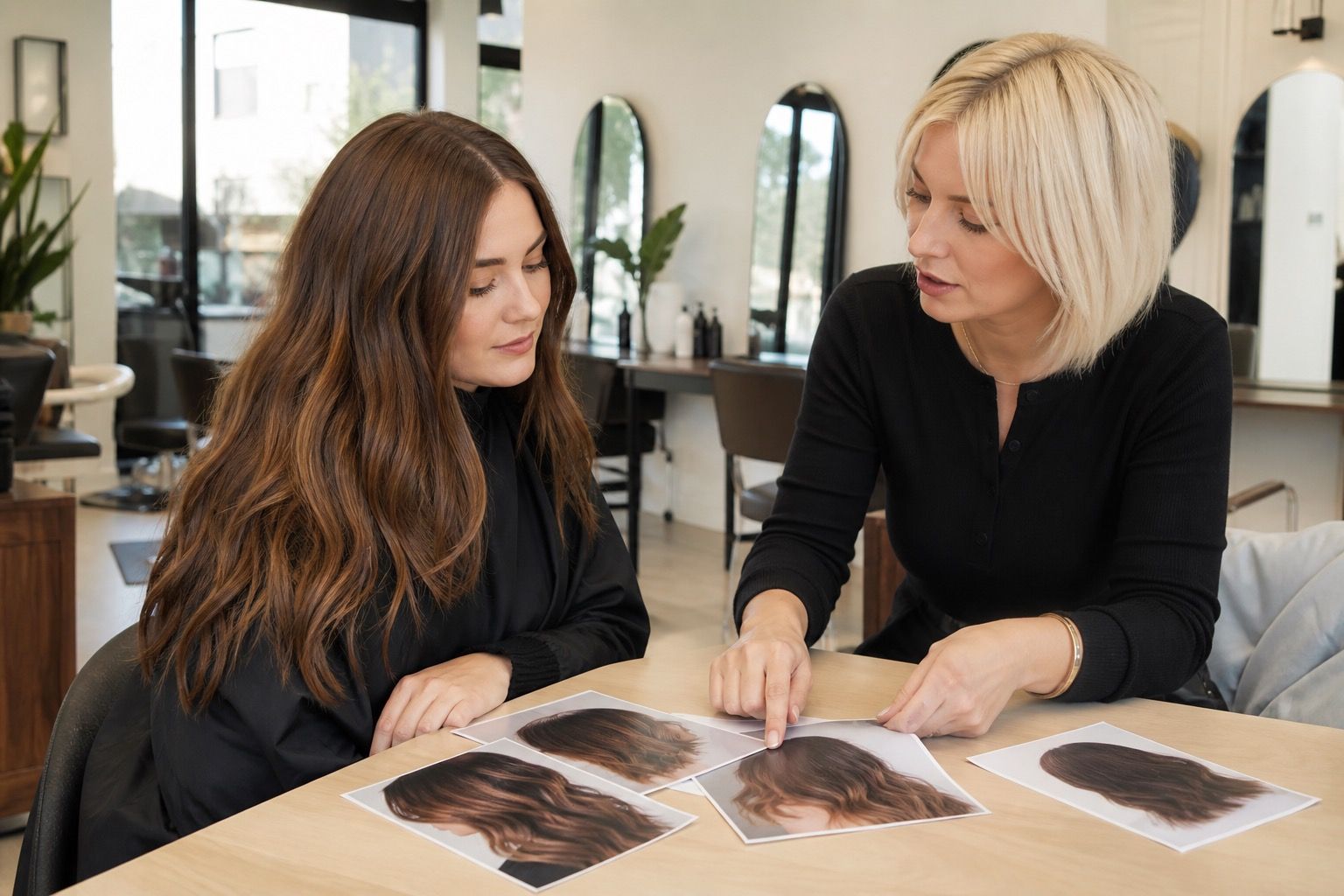
A hair color analysis can give you useful words for what feels off or right, but it becomes valuable at the salon only when those words turn into choices about depth, warmth, placement and upkeep. Instead of arriving with a seasonal label and a folder of unrelated inspiration, bring a short, honest picture of your current hair and the amount of change you can actually maintain.
Translate analysis into plain salon language
Colour analysis often describes a person as cool, warm, clear, deep or muted. A colourist needs to know what that means on your head. “I want less gold around my face,” “I like my natural root but the ends go brassy,” and “I do not want a sharp line when it grows out” are practical statements. They describe an outcome without insisting on a formula that may not suit your existing colour.
Share your colour history without editing it
The fastest route to a disappointing appointment is treating old colour as irrelevant. Permanent black from last year, at-home red, box dye, henna, bleach, a recent gloss and even a few bright face-framing pieces all affect what can happen next. Hair can look one colour at the roots and behave very differently through the lengths. A colourist is not asking about history to be difficult; they are working out how much lift is possible and where a toner may grab unevenly.
Give dates when you can, even approximate ones, and mention chemical straightening, frequent heat styling or breakage. If you have used a temporary colour mask, say so. It may fade on the surface yet leave a warm or cool cast behind. Honest colour history makes a cautious first session more likely to look intentional. It also lets the colourist decide whether a strand test, a gloss or a gradual plan is the sensible next move.
Ask about lift, tone and maintenance separately
These three ideas are often bundled together, then misunderstood. Lift is how light the hair can become; tone is the visible direction once it gets there; maintenance is what keeps that direction from changing. You may be able to lift to a warm level in one visit but need more time before reaching a cool beige blonde. That is not a failed consultation. It is a realistic distinction between what the hair can do today and the look you eventually want.
Ask whether the result will rely on a toner, gloss or root shadow, and what happens when each fades. A toner can make newly lightened hair look beautifully smoky or beige, but porous ends may release it faster than the roots. A root shadow can soften grow-out, while a gloss can add shine and adjust warmth without another full highlight appointment. Knowing which element is doing the work helps you budget for the right follow-up rather than booking a full transformation every time.
| Question to ask | Why it matters | What a clear answer sounds like |
|---|---|---|
| How light can we safely go today? | Sets a realistic first-visit goal | “We can brighten the front now and build lighter ends later.” |
| What keeps this tone cool or neutral? | Explains fade and home care | “The toner gives the beige finish; expect it to soften between visits.” |
| Where will the grow-out line sit? | Connects colour to your schedule | “A root shadow will make the regrowth less obvious.” |
| What is the maintenance budget? | Prevents a surprise second commitment | “Plan a gloss in eight weeks and highlights when the dimension needs refreshing.” |
Agree on a realistic first appointment
A good first appointment does not have to achieve every reference photo at once. If your aim is a softer brunette, the first visit may be a corrective gloss, a few lowlights and face-framing adjustment rather than a major lift. If you want to move from dark dye to blonde, the honest plan may be warm-to-neutral stages over several appointments. The first result should look complete on its own, not like an unfinished mistake that only works after the next booking.
Talk about time and cost before the colour begins. Balayage, foils, colour correction and a global blonde service can occupy very different parts of the day, and a toner or treatment may be an extra line on the bill. Ask what can be simplified if the appointment needs to stay within a set budget. Often the best compromise is to invest in the pieces near the face and keep the rest of the hair closer to its natural base.
Make the maintenance plan fit your routine
Maintenance is not only purple shampoo and a reminder to return to the salon. It includes how often you wash, whether you swim, how you style, how visible your root is and whether your ends are already dry. A low-maintenance look may still need a gloss because a soft brown becomes warm over time, while a high-contrast blonde may require careful root timing even if the lengths stay healthy. Ask for the schedule in plain weeks, not vague promises that it will be easy.
Be direct about your routine. If you wash daily and use hot tools, say so. If you can only make two colour appointments a year, say that too. A colourist can place highlights farther from the root, use a more forgiving base or recommend a shade that fades gently. The point is not to choose the least interesting hair colour; it is to choose one whose good phase lasts long enough to feel worth the time and money.
Keep notes for the next visit
After the appointment, take a few unfiltered photos in daylight, indoor light and the lighting where you spend most of your week. Note what you liked after the first wash, not only on the day of the blow-dry. Maybe the brightness around the face is right but the ends feel too ash, or perhaps the root shadow is perfect but you want fewer light pieces next time. Those observations are more useful than trying to remember a formula you were never given.
Save the reference images, your current photos and a short record of dates, glosses and any surprising fade. This gives the next salon consultation a real starting point. Hair colour analysis can help you choose a direction, but the lasting result comes from this ordinary chain of decisions: truthful history, clear language, realistic lift and a maintenance plan that suits your actual life.