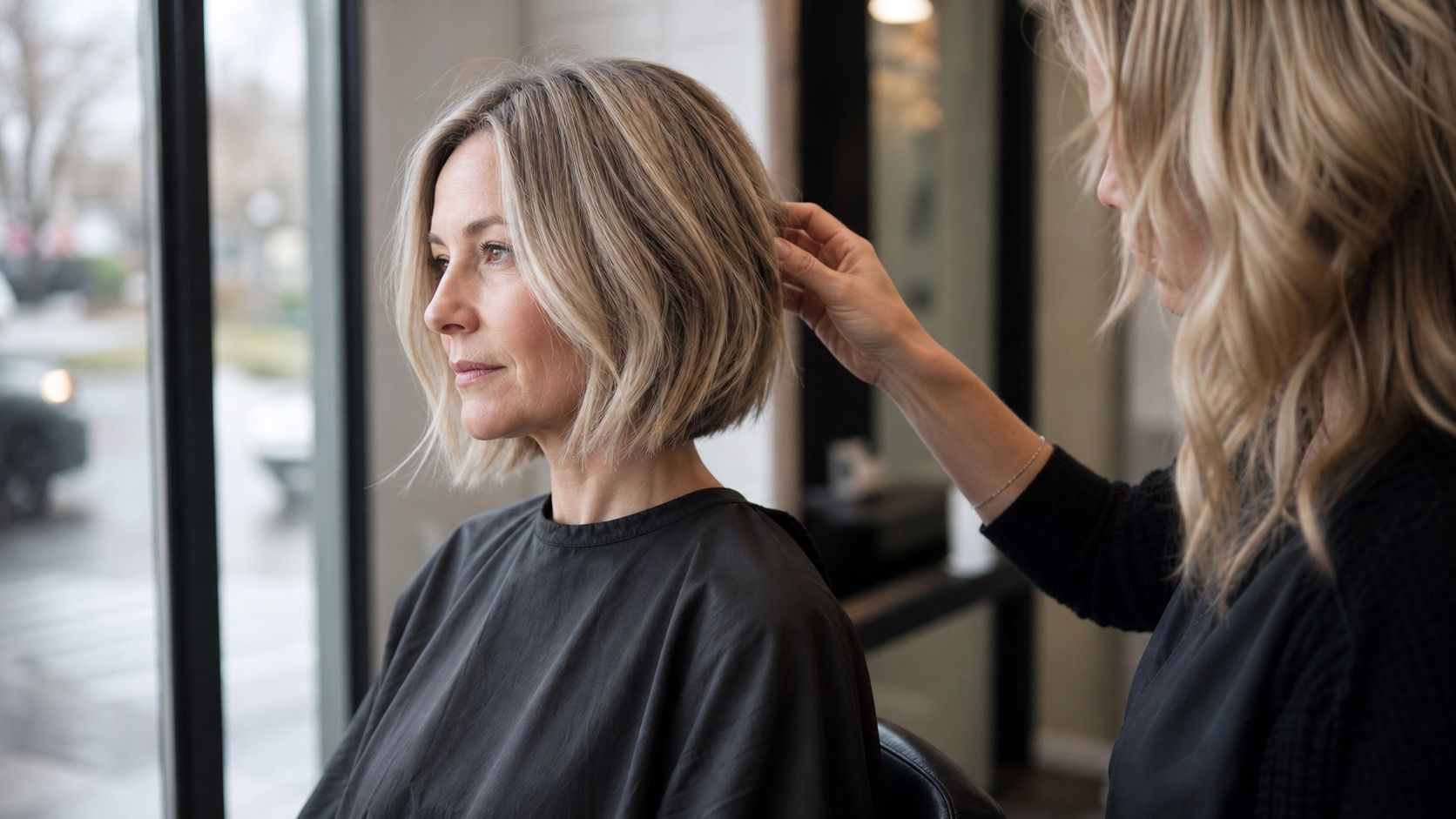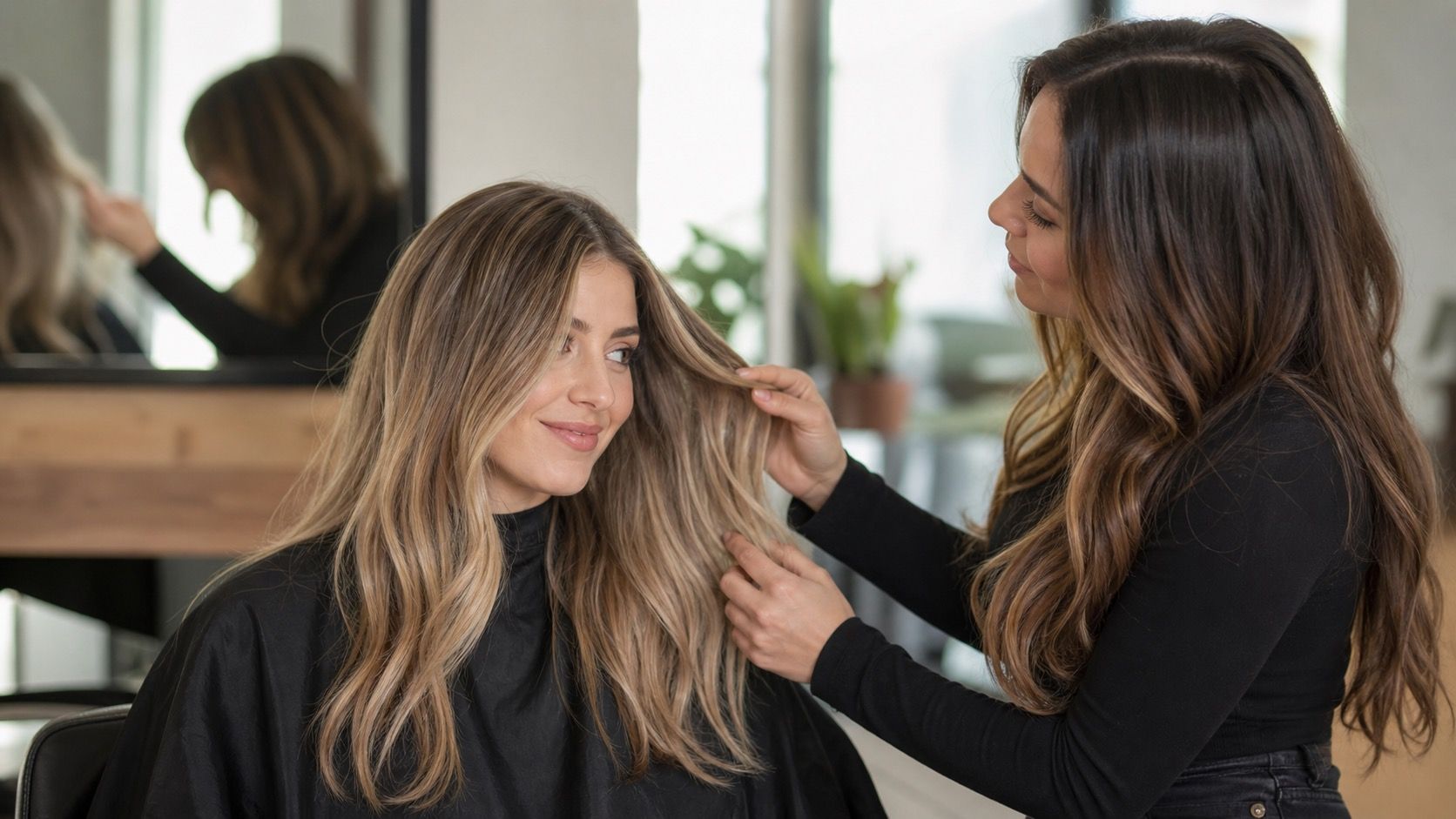
Cool Summer vs Soft Summer hair color is less about finding two separate lists of approved shades and more about reading the finish. Both palettes lean cool, both can wear ash brown and beige blonde, but Cool Summer usually needs a clearer result while Soft Summer is more convincing with lower contrast and a diffused, slightly smoky surface.
See the difference in clarity, not just in temperature
It is tempting to call every non-golden shade “cool,” then stop there. That misses the practical distinction. Cool Summer hair can have a noticeable pearl, cool berry or blue-brown reflect and still look harmonious. Soft Summer often needs the same colour softened with taupe, beige or grey so it does not look too crisp beside the skin.
Let contrast decide root depth and brightness
Cool Summer commonly carries a little more visible separation between skin, brows, eyes and hair. That makes a medium cool root with pearly face-framing pieces feel lively. Soft Summer often looks more settled with a root closer to the natural level and highlights that are only one or two steps lighter, blended so there is no hard line at the hairline.
Too much darkness is a frequent mistake for both groups. A near-black root can make a Cool Summer face look stern and a Soft Summer face look faded. Too much blonde creates the opposite problem: it may erase the useful structure of the brows. In both cases, medium depth is often the more flexible starting point; the difference lies in whether the finish is clearer or more muted.
| Feature | Cool Summer direction | Soft Summer direction |
|---|---|---|
| Overall finish | Clean, cool, moderately clear | Smoky, blended and muted |
| Brown | Cool brown or subtle plum brown | Taupe, mushroom or soft ash brown |
| Blonde | Pearl or cool beige with brightness | Dark ash or mushroom blonde |
| Highlights | Defined but finely blended face framing | Low-contrast ribbons and soft root melt |
Use this as a comparison, not a formula card. Natural depth, grey coverage, previous dye and haircut still determine whether a shade is realistic in one appointment.
Identify the shared shades and the point where they split
Ash brown is shared territory, but Cool Summer can often take a clearer, cooler version with more reflected light. Soft Summer generally benefits when ash brown is tempered with neutral beige so it does not appear slate-grey. The same happens with blonde: both may suit cool beige, while Cool Summer can usually wear the lighter, more pearlescent version.
Rose-brown and muted berry can also overlap. For Soft Summer, they should read as a quiet tint in brown hair. For Cool Summer, a slightly cleaner blue-red note can be attractive, provided it does not become vivid purple or high-contrast red. When a shade looks dramatic in the swatch book, reduce the saturation before applying it across the whole head.
Use a salon strand test to expose unwanted warmth
A strand test is the most practical way to settle uncertainty, especially if hair has been coloured before. Ask for two small test formulas at the same depth: one cool-neutral and one distinctly cool. View them dry, near a window and against your usual clothing. This reveals whether the hair is lifting yellow, orange or red before a toner is asked to solve everything.
For blonde services, the test also shows how much brightness the base can reach without damage. A Soft Summer client may decide that a dark mushroom blonde is enough once the yellow is softened; a Cool Summer client may find that the same base needs a few pearlier pieces around the face. That is an evidence-based adjustment, not a failure to fit a label.
Bring a plain top in blue-grey, soft navy or cool rose to the consultation. Strong black, bright white and warm camel can distort your perception of contrast. The aim is to see the proposed hair colour beside conditions you actually meet in daily life.
Keep makeup and maintenance in the comparison
Makeup can offer a useful clue. If muted rose blush, soft grey liner and dusty lip colours make a hair shade feel balanced, the softer version may be right. If those same colours make you disappear but a clearer berry lip wakes the face up, a Cool Summer level of clarity may be more useful. It is still only one signal, not a diagnosis.
Maintenance also changes the choice. A pearl blonde that is perfect for Cool Summer needs regular toner care; a more muted beige blend may be easier for someone who wants to stretch appointments. Soft Summer hair colors often tolerate a gentle root melt as they grow, while clear Cool Summer highlights can need more frequent attention around the hairline.
Leave room for a personal result, not a rigid label
Seasonal language is valuable when it gives you better questions: Is the brown too red? Are these highlights brighter than my features? Does this root look heavy after the first wash? It becomes unhelpful when it makes you reject a shade that genuinely works with your face, lifestyle and hair history.
Choose a direction, photograph it in daylight and give it time to settle. If the result is too yellow, too dark or too flat, the next gloss can refine it. Cool Summer and Soft Summer are close neighbours; a thoughtful colourist can work in the overlap and make the final hair colour look like a person, not a palette label.
That flexibility is often what makes the colour wearable between appointments.
Use fading and regrowth as useful evidence
The weeks after a colour appointment often reveal more than the initial salon mirror. When a toner fades, notice what emerges. If a slightly clearer cool-beige finish still makes the face look fresh, you may be able to borrow more from Cool Summer. If the same brightness begins to feel sharp and every pale section looks disconnected, a softer mushroom or taupe correction may be kinder. This is why one finished colour should be treated as information, not a permanent declaration of season.
Regrowth tells a similar story. A Cool Summer client may enjoy a medium root with a clean, pearly lift around the face, while a Soft Summer client often prefers the root melt to stay closer to the natural base. Neither approach is better. The relevant question is whether the contrast between root and lengths looks intentional after six to eight weeks, when it is no longer held together by a fresh toner and salon styling.
Keep the adjustment small when testing the border between palettes. Change the gloss before changing the whole depth, or alter the brightness of face-framing pieces before adding highlights throughout. That method is gentler on the hair and makes the result easier to read. If you lighten, warm up, darken and add red reflection at once, you cannot tell which decision created the imbalance.
A useful consultation note might read: medium natural root, cool-neutral gloss, low-contrast beige pieces, then a request for slightly clearer or slightly softer face framing next time. It is much more actionable than “make me Cool Summer.” The final result should work with your features, haircut, grey coverage needs and maintenance tolerance even if it lives between the two seasonal descriptions.