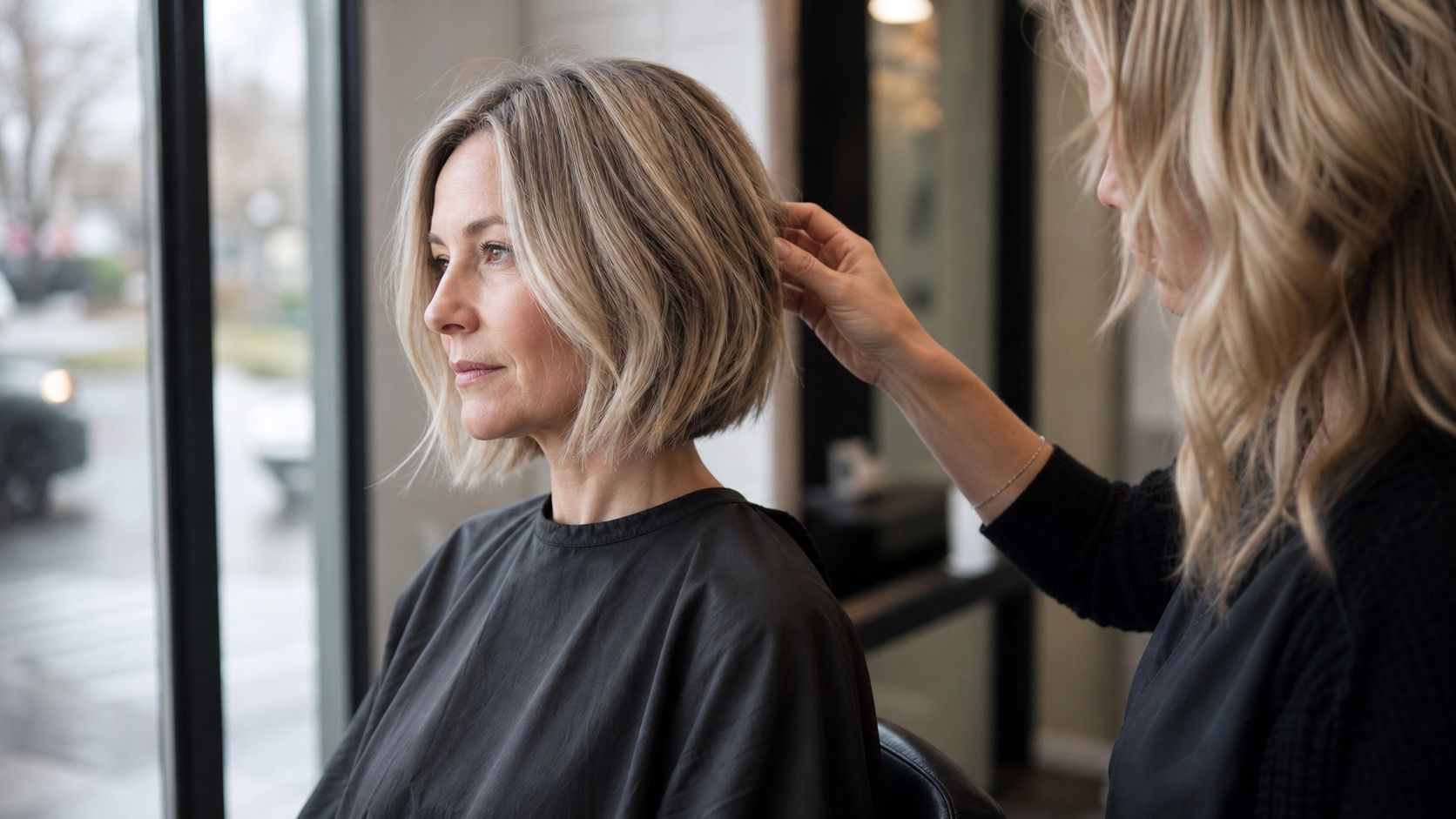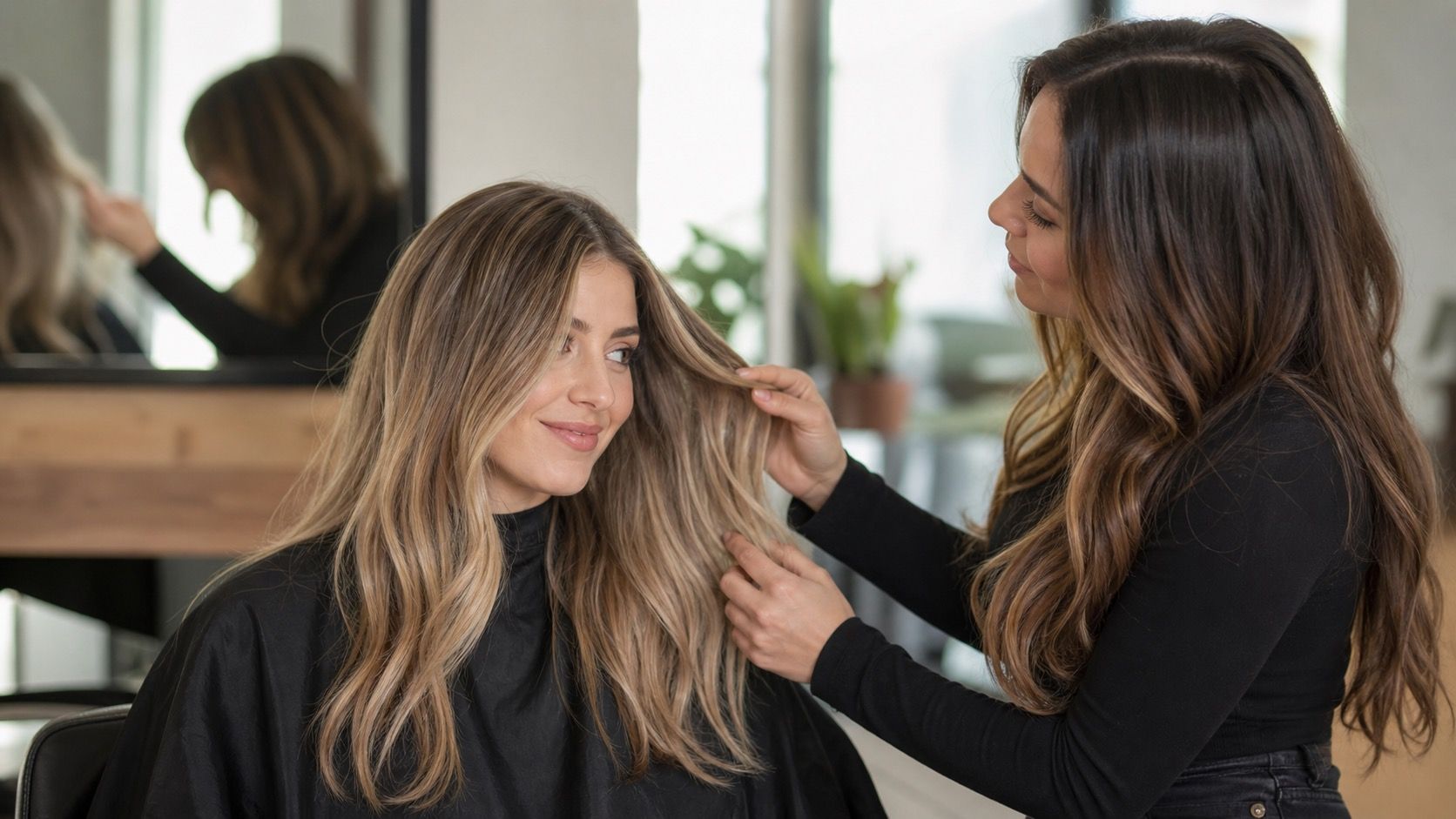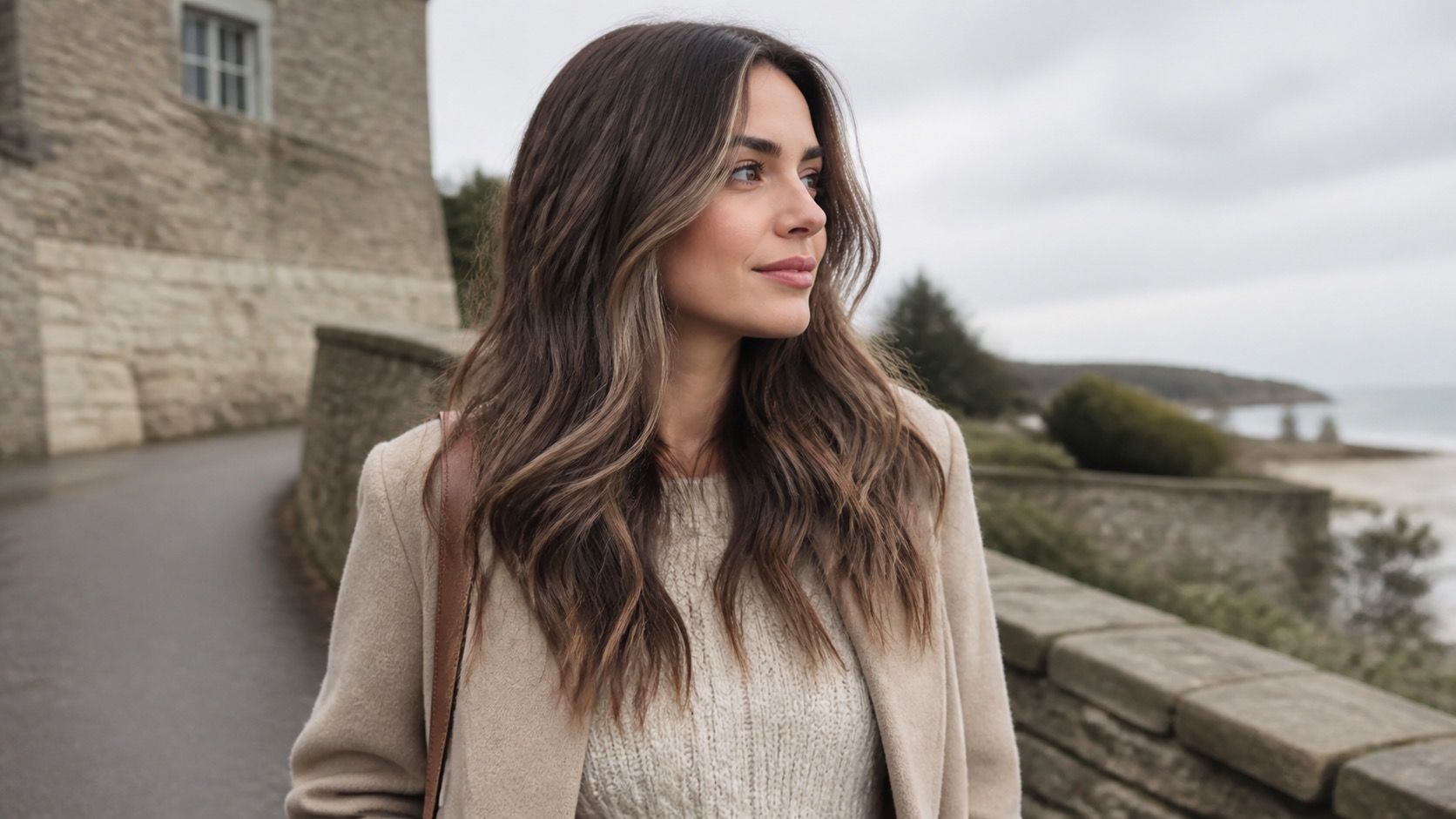
Cool Summer hair colors need coolness, but they also need enough clarity to avoid looking lifeless. The right shade usually has a clean blue-red or blue-beige cast, medium depth and visible light around the face; it should not be so pale, dark or ashy that it overwhelms the person wearing it.
Separate Cool Summer from Soft Summer before going cooler
Cool Summer and Soft Summer can both wear ash brown, smoky beige and restrained blonde, so they are easy to confuse. The difference is clarity. Soft Summer is softened by grey and tends to suit blurred transitions. Cool Summer usually handles a cleaner, crisper colour: not bright like Winter, but less muted than Soft Summer. A pearl highlight may look fresh on Cool Summer and strangely chalky on a softer face.
Use brunette shades that stay cool without turning charcoal
Cool brown, mushroom brunette, smoky cocoa and plum brown are strong starting points. They have enough depth to frame the face while avoiding the orange reflection common in warm chocolate, caramel and auburn. The best result has dimension: a slightly deeper root, subtle cool ribbons through the lengths and a gloss that makes the surface look polished rather than matte.
Do not ask for “ash” without a level. On dark hair, too much blue or green ash can create a flat khaki or charcoal effect, particularly on porous ends. Ask the colourist to compare a neutral-cool brown with a very cool brown beside your skin. The more extreme formula is not necessarily the more flattering one.
For grey coverage, natural base pigment may be necessary at the root. That is normal. What matters is the final reflect after the gloss, not the label on one tube. A cool-neutral root with a blue-violet toner through the lengths often looks softer in real daylight than a permanent, heavily ash formula everywhere.
Choose blonde with enough pearl and depth
Pearl blonde, dark ash blonde, cool beige blonde and silver-beige highlights can suit Cool Summer because they keep yellow under control while retaining light. The key is that the blonde should still have some brightness. Over-toning into flat grey can make the face look drained, while creamy gold may turn the complexion pink or sallow.
If your base is medium brown, aim for a gradual lift. Fine foils or balayage with cool face framing allow the eye to adjust to the lighter level without creating an abrupt stripe at the hairline. A root shadow close to the natural colour is useful, but it should not be nearly black against pearl lengths.
| Colour direction | What it gives | Common mistake |
|---|---|---|
| Cool medium brown | Clear depth with moderate contrast | Adding warm chestnut shine |
| Plum brown | A subtle blue-red reflection | Making it visibly purple |
| Pearl blonde | Brightness without gold | Taking it to stark white |
| Cool beige highlights | Movement around the face | Wide, stripy blonde bands |
Watch the result after the first few washes. Toner often settles, and indoor salon light can hide yellow that becomes obvious in a car window or near a north-facing window. A photo in ordinary daylight gives a more useful read than a close-up under a ring light.
Place highlights where clarity helps the face
Cool Summer highlights work best when they create controlled brightness, not a random scatter of pale pieces. Fine sections near the temples, a softly blended money piece and a few ribbons through the lower lengths can lift the face while keeping the crown connected to the natural root. The exact placement should follow your parting and haircut, not a generic balayage pattern.
On curly or textured hair, ask to judge the colour in its usual shape. A highlight that looks delicate on a straight blow-dry can appear much wider once curls separate. On a blunt bob, fewer but carefully diffused pieces often look more expensive than high-contrast striping. The objective is clean movement, not a visible technique.
Stop yellow fade and overly dark corrections
Yellow is the usual enemy of cool blonde, especially on old lightened ends. A violet shampoo can help, but daily use may make porous hair look violet-grey while leaving the root unchanged. Use it occasionally, follow with moisture, and book a gloss when the whole colour begins to lose its cool sheen.
The other overcorrection is going too dark to cover warmth. A dense dark brown may erase brassiness for a week, then feel severe and reveal a warm red cast as it fades. It is usually better to cool the tone and preserve some reflected light. Heat protectant, lower iron temperatures and a colour-safe wash routine help the toner last longer than repeated emergency corrections.
A successful Cool Summer result looks fresh in normal life: under cloudy daylight, in office lighting and next to your usual clothes. It has cool direction and enough definition to make the eyes noticeable, without the hard contrast or artificial silver cast that belongs to a different palette.
Before a major change, wear the chosen direction for a week in ordinary conditions rather than judging it only under salon lights. Notice whether the colour stays fresh with blue-grey, berry and navy clothes, and whether the root still feels balanced after the first wash. Those observations are more useful than chasing an exaggerated icy effect in a single appointment.
When in doubt, preserve condition and choose a glossable, medium-depth result; clear shine reads better than aggressive lightening.
Plan the shade around your starting canvas
Cool Summer hair color is not applied to a blank canvas. Natural roots, old permanent dye, sun-lightened ends and mineral buildup all influence the result. Two people can ask for pearl blonde and leave with very different hair because one begins at dark blonde and the other is lifting through orange-brown. A clear consultation starts with that history, not with a promise based on a single reference image.
Ask the colourist what undertone is likely to appear at the intended level. If the answer is yellow, a pearl or blue-violet toner may be realistic; if it is orange, the work may need more than one session before it can look clean and cool. This is not a reason to abandon the idea. It is a reason to make a plan that protects condition and avoids the familiar cycle of over-lightening followed by an overly dark correction.
Hair texture changes how brightness reads. On fine straight hair, a small number of cool beige ribbons may be enough to create movement. On dense waves or curls, those same ribbons can disappear, so the colourist may place more light where the pattern opens around the face. Ask to see the work dry and in your normal parting. The back of the head can look beautifully blended while the front is still too stripey or too warm.
After the appointment, take two reference photos in plain daylight: one with the hair down and one tucked behind the ears. Save them before the toner fades. At the next visit, they help you say whether you liked the depth, the brightness or the coolness, rather than relying on a vague request to make it “more ashy.” Clear feedback leads to clearer Cool Summer hair colours without pushing the formula toward grey.