Soft Summer Hair Colors: Muted Ash Blonde, Mushroom Brown & Smoky Tones
The short answer: The Soft Summer palette is usually described as muted first, cool or cool-neutral second, with low to medium contrast. For hair, start by comparing a smoky mushroom brown, soft ash blonde, muted cocoa, or beige bronde. Look for color that feels gently grayed or softened rather than bright gold, vivid copper, stark platinum, or solid jet black. These are styling directions, not rules about what you can wear. Your natural depth, existing color, and preferred upkeep decide which version makes sense for you.
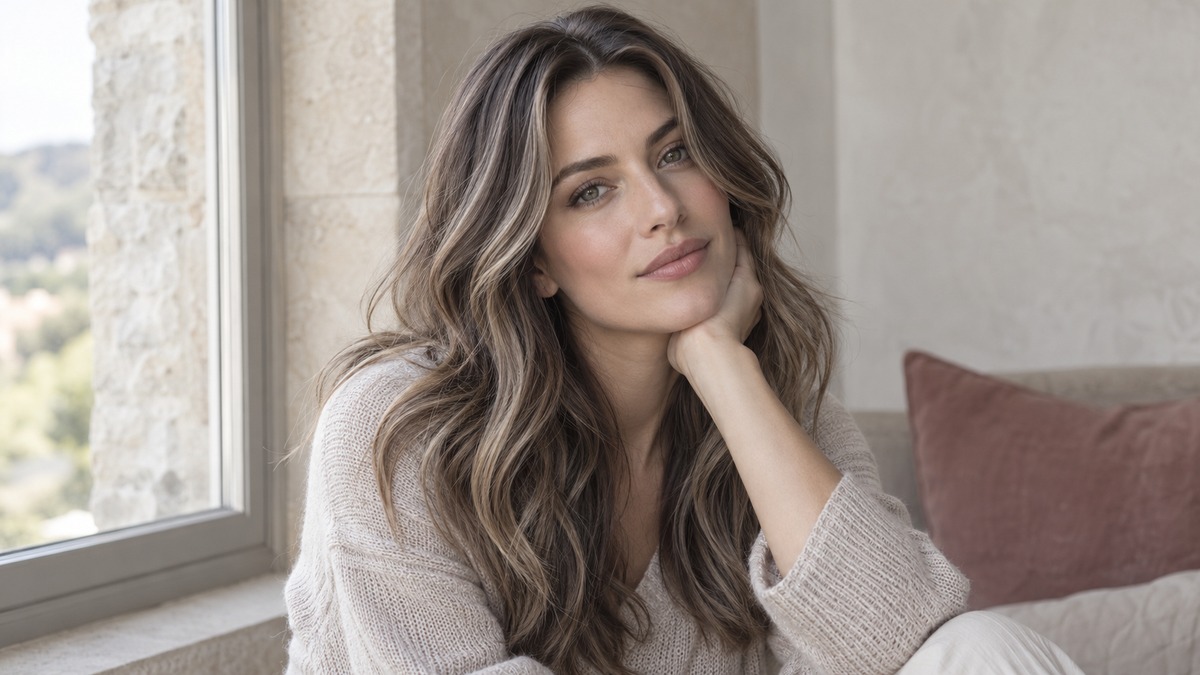
The best hair colors for Soft Summer share a useful feature: the tone stays quiet even when the hair has dimension. A pale highlight can still belong in the picture if it is blended and restrained. A deep brunette can work if its edges are softened by a natural-looking root or lowlights. The goal is to choose a level of contrast you enjoy, then adjust the warmth and saturation until the color feels right beside your face in daylight.
On a narrow screen, scroll sideways to compare all four columns.
| Direction | Ask to see | Best when you want | Check before coloring |
|---|---|---|---|
| Soft Summer blonde | Smoky ash blonde or pearl beige | A lighter frame without icy white contrast | How much lightening your current base needs |
| Soft Summer bronde | Muted beige bronde with a soft root | Some brightness with quieter grow-out | Whether the beige ribbons read gold in daylight |
| Soft Summer brunette | Mushroom brown or muted ash brunette | Medium depth without copper or inky black | Whether the brown turns too flat or too warm |
| Deeper option | Soft cocoa with close-depth lowlights | Richer brown and gentle dimension | How much root contrast the final depth creates |
The Soft Summer Profile: Cool, Muted & Low-to-Medium Contrast
In the Soft Summer framework described by The Concept Wardrobe, muted is the leading quality and cool is the secondary one. “Muted” means lower color intensity: think a smoky beige beside clear yellow-gold, or softened brown beside vivid red-brown. Contrast is the visible light-to-dark difference among the hair, brows, eyes, and skin. The traditional profile often has a low or medium contrast level, but it does not assign a single allowable hair level to everyone.
Descriptions often mention gray-blue, gray-green, or softened hazel eyes; neutral-pink or cool-neutral skin; and naturally ashy hair. Those are examples, not a checklist. Eye color alone cannot diagnose a season. Surface redness is not the same as undertone, and a warm-looking photo may be caused by indoor lighting. If you are unsure where you sit, compare the same hair depth in a warm, a cool, and a neutral version in indirect daylight. Our hair color analysis guide walks through depth, temperature, and contrast as separate decisions.
A natural level 6 or 7 is a useful reference point for a reader whose hair sits in the dark-to-medium blonde range. In a common professional numbering system, Wella labels level 6 dark blonde and level 7 medium blonde. Your own base may be lighter or deeper. The number is a measure of depth, not a season label or a complete color formula. A level-6 ash finish and level-6 golden finish can look quite different beside the same face; a level-6 root and level-8 ribbon add a separate contrast decision.
Start with what you see at your roots rather than a screenshot of your ends. Previous dye, highlights, gray hair, and sun exposure can all make the lengths differ from the natural base. Ask a colorist to identify the root depth, the current depth through the ends, and whether your preferred shade calls for depositing tone or for lifting first. This keeps the styling goal separate from the process of reaching it.
The Most Flattering Hair Colors for Soft Summer
The options below are a comparison menu. Their names are useful in a consultation, but salon shade names are not standardized: one brand’s mushroom brown may look greener, cooler, or darker than another’s. Evaluate the actual swatch or reference in neutral daylight and state whether you want a muted result, visible warmth, a lighter face frame, or a low-maintenance root.
Mushroom Brown: The Crown Jewel of Soft Summer
Mushroom brown sits between ash brown and taupe: a medium brunette with a soft, smoky reflection rather than a red or golden shine. It is a strong starting point if you want to keep brunette depth while lowering the apparent warmth. On a natural dark-blonde or light-brown base, a close-depth mushroom result may also keep the grow-out quieter than a large jump to pale blonde.
Ask for a reference that shows the color in daylight, not only under a salon ring light. A mushroom swatch can look attractive on screen and overly gray in real life if it lacks enough neutral brown. Conversely, a “cool brunette” may turn into a strongly coppery finish when warm underlying pigment shows through. A useful request is: “Keep it brown and softly taupe; I do not want it to read silver or orange.” Then let the colorist assess whether the current base can be toned or needs a different service.
For dimension, consider delicate beige-brown balayage ribbons placed away from a very dark root line. Balayage describes painted placement, not a guaranteed color; the finishing tone still matters. If the ribbons become bright gold, the look moves away from the muted goal. If every piece is the same flat gray-brown, it may lose the soft movement you wanted. Bring one image for overall depth and a second for ribbon size and placement.
Smoky Ash Blonde & Pearl Beige
Smoky ash blonde is a blonde with subdued cool reflection. Pearl beige is a gentler neutral-cool alternative when a pure ash looks too gray. Both can suit someone who wants a light frame without the hard white-versus-dark contrast of platinum. A root close to your natural depth can further soften the transition and make the color easier to grow out than a uniform light blonde.
Compare the blonde at the same depth before deciding which tone you prefer. A level-7 or level-8 smoky blonde, for example, can read quieter than a much paler icy blonde even if both are called “cool.” The look on your hair depends on your starting color and its history. Wella’s guidance on blonde color separates lifting to the desired depth from toning the warmth exposed during lightening; the two are different steps. A toner can refine an already suitable base, but it cannot turn a deep, previously dyed brunette into a pale blonde by itself.
Ask how the blonde will appear after several washes. Cool tones on lightened hair can fade, and underlying yellow or orange may become more visible. Wella’s blonde-care explanation describes that change. The practical decision is whether you welcome a slightly warmer beige as it fades or want a plan for refreshing the cooler finish. If you would prefer less upkeep, a darker pearl beige or softly rooted bronde may serve the same muted goal with less visible regrowth.
Muted Soft Cocoa with Lowlights
If ash blonde feels too light and mushroom brown too gray, try soft cocoa: a neutral-to-cool brown with a muted finish. Keep it distinct from red cocoa or warm chocolate. Wella’s medium-brown shade guide shows that a medium brown can lean warm or cool, which is why “brown” alone is not a precise salon instruction.
Lowlights are darker pieces within the existing color. For a soft look, ask about lowlights that stay close to your overall depth rather than turning into black stripes. They can give a beige bronde or faded brunette a little more shape without asking every strand to become darker. Their effect depends on placement and the current lightness of the hair, so show how much of the lighter color you want to keep.
This is also where muted ash brunette can work: a cool-neutral brown with enough natural brown remaining to avoid a hollow gray cast. The difference between muted cocoa and ash brunette is often subtle in photographs. Put two references side by side in the same light; decide whether you prefer a soft neutral brown or a clearer taupe edge. If you already have permanent dark color on the lengths, tell the colorist before assuming a lighter cocoa can be achieved with a gloss.
Hair Colors That Ruin the Soft Summer Harmony
Vivid copper and fiery red-orange add much more warmth and saturation than the traditional Soft Summer palette. Wheat or yellow-gold blonde can do the same, particularly when a large area of the hair is lightened. If those colors delight you, wear them deliberately. If you are seeking a quieter look, compare copper with muted brown, or bright gold with pearl beige, at a similar depth so you can judge the tone rather than the brightness alone.
At the other end, platinum white and solid jet black create a strong light-dark edge. A high-contrast choice may be exactly the statement you want, but it is different from the low-to-medium contrast described in Soft Summer guidance. If black feels too abrupt, compare it with a smoky deep brown or soft cocoa. If platinum feels stark, compare it with ash beige at a darker blonde depth. You do not have to change every part of your hair to test the direction: look at references with a softer root, a muted face frame, or fine lowlights.
The most common mistake is treating cool as the only instruction. A highly saturated blue-black is cool, but it is not muted. Icy white is cool, but its brightness can make contrast high. A muddy gray result may be muted but lack the brown or beige dimension you wanted. Choose in this order: depth, contrast, temperature, then saturation. That sequence gives your colorist a clearer target than “make it Soft Summer.”
Plan the Color Around Your Starting Hair
Bring three kinds of evidence to the appointment: a daylight photo of your natural roots, a photo showing the current lengths and ends, and two target references in comparable lighting. Tell your colorist about permanent color, previous lightening, glosses, and any uneven bands. Those details affect whether a cool-neutral result can be reached by depositing color, by selective lightening, or through more than one visit. A photograph gives a direction; it does not reveal the formula or condition of your hair.
Ask for a plan that covers the first result and the fade. “What will this look like after several washes?” is often more useful than “How long will it last?” The answer depends on the service, wash routine, porosity, starting color, and amount of lightening. If cool brunette tends to warm on your hair, ask what a realistic refresh would involve. If you want fewer appointments, keep more of your natural root and consider less contrast between the base and the highlights. Our hair color maintenance guide helps turn that choice into a practical schedule.
Do not select a toner or pigmented shampoo from a seasonal label alone. The unwanted reflection matters: yellow and orange call for different corrections, and a product that is too cool can dull beige you actually like. Our hair toner guide explains the difference between adjusting tone and changing depth. Follow the directions for any product you use, and ask the salon which approach fits the shade and condition of your own hair.
FAQ
Is mushroom brown always the best Soft Summer hair color?
No. It is a useful brunette starting point because it is muted and often cool-neutral, but it can look too gray, too dark, or simply unlike your preferred style. Compare mushroom brown with ash blonde and soft cocoa at depths close to your current hair. The best choice is the one that fits your taste, your starting base, and the maintenance you accept.
Can a Soft Summer have brown eyes or darker skin?
Seasonal descriptions often show gray-blue or hazel eyes and fair skin, but those examples do not define who can use the styling palette. Focus on the overall effect of muted versus bright color and lower versus higher contrast. Do not assign yourself a season from eye color, skin depth, or one photograph alone. Try comparable shade references in daylight and keep the ones you prefer.
What if I am between Soft Summer and Soft Autumn?
Both seasonal palettes are muted; the usual distinction is whether a cooler or warmer reflection feels more balanced. Put a cool mushroom brown beside a warmer beige-brown at similar depth. Watch how each looks next to your skin in indirect daylight, and include a neutral option between them. The hair color analysis guide offers a broader comparison when the seasonal label remains uncertain.
How do I ask a colorist for a Soft Summer blonde?
Say whether you mean a smoky ash or a soft pearl beige blonde, and show a reference for each at a similar depth. Point out the root, the size of any light ribbons, and the amount of warmth you are comfortable seeing as the color fades. Ask the colorist to assess your current base and history before choosing the lightening and toning steps.
Your Next Step
Save two or three daylight references that differ in only one major way: one deeper versus lighter, or one ashier versus more beige. Note your natural root depth, any previous color, and how often you want salon visits. The hair color quiz can help frame your decision; take those notes and references to a colorist for a realistic plan.