Hair Color Analysis Guide: Discovering Your Undertone, Contrast & Best Palette
The short answer: Hair color analysis is a way to compare three visual qualities near your face: the warmth or coolness of a shade, the light-to-dark contrast between your features, and whether softer or clearer color feels more at home. Seasonal palettes can organize those comparisons, but they cannot determine a dye formula or rule out a color you love. Start with your natural root depth and two shades viewed beside your face in indirect daylight. Then ask how the color could be achieved and maintained on your actual hair.
If you already use Spring, Summer, Autumn, or Winter for clothing, hair is a related but different decision. It stays beside your complexion as it grows and fades. A shade that works in a swatch may need a deeper root or softer reflection to work as hair. The hair color quiz can help organize these choices.
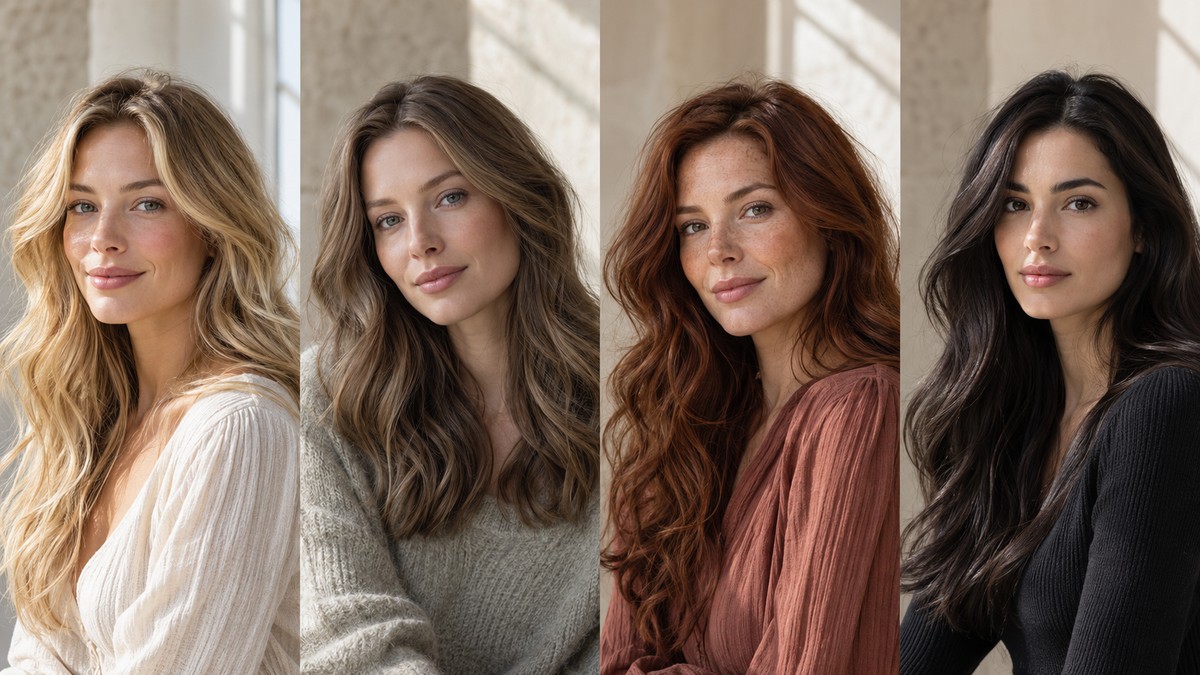
| Seasonal direction | General color character | Hair shades to compare |
|---|---|---|
| Spring | Warm and clear | Golden blonde, strawberry blonde, honey brown |
| Summer | Cool and muted | Mushroom brown, soft ash blonde, smoky taupe |
| Autumn | Warm and muted or earthy | Chestnut, caramel, copper, deep auburn |
| Winter | Cool and clear, often with stronger value contrast | Cool espresso, soft black, cool burgundy, icy blonde with a considered root |
These are starting palettes, not a test result. Neutral or olive undertones may cross rows. Depth, placement, and personal taste can change which reference feels right. Compare an appealing shade in daylight before excluding it.
The 3 dimensions of hair color analysis
1. Temperature: warm, cool, or balanced
Temperature describes the color impression of a shade. Honey, copper, and golden brown read warmer; ash brown, cool beige, and blue-black read cooler. Skin undertone is the relatively persistent warm, cool, neutral, or olive impression you notice when comparing colors beside your face. It is separate from skin depth (how light or deep the skin is) and from temporary surface redness. A fair complexion is not automatically cool, and deeper skin is not automatically warm.
The useful question is not “Which side must I belong to?” It is “How does this warm shade compare with a cooler shade at the same depth next to my face?” If warm honey makes your features look more defined to your eye, save it. If a balanced beige looks calmer, save that too. Matching warm with warm and cool with cool is a styling convention, not a chemical or biological requirement. Intentional contrast can be a strong personal choice.
Hair pigment matters for the process, but cannot reveal skin undertone. Hair contains eumelanin and pheomelanin; lightening can expose warmth. Wella’s color education material distinguishes level, tone, and contributing pigment. A colorist assesses your base and color history rather than deriving a formula from a season.
2. Contrast: how light and dark your features appear together
Facial contrast is the visible difference in value among the hair, brows, eyes, and skin around your face. Try squinting at a daylight photo or viewing a grayscale copy: do the darkest features stand well apart from the lighter ones, or do most areas blend gently? You can have high contrast at any skin depth. Look at the differences within your own features, not at a single eye or eyebrow color.
Hair can preserve, soften, or increase contrast. Espresso near dark roots keeps a strong frame. Pale blonde may draw attention to brows and eyes; a deeper root can retain depth. On features with gentle value differences, very dark color creates a more graphic frame. Decide which effect you want before choosing a seasonal name.
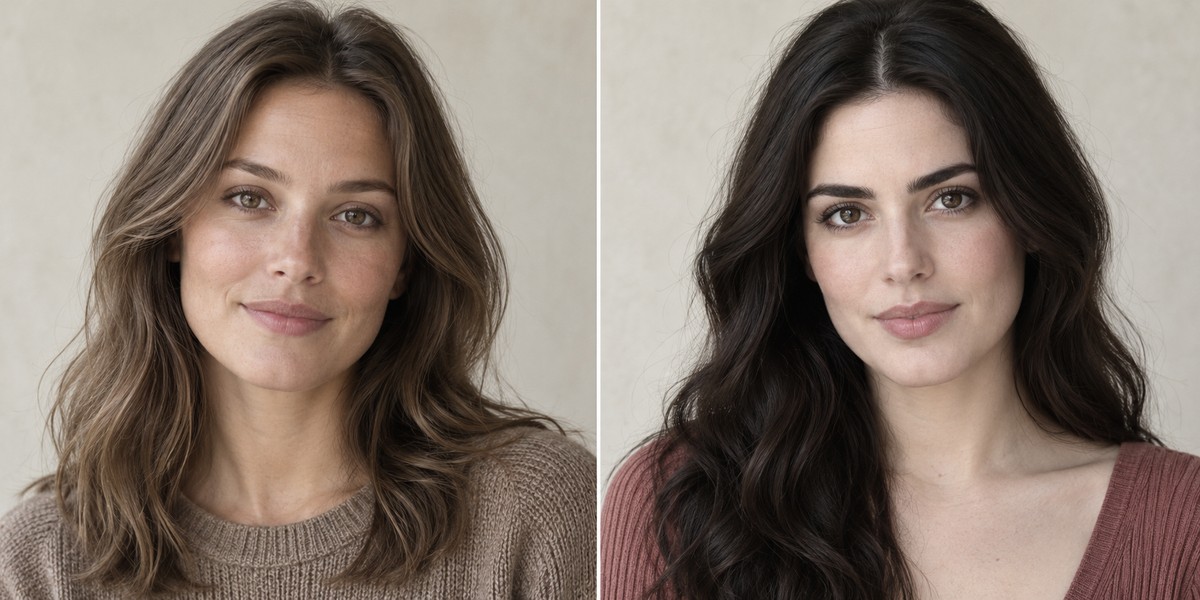
Compare the relative light-to-dark pattern, not either person’s season. Your contrast may sit between these examples. Two references with similar warmth but different depths can isolate contrast from temperature. The hair color ideas guide explores change and upkeep.
3. Chroma: muted or clear color
Chroma means how vivid or subdued a color appears. Mushroom brown and smoky taupe are muted; bright copper and polished blue-black read clearer. This is independent of how light or dark a shade is. A deep brown can be soft and slightly smoky, while another brown of similar depth can look glossy and sharply defined.
For hair, dimension and finish also affect chroma. Beige ribbons can soften a dark base; saturated copper looks clearer than softly mixed chestnut. Compare equal-depth references in the same light and decide whether you prefer a quiet blend or crisp edge near the face.
How to test your coloring at home: the daylight protocol
Indoor lighting can change the apparent color of skin and hair. Warm bulbs may push a beige blonde toward gold, while mixed bathroom lighting can make a cool brown look flat. Adobe’s explanation of white balance shows why changing the light changes the colors you see. For a fair comparison, use bright indirect daylight by a window, away from direct sun. Keep the same position and light for every option; a north-facing window is useful when available, but consistency matters more than the compass direction.
- Remove makeup if you normally wear it, then let any temporary redness settle. Pull colored lengths away from your face so you can first see your skin and natural roots. You do not need to scrub your skin or wait for an exact number of minutes.
- Put a neutral white or light gray cloth over your shoulders. This reduces the effect of a bright shirt reflecting color onto your face. Keep the background and camera exposure the same throughout.
- Hold two hair swatches, fabric pieces, or reference images at a similar depth beside your face: one warmer and one cooler. Compare how you see your eyes, brows, and complexion in the mirror. Repeat with a softer and a clearer version of your preferred direction. A phone screen is less reliable than real swatches because its display and the source photo may shift color.
- Hold a clean white card below your chin as a neutral reference. Notice whether your skin appears more golden, pink, balanced, or olive beside it, but do not treat a single observation as a definitive undertone test. Compare several colors instead of trying to assign a season from the card alone.
- Finally, look at your untreated roots, brows, and eyes together to estimate contrast. Save two or three shade references taken in comparable daylight and write down what changed between them: depth, warmth, or clarity.

The vein and jewelry tests can be extra observations, but neither reliably settles undertone on its own. Veins are seen through skin and affected by lighting; gold or silver jewelry may appeal because of style, finish, or familiarity. If these tests disagree with your swatch comparison, keep both warm and cool options open. Olive skin can appear greenish or grayish beside white and may lean warm, cool, or neutral. Our olive-skin hair color guide explores that overlap in more detail.
What if the mirror gives mixed answers?
Mixed results are normal. Move swatches closer, match their depth, and compare one variable at a time. Try again in similar light. If you still like both temperatures, start with soft chocolate or beige bronde. Aim for a consultation shortlist, not a permanent label.
The 4 seasonal directions translated to hair color
Each season suggests references; natural depth, current dye, texture, and upkeep determine the route. The groups below use warm/cool and muted/clear as styling guidance, not fixed skin or eye-color profiles.
Spring: warm and radiant
Spring references tend to combine warmth with clarity. Golden honey blonde, strawberry blonde, and light copper are useful comparisons if you enjoy a lively, luminous finish. A warm honey brown can offer a darker version without changing the overall direction. Try a beige-gold and a brighter gold at the same depth to find out whether you prefer softer or clearer warmth.
If an icy ash sample makes your complexion appear grayer to your eye, you can move a little warmer rather than assuming you need an entirely new depth. Equally, black is not forbidden: it simply creates a stronger value contrast than many Spring references. If you choose it, compare a soft black with deep brown beside your face. On dark natural hair, reaching pale golden blonde may require considerable lift; ask a colorist what the first appointment can realistically deliver.
Summer: cool and soft
Summer references are usually cooler and more muted. Mushroom brown, soft ash brown, beige blonde, and smoky taupe show how a shade can be cool without looking stark. If you want blonde, compare a soft beige with a silvery ash at the same level. The beige may give a gentler frame while still avoiding overt gold.
Copper or vivid orange-red will feel more contrasting against a muted palette, which might be exactly the point if you want a statement color. For a quieter route into warmth, try a neutral chestnut or a few beige pieces. An ash reference also depends on the starting hair: exposed orange or yellow pigment may need toning, and a cool finish can shift between visits. Ask what the color will look like as it fades, not only on salon day.
Autumn: warm and rich
Autumn references favor warmth with an earthy or softened quality. Chestnut, toasted caramel, rich copper, terracotta, and deep auburn are useful starting points. A warm olive or golden complexion may appear in this group, but those features do not automatically assign a season. Compare chestnut with a similar-depth neutral chocolate: the difference may tell you more than a long list of seasonal traits.
Platinum and blue-black move away from the familiar warm, softened palette, yet either can be an intentional style choice. They also pose different practical questions. Platinum from a dark base needs a lightening plan and ongoing tone care; blue-black may be difficult to move lighter later. If you want contrast without an all-over shift, ask whether a deeper warm root and selective caramel pieces could preserve some of your natural depth.
Winter: cool and high contrast
Winter references often keep color clear and the face-to-hair contrast defined. Deep espresso, soft black, cool burgundy, and an icy blonde with a considered darker root are examples, not required colors. The key comparison is whether a deep, crisp frame or a paler but still deliberate contrast better fits the look you want. A cool espresso may read softer than flat blue-black while keeping depth near the brows.
Pale blonde is a larger process decision when your natural base is dark. A cool tone can require significant lifting before toning, and visible regrowth may change the look quickly. Warm ocher or yellow blonde may feel less aligned with a cool reference palette, but a beige-gold variation can be worth testing if you prefer some warmth. Contrast, preference, and feasibility all deserve a place in the decision.
Why hair analysis differs from wardrobe color analysis
Clothing can be changed or moved away from the face. Hair has a natural base, a history of color services, and a growing root. The cuticle and underlying pigment affect how dye or lightener behaves; a seasonal chart cannot tell you whether previously colored lengths will lift evenly. Wella’s technical color chart illustrates how darker levels can expose reddish and orange warmth and lighter levels yellow as hair is lightened. That sequence is a planning tool, not a promise that every head of hair follows one identical path.
The same target can carry different upkeep. Pale blonde against dark roots shows growth more than blended bronde. Toner can manage exposed warmth, but cannot erase color history or prevent fading permanently. Ask how the shade may look after several washes and as it grows.
Before coloring, show the colorist daylight photos of your roots and two references that differ in only one major way. Tell them about permanent dye, henna, lightening, and chemical services on the lengths. Ask whether a strand test would help assess the proposed process. Follow the product’s directions for allergy testing; the FDA advises a patch test each time hair dye is used. A strand test checks the hair’s response to a color process and does not replace an allergy test.
Turn your palette into a usable salon brief
Write one sentence for each decision: “I like a medium-depth cool brown,” “I want to keep my dark root visible,” and “I prefer soft dimension over a solid finish.” Add a maintenance limit, such as how much visible regrowth you are comfortable seeing. Bring one reference for the color, one for the root transition, and one that shows what you want to avoid. The colorist can then compare your target with your natural level, existing pigment, hair condition, and realistic appointment sequence.
If two seasons seem plausible, choose the shades you would wear and ask for swatches at a comparable depth.
Frequently asked questions
Can my color season change if I dye my hair?
Dye changes the color framing your face and may change how much contrast you see. It does not change your skin undertone. Some styling systems may describe the resulting look differently, but a season is a guide, not a fixed biological identity. Judge the new shade by the effect you want and by what maintaining it will involve.
What if I have neutral undertones?
Compare balanced options first: beige bronde, soft chocolate, or neutral brown. Then try a warmer and a cooler version at the same depth. Neutral does not mean every shade will feel identical; it means a single warm-or-cool label may be less useful than side-by-side comparison. Olive tones can also look balanced in one light and more golden or gray in another.
How does the hair color quiz use this analysis?
The hair color quiz organizes your answers about tone, contrast, natural depth, color history, and maintenance into three shade directions. Use the daylight comparison above and bring your preferred references to a colorist.
Your next step
Save one warm and one cool reference at a similar depth, plus a photo of your natural roots in daylight. Decide whether you want to preserve, soften, or increase the contrast around your face, and how much upkeep you can accept. Bring that short list to a colorist. You can also visit the hair color quiz page for its availability status as the questionnaire is developed.