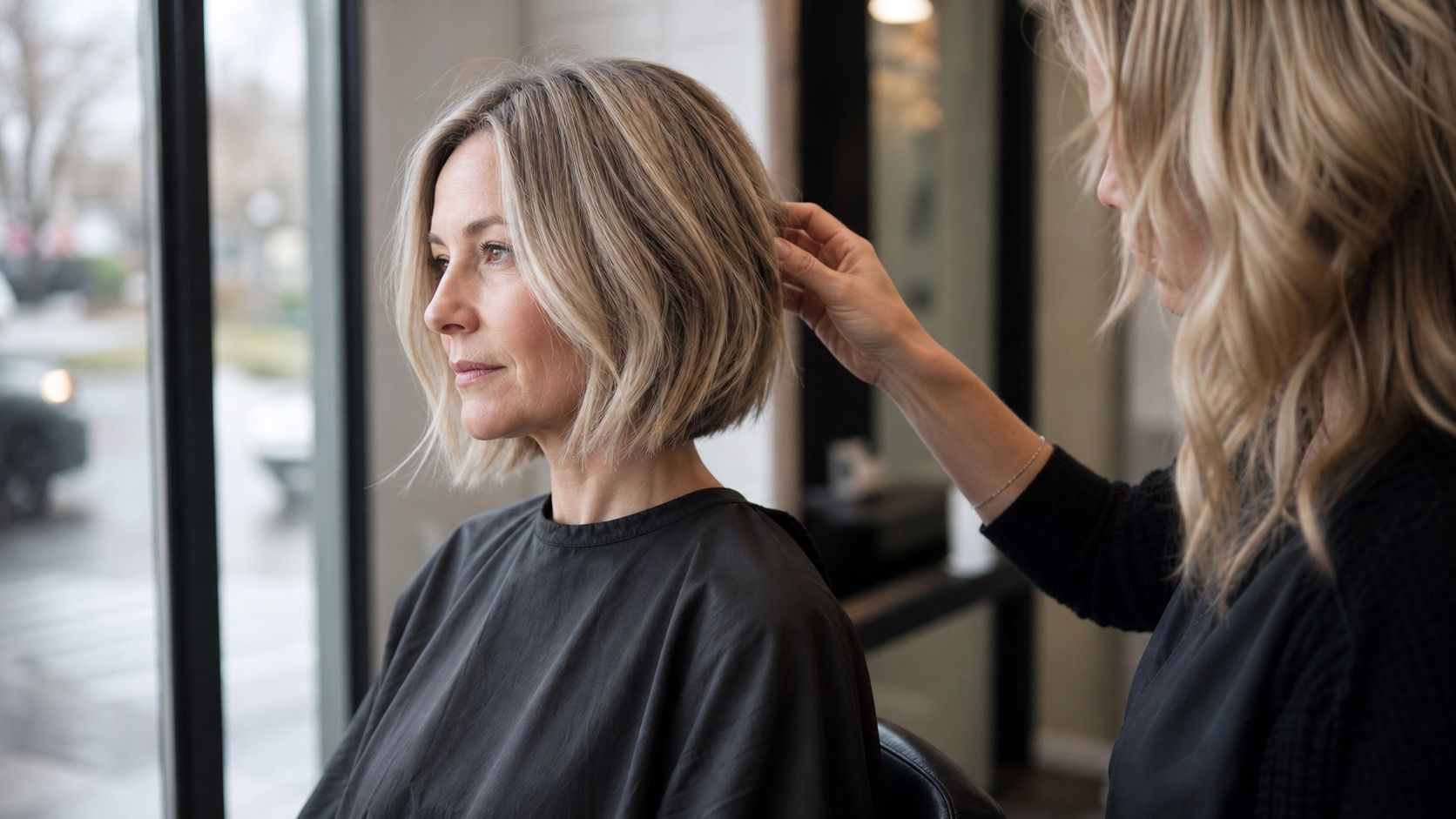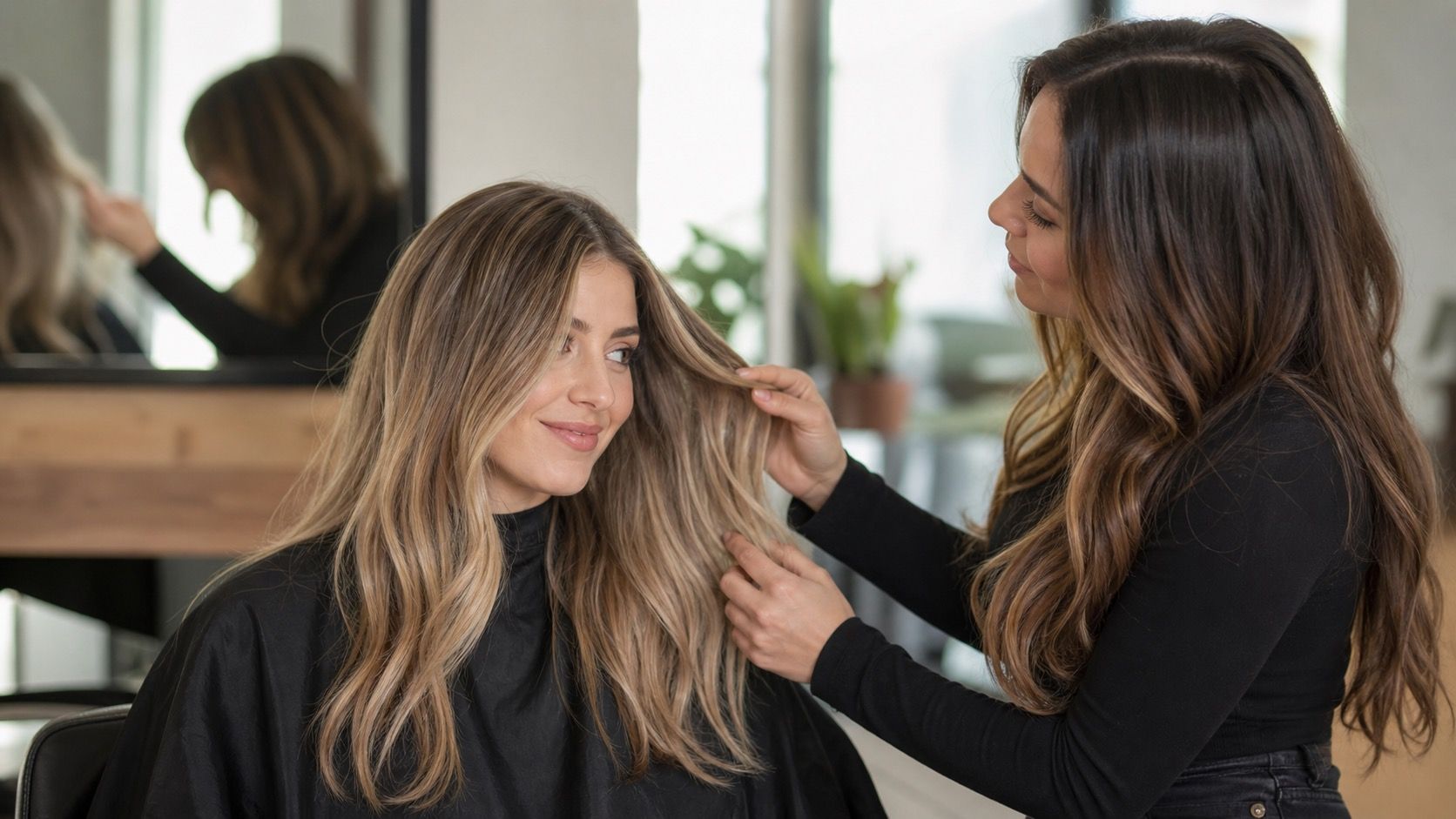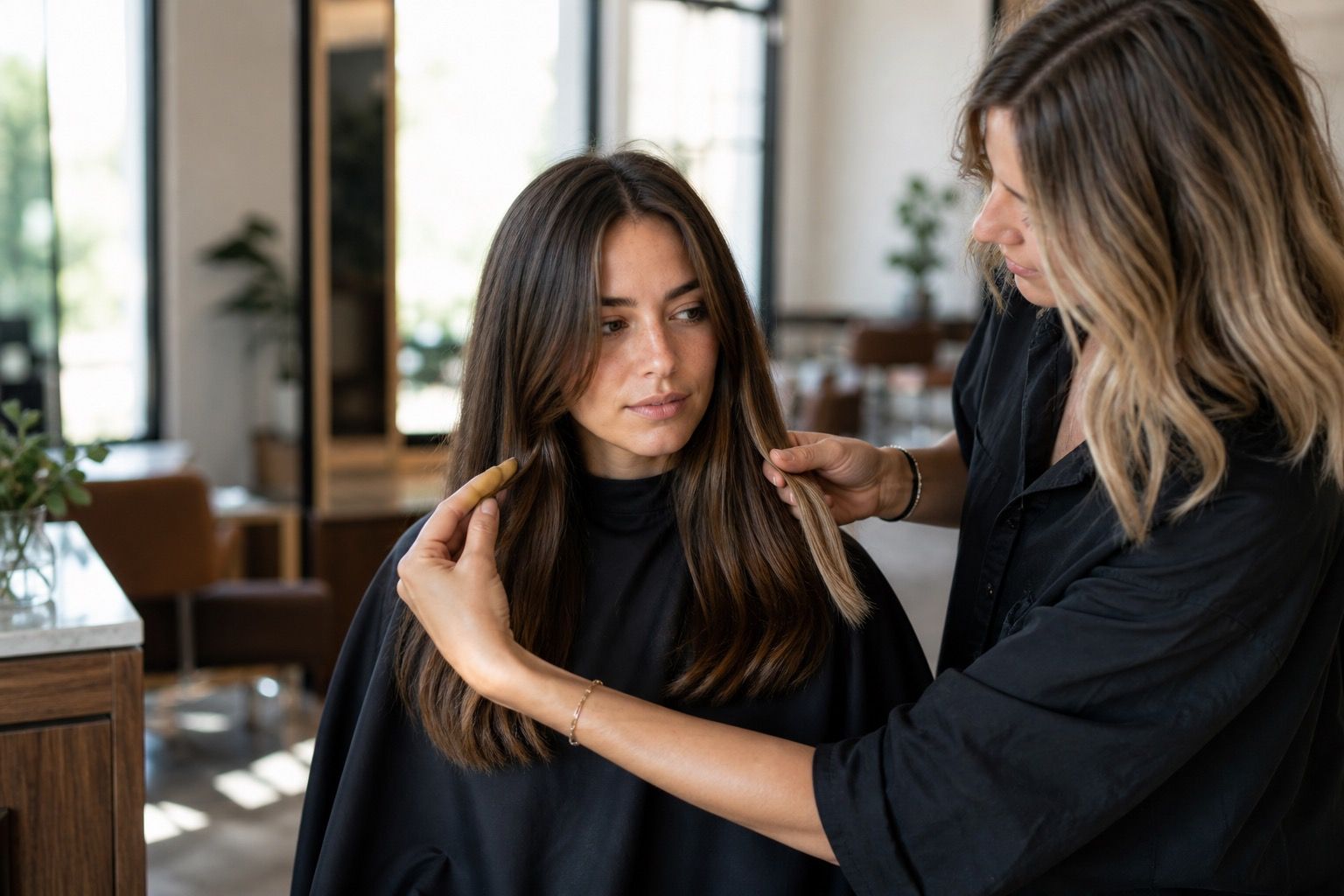
Choosing hair color by skin undertone is helpful when it gives you a starting point, and frustrating when it pretends to deliver a final answer. Skin carries surface colour from sleep, sun, makeup and temperature; hair changes with old dye and light. A better approach uses undertone as one clue alongside contrast, natural roots and the effect you want your colour to have around your face.
What undertone can tell you, and what it cannot
Undertone is the quieter temperature beneath surface skin colour. It may lean warm, cool or neutral, while the surface can still look red after exercise, golden after holiday sun or pale under winter light. Warm undertones often sit comfortably beside gold, caramel and copper-brown directions. Cool undertones may find ash, pearl, blue-black or cool beige easier. Neutral undertones can borrow from both sides, provided the depth is right.
Spot warm, cool and neutral signals in daylight
Use several signals because every quick skin undertone test has limits. Look at your bare face near a north-facing window or outside in open shade. Compare a warm cream fabric with a soft white one, then hold muted coral and dusty rose near the chin. The better colour tends to make shadows under the eyes less obvious and the lips look more even. It should not make the skin look artificially yellow, grey or blotchy.
Gold versus silver jewellery can offer a useful clue, especially if one metal consistently makes your face look clearer. But polished metal reflects nearby colours, so it is not a scientific test. Try brushed gold, silver, pearl and champagne metal in the same light. Many neutral people find two or three options work, while a very bright yellow gold or icy silver looks too assertive.
The vein test is the weakest clue when used alone. Veins can look blue, green or purple depending on depth, lighting and skin thickness. Instead of deciding that blue veins equal cool undertones, use it as a small observation beside fabric, jewellery and your natural reaction to warm versus cool makeup. Agreement across a few tests matters more than a single dramatic result.
Match hair warmth to the whole face, not just the wrist
Hair sits around the cheeks, eyes and mouth, so test colours there. A warm blonde may illuminate beige skin but compete with rosy cheeks. Cool ash can soften redness but make naturally golden skin look tired if it is too matte. Ask whether you want the colour to echo your existing warmth, gently balance it or create deliberate contrast. Those are three different aims, and each can be valid.
Face framing is an easy place to test warmth without committing to a full transformation. A few honey pieces around a neutral brunette can make the eyes brighter; a beige or cool ribbon can calm the same brunette if she prefers a quieter look. Because the front sections are so visible, a small shift there often tells you more than changing the hidden lower lengths.
Natural roots are another honest guide. They show the depth and temperature your skin has lived beside for years. You do not need to copy them exactly, but working within one or two levels usually makes regrowth more forgiving. If you go much lighter, darker or warmer, choose that as a style decision and discuss how toner, root blending and maintenance will keep it intentional.
Let contrast decide when undertone is not enough
Contrast is the difference between your hair, skin, eyes and features. A person with dark brows, dark lashes and clear eyes can often carry a deeper or cleaner hair colour than someone whose features blend softly together. This explains why two people with similar cool undertones can look very different in black, platinum or dark espresso. Temperature may be similar; visual weight is not.
To judge contrast, take a daylight photo with no filter and convert it mentally to a simple light-dark picture. Do your eyes and brows create distinct points, or is the overall impression soft? High contrast may suit deep brunette, crisp highlights or a clean platinum-to-root transition. Low contrast often benefits from blended beige blonde, soft brown or fine tonal dimension rather than sharp blocks.
Do not confuse contrast with drama. A low-contrast person can still choose vivid red; it may simply be more noticeable and require stronger styling to feel balanced. A high-contrast person can wear soft mushroom brown; it may look intentionally understated. The point is to know why a shade feels quiet, striking or slightly disconnected before you commit to it.
Translate your observation into a salon-ready choice
| What you notice in daylight | A useful colour direction to discuss | Question for the colourist |
|---|---|---|
| Warm cream and gold make skin look rested | Honey, caramel, warm chestnut or soft copper | How can warmth stay rich rather than orange? |
| Soft white and silver look clearer | Beige ash, pearl, cool brown or blue-black | Which level avoids a flat grey result? |
| Both temperatures work but extremes do not | Neutral blonde, beige brown or balanced chocolate | Can the root remain close to my natural colour? |
| Dark features need definition | Deeper base with measured face framing | Where should the lightest pieces begin? |
Bring two or three reference photos that show the same direction in ordinary light, not ten unrelated trends. Point out what you like: the darker root, the low-contrast brightness, the neutral beige tone, or the copper around the face. A skilled consultation turns these preferences into a formula based on your current base, previous colour and hair condition.
If there is old dye, henna, heavy highlights or a wish to go several levels lighter, ask whether a strand test is sensible. Undertone cannot override chemistry. A salon may need to lift through warm stages or fill pale ends before a darker shade can hold. Knowing that before the service protects both the hair and your expectations.
Keep flexibility as your hair and skin change
Season, tan, medication, skincare and even a different brow colour can change how a hair shade reads. Blonde may look warmer after a holiday; brunette can fade redder after repeated heat styling. Rather than declaring yourself permanently warm or cool, revisit your best fabrics and daylight photos when you notice the balance has shifted.
Choose a maintenance plan that matches your appetite for change. A gloss is a low-commitment way to test a cooler or warmer direction. Soft highlights and root blending allow a gradual move. A full bleach-and-tone or deep permanent dye can be beautiful, but it asks for more deliberate appointments and home care. The right choice is one you will still like during the grow-out, not only on the first afternoon.
Use undertone to narrow the field, then let your face, roots and preferences make the final call. When a hair colour looks good in daylight, leaves your skin looking like skin and still feels right with your usual clothes, it is doing more useful work than any rigid label can do.